Harvey Weinstein was convicted Monday at his sexual assault trial, sealing his dizzying fall from powerful Hollywood studio boss to archvillain of the #MeToo movement.
The verdict followed weeks of often harrowing and excruciatingly graphic testimony from a string of accusers who told of rapes, forced oral sex, groping, masturbation, lewd propositions and that's-Hollywood excuses from Weinstein about how the casting couch works.
The conviction was seen as a long-overdue reckoning for Weinstein after years of whispers about his behavior turned into a torrent of accusations in 2017 that destroyed his career and gave rise to #MeToo, the global movement to encourage women to come forward and hold powerful men accountable for their sexual misconduct.
The jury of seven men and five women took five days to find him guilty.
The case against the once-feared producer was essentially built on three allegations: that he raped an aspiring actress in a New York City hotel room in 2013, that he forcibly performed oral sex on another woman, production assistant Mimi Haleyi, at his apartment in 2006, and that he raped and forcibly performed oral sex on "Sopranos” actress Annabella Sciorra in her apartment in the mid-1990s.
Three additional women who said they, too, were attacked by Weinstein also testified as part of an effort by prosecutors to show a pattern of brutish behavior on his part.
The Associated Press does not typically identify people who say they are victims of sex crimes unless they grant permission, as Haleyi and Sciorra did.
Jurors signaled their struggles with the Sciorra charges four days into deliberations. On Friday, after reviewing sections of her testimony and related evidence, they sent a note to the judge indicating they were deadlocked on the counts but had reached a unanimous verdict on the others. After some debate in the courtroom, the judge ordered jurors to keep deliberating.
While Weinstein did not testify, his lawyers contended that any sexual contact was consensual and that his accusers went to bed with him to advance their careers.
The defense seized on the fact that two of the women central to the case stayed in contact with Weinstein through warm and even flirty emails — and had sex with him — well after he supposedly attacked them.
THIS IS A BREAKING NEWS UPDATE. AP's earlier story follows below.
Jurors at Harvey Weinstein’s New York City rape trial are set to resume deliberations Monday after signaling they are at odds on the top charges in the closely watched #MeToo case.
The jury sent a note to Judge James Burke at the end of a fourth day of deliberations on Friday, asking if it was permissible for the panel to be hung on one or both counts of predatory sexual assault against the disgraced movie mogul while reaching a unanimous verdict on lesser charges.
The judge responded by ordering the jury to keep deliberating and try to reach a unanimous decision. The query sparked speculation that the trial could end with a partial verdict, but Burke has not addressed that.
Previous notes suggested that jurors were focused on a key aspect of both predatory sexual assault counts — “Sopranos” actress Annabella Sciorra's allegations that Weinstein attacked her in the mid-1990s. The jury must factor in Sciorra’s account, along with the accusations that Weinstein raped an aspiring actress in March 2013 and forced oral sex on former film and TV production assistant Mimi Haleyi in 2006, to find him guilty of predatory sexual assault.
A guilty verdict on just one of those two predatory sexual assault charges would likely send Weinstein to prison for the rest of his life.
Weinstein has maintained any sexual encounters were consensual.
The Associated Press has a policy of not publishing the names of people who allege sexual assault without their consent. It is withholding the name of the 2013 rape accuser because it isn’t clear whether she wishes to be identified publicly.
Daniel Madrzykowski, research director at the UL Fire Safety Research Institute, joins Cheddar News to discuss the deadly Bronx fire that killed 19 people and fire safety tips that people need to know about.
Markets closed the day mixed, and well off their lows of the day following a market meltdown earlier in the session. The Nasdaq staged a comeback late in the day, even amid ongoing worries about the Federal Reserve raising interest rates. Doug Flynn, certified financial planner and co-founder of Flynn Zito Capito, joined Cheddar News' Closing Bell to discuss the markets' close and what's driving the major indexes.
Two companies recently announced a new partnership aimed at addressing the growing demand to borrow against crypto - digital assets capital markets firm CrossTower is partnering with commercial bank, BankProv. The companies are launching a crypto lending platform that will allow Bitcoin miners to receive loans to invest in crypto mining equipment. The companies say the program also addresses the difficulty of breaking into crypto mining due to the high cost. CrossTower research analyst Martin Gaspar joins Cheddar News' Closing Bell to discuss.
Next-gen social sports platform Break the Love recently raised $2.5 million in seed funding. Break the Love's platform and iOS app allows users to discover and book group-based tennis activities, to either learn, train, or compete. The new company has already gotten support from a few big names in the world of tennis, including the coach of Naomi Osaka, as well as the United States Tennis Association and the brand Wilson. Break the Love founder and CEO Trisha Goyal joins Cheddar News' Closing Bell to discuss.
As the Omicron variant continues to sweep across the country. The US Supreme Court is expected to hear arguments at the end of this week on whether or not the Biden administration can force private companies to vaccinate or test millions of their employees. In addition, the National Nurses United has spearheaded legal action to protect nurses and health care workers, patients, and the public while on the job. President of the National Nurses Union, Zenei Cortez, joined Cheddar to discuss more.
China's ongoing crackdown of its own entertainment industry has been raising eyebrows for once now. With the ruling Communist Party instructing media companies to boycott immoral and overly entertaining stars. But the country has gone even further. Now experts warn that this could lead to further issues such as gender-based violence. Professor at the Institute of Sociology at National Tsinghua University, Hsiu-Hua Shen, and Associate Professor of Politics at Keough School of Global Affairs at the University of Notre Dame Joshua Eisenman, joined Cheddar to discuss more.
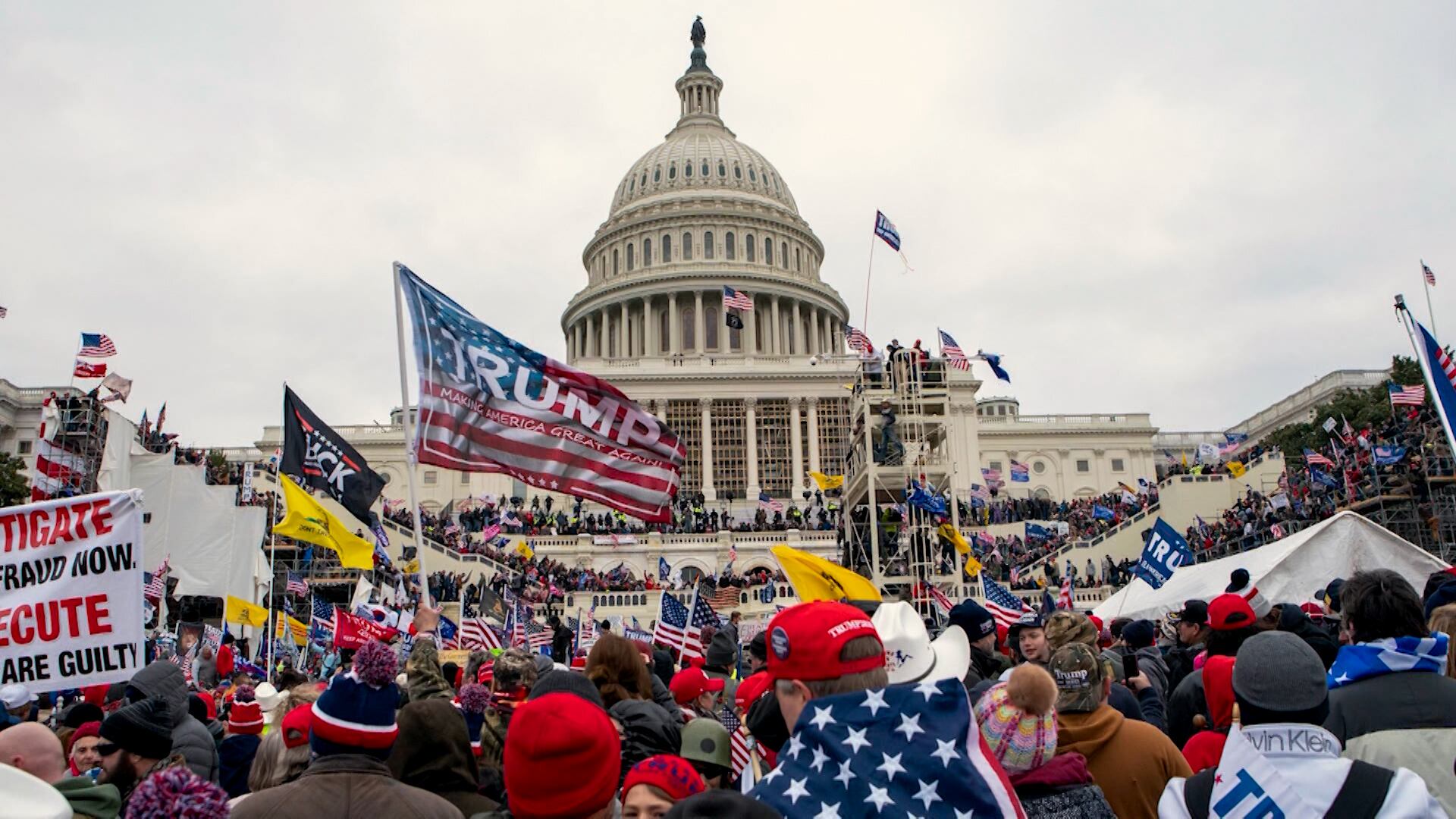
Today marks one year since the January 6 Attack on the United States Capitol. The Country watched as supporters of then-President Trump stormed what was assumed to be the most secure building in the country in an attempt to stop the certification of the 2020 Election. Several lawmakers, including the Vice President, could be seen ducking down as they feared for their lives. Democratic Michigan Representative Dan Kildee, joined Cheddar to discuss more.
Bed Bath & Beyond delivered disappointing fiscal third-quarter results for 2022. Shares initially dove more than 9% in premarket trading on the news but finished the day up nearly 8%. Bed Bath & Beyond has been a meme-stock target for online investors in the past -- so was meme-stock mania a factor in the recent stock movement for the company? Jaime Rogozinski, the founder of the subreddit WallStreetBets, joins Cheddar News' Closing Bell for more, as his forum helped spark the meme stock phenomena. He also discussed some decentralized finance services and trends for the retail investor to watch for in 2022.