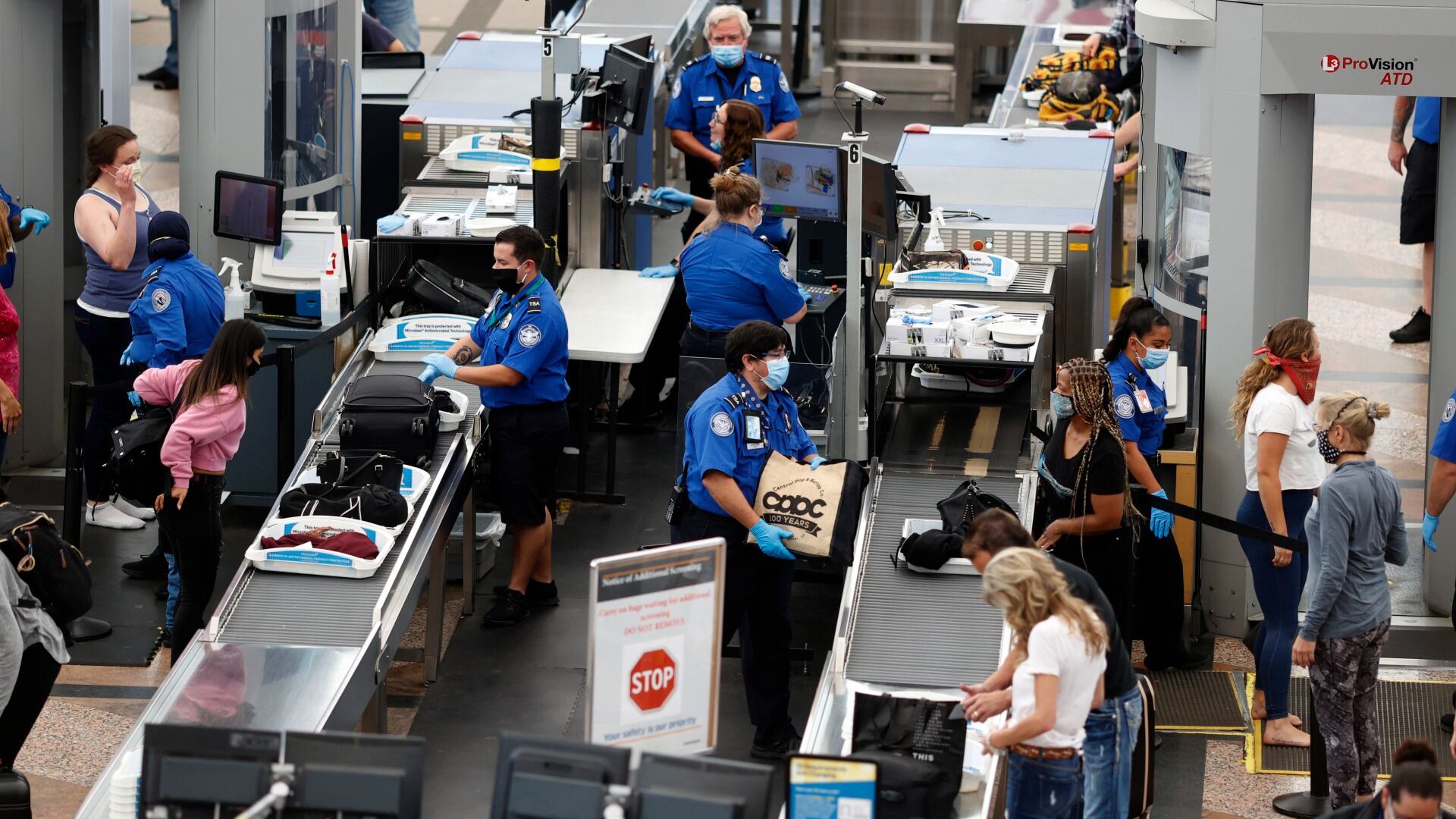
The TSA found a record 6,542 firearms in carry-on luggage at 262 different airports in 2022, according to the agency's annual round-up.
Let's put those numbers in perspective: Out of 761 million screenings across the country, 8.6 firearms were found for every million passengers. Put another way, the TSA found one firearm for every 116,394 passengers.
Among the firearms found, the TSA said 88 percent were loaded.
Many of these airports were located across the U.S. South. These are the top 10 worst-offenders:
Austin and Tampa are both new additions to the list. They replaced Louis Armstrong New Orleans International and Salt Lake City International.
Yet southern airports weren't the only ones to see an uptick in gun-toting passengers. New York City airports reported finding 39 handguns at checkpoints in 2022, up from 26 in 2021.
Here's what happens when the TSA stumbles upon a firearm during a security screening. Airport staff will immediately notify local law enforcement officers, who then remove the weapon from the X-ray tunnel and contact the passenger. From there, law enforcement has some discretion based on local laws, but the TSA can in some cases levy a civil penalty.
The agency said it weighs a number of factors when deciding to penalize a traveler, such as whether the firearm was loaded or if there was ammunition accessible nearby. Even if a traveler has a concealed weapons permit, it added, firearms are not permitted in carry-on luggage.
All passengers must declare their firearm during the check-in process.