Government Shutdown Is a Life or Death Issue for Native Americans: Tribe Chairman
*By Carlo Versano*
For many Americans, the partial shutdown of the federal government is only felt in minor ways, if it all: [overflowing trash cans](https://wtop.com/dc/2019/01/national-park-service-gets-help-with-garbage-cleanup-during-government-shutdown/slide/1/) on the National Mall, or [free entry](https://www.cnn.com/travel/article/us-government-shutdown-travel/index.html) to national parks. For Native Americans, a prolonged shutdown could mean life or death.
The Bureau of Indian Affairs, part of the Dept of the Interior, is one federal office considered non-essential as President Trump and Congress fail to reach a deal over a funding impasse. For tribes like the Sault Ste. Marie of Michigan, which are heavily reliant on federal funding thanks to long-ago deals made with the government for services in exchange for land, the results of the shutdown as already devastating.
Aaron Payment, Sault Ste. Marie's chairman, told Cheddar that he's focused on one date: Jan. 15. That's when the tribe's next drawdown of federal funds is scheduled. If that transaction doesn't happen, critical services will become unavailable, he said.
"In the long term, it's going to have a drastic impact," he said, noting that the shutdown, already in day 14, is costing the tribe about $100,000 a day. Eventually, "we won't have access to healthcare," he said. "Our members need prescriptions and medicines that help keep them alive."
For Payment and members of his tribe and others, the situation in Washington is familiar. A 2013 shutdown under President Obama cost Sault Ste. Marie $1 million, he said, and had lasting impacts still felt today. Tribe members were laid off, furloughed, and lost healthcare providers, who pulled out due to the uncertainty of the shutdown. Recruiting health services is one of the most difficult challenges for Indian Country, which has the added disadvantage of being in rural areas without many providers.
Payment stressed that Native Americans were not asking for handouts, or reparations. As far back as the 1800s, tribes sold hundreds of millions of acres of land to the government "for the promise of health, education and social welfare in perpetuity." Those services are now deemed non-essential. And when the shutdown ends, it is not guaranteed that tribes will be reimbursed for the costs they incurred during the closure, the way other federal employees will be.
"We prepaid for everything," Payment said.
"The government is only as good as its word."
For full interview [click here](https://cheddar.com/videos/tribe-leader-says-government-shutdown-could-have-drastic-impact).
The PGA has suspended 17 golfers, including Phil Mickelson and Dustin Johnson, who are competing in a Saudi-backed golf event outside of London. In a memo, commissioner Jay Monahan said "these players have made their choice for their own financial-based reasons", announcing they are ineligible to participate on the PGA tour or any other tours it sanctions. Hugh Kellenberger, Senior Managing Editor at the Athletic, breaks down the controversy, and what might happen next.
U.S. stocks closed Friday at session lows after May CPI data showed inflation in the U.S. has not peaked and is still rising rapidly. For the week, the S&P fell 5.06%, the Dow lost 4.58%, and the Nasdaq dropped 5.60%, marking the worst week since January for all three major indexes. Mike Zigmont, Head of Trading and Research at Harvest Volatility Management, joins Cheddar News' Closing Bell to discuss.
Benefits brokerage, Nava Benefits, raised $40 million in a Series B round. Nava says it's on a mission to fix healthcare, one benefits plan at a time. The startup is working to bring benefits to small business that are normally available to only Fortune 500 companies. Brandon Weber, Co-Founder and CEO of Nava Benefits, joined Cheddar News' Closing Bell to discuss.
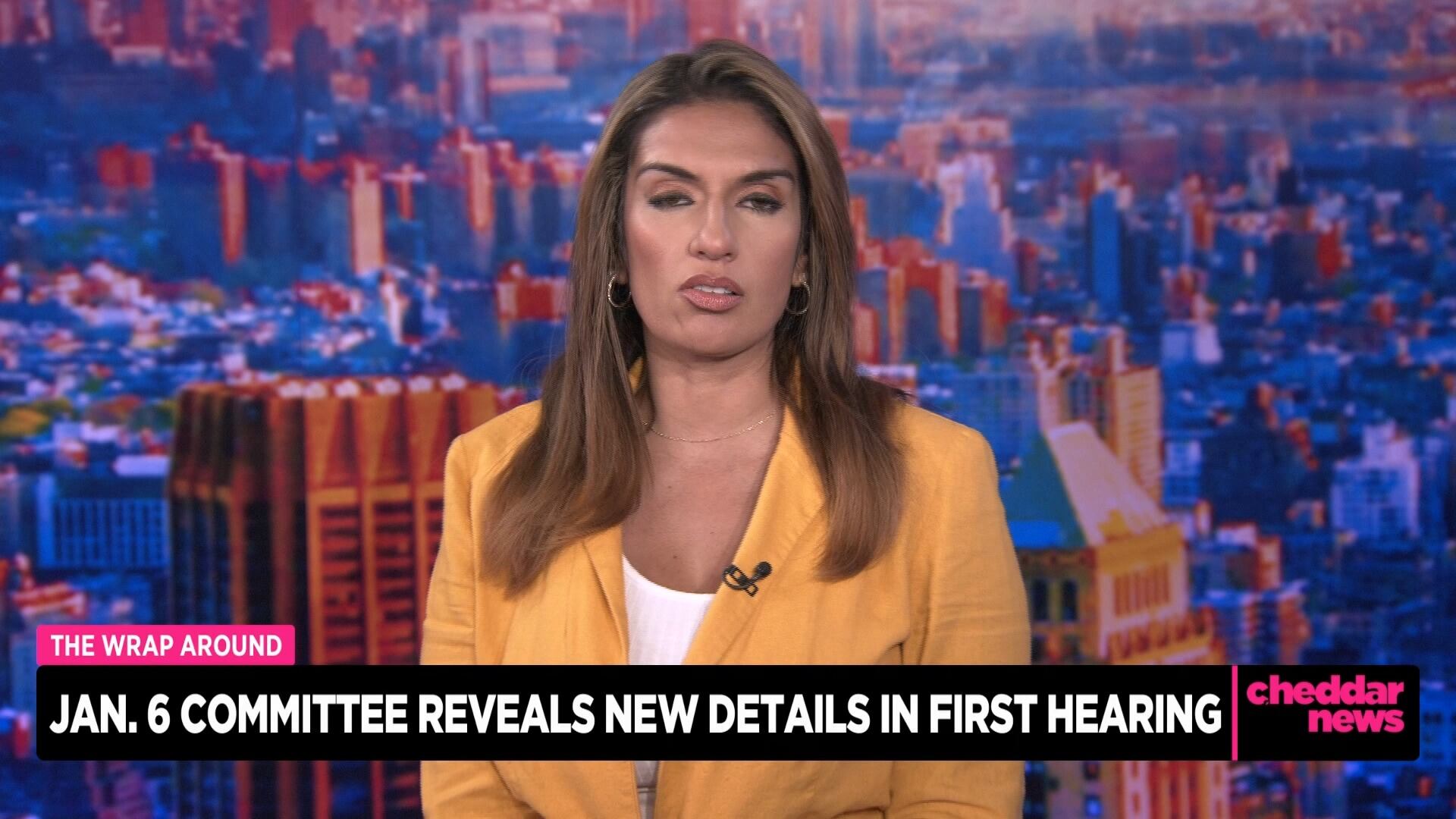
The House Select Committee investigating the Jan. 6 riots on Capitol Hill held its first primetime hearing on Thursday. Cheddar News speaks with legal analyst Tracy Pearson, who breaks down the biggest takeaways.
Fuel and oil prices have risen almost 17 percent since May, making the national gas prices reach nearly $5 a gallon. Andrew Lipow from consulting firm Lipow Oil Associates joined Cheddar News to discuss the future of gas prices. "The biggest issue on the oil market is really events that are beyond our control, which is what is happening over in Europe," he said, regarding the ongoing Russia Ukraine war. Lipow also said he predicted gas prices to hit $5.05 and that he's focused on the Biden administration's overtures in repairing a relationship with Saudi Arabia.
March For Our Lives will be returning this weekend to Washington, DC, in the wake of the recent mass shooting seen throughout the country. Marchers include Yolanda Renee King, the only granddaughter of Martin Luther King Jr. She joined Cheddar News to discuss the importance of the march and activism in general. "I just think that it's so important to have these rallies because we need to demand to our leaders and politicians that they pass legislation and that and we actually need to see action," she said.
Erika Alexander and Whitney Dow, directors of 'The Big Payback,' join Cheddar News to discuss their new film, 'The Big Payback.' It premieres Saturday, June 11 at the Tribeca Festival.
President Biden proposed a new rule that would add 500,000 chargers for electric vehicles nationwide. The proposal comes amid the rapid shift to EVs with dozens of automakers announcing plans for all-electric fleets within the next decade. But with the new surge will the U.S. have the proper infrastructure to keep up? Scott Painter, founder and CEO of Autonomy.com joined Cheddar's Opening Bell to discuss. "I really think the idea of standardization is a big deal. Standardization certainly makes it much better for everybody to be able to get a charge when they need one," he said.
The House select committee investigating the January 6th riots on Capitol Hill is opening its landmark series of public hearings. Cheddar News speaks with Mike Sozan, senior fellow at the Center for American Progress who explains how to follow the hearings and what to expect.