By Zeke Miller and Michael Balsamo
In a major step toward returning to pre-pandemic life, the Centers for Disease Control and Prevention eased indoor mask-wearing guidance for fully vaccinated people on Thursday, allowing them to stop wearing masks outdoors in crowds and inside in most situations.
The new guidance still calls for wearing masks in crowded indoor settings like buses, planes, hospitals, prisons and homeless shelters but will help clear the way for reopening workplaces, schools, and other venues — even removing the need for masks or social distancing for those who are fully vaccinated.
“We have all longed for this moment — when we can get back to some sense of normalcy,” said Dr. Rochelle Walensky, the director of the CDC.
The announcement comes as the CDC and the Biden administration have faced pressure to ease restrictions on fully vaccinated people — people who are two weeks past their last required COVID-19 vaccine dose — in part to highlight the benefits of getting the shot. The country's aggressive vaccination campaign has paid off: U.S. virus cases are at their lowest rate since September, deaths are at their lowest point since last April and the test positivity rate is at the lowest point since the pandemic began.
Walensky announced the new guidance on Thursday afternoon at a White House briefing, saying the long-awaited change is thanks to millions of people getting vaccinated — and based on the latest science about how well those shots are working.
“Anyone who is fully vaccinated can participate in indoor and outdoor activities – large or small — without wearing a mask or physically distancing,” Walensky said. “If you are fully vaccinated, you can start doing the things that you had stopped doing because of the pandemic.”
The easing guidance is likely to open the door to confusion, since there is no surefire way for businesses or others to distinguish between those fully vaccinated and those who are not. Walensky said those who are not fully vaccinated should continue to wear masks indoors.
President Joe Biden was set to highlight the new guidance Thursday afternoon in a speech from the White House.
To date about 154 million Americans, more than 46% of the population, have received at least one dose of the COVID-19 vaccines and more than 117 million are fully vaccinated. The rate of new vaccinations has slowed in recent weeks, but with the authorization Wednesday of the Pfizer vaccine for children ages 12 to 15, a new burst of doses is expected in the coming days.
Just two weeks ago, the CDC recommended that fully vaccinated people continue to wear masks indoors in all settings and outdoors in large crowds.
During a virtual meeting Tuesday on vaccinations with a bipartisan group of governors, Biden appeared to acknowledge that his administration had to do more to model the benefits of vaccination.
“I would like to say that we have fully vaccinated people; we should start acting like it,” Utah Gov. Spencer Cox, a Republican, told Biden. “And that’s a big motivation get the unvaccinated to want to to get vaccinated.”
“Good point,” Biden responded. He added, “We’re going to be moving on that in the next little bit.”
Walensky said the evidence from the U.S. and Israel shows the vaccines are as strongly protective in real world use as they were in earlier studies, and that so far they continue to work even though some worrying mutated versions of the virus are spreading.
The more people continue to get vaccinated, the faster infections will drop — and the harder it will be for the virus to mutate enough to escape vaccines, she stressed, urging everyone 12 and older who’s not yet vaccinated to sign up.
And while some people still get COVID-19 despite being vaccinated, Walensky said that’s rare and cited evidence that those infections tend to be milder, shorter and harder to spread to others. If people who are vaccinated do develop COVID-19 symptoms, they should immediately put their mask back on and get tested, she said.
There are some caveats. Walensky encouraged people who have weak immune systems, such as from organ transplants or cancer treatment, to talk with their doctors before shedding their masks. That’s because of continued uncertainty about whether the vaccines can rev up a weakened immune system as well as they do normal, healthy ones.
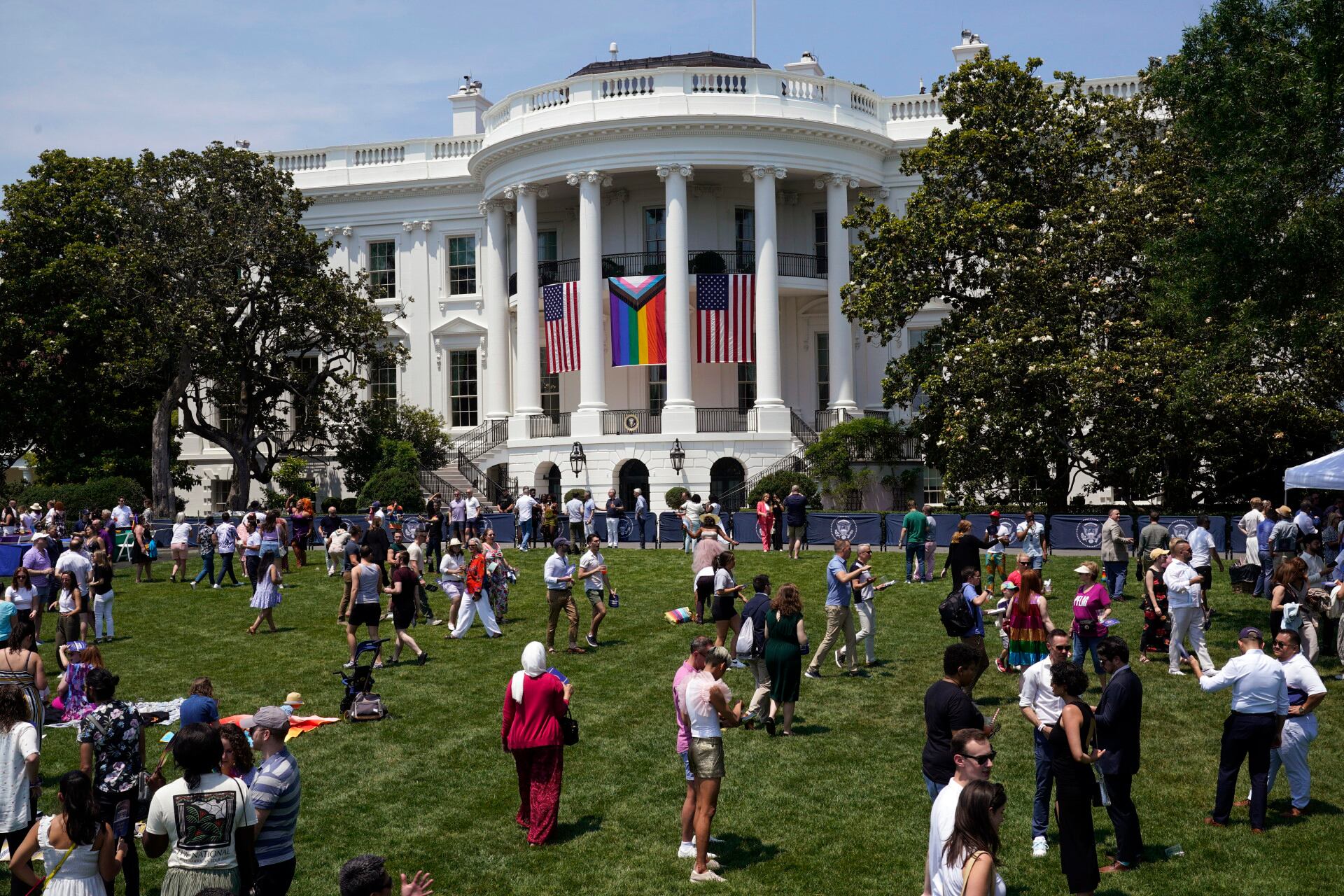
The new guidance had immediate effect at the White House, which has taken a cautious approach to easing virus restrictions. Staffers were informed that masks are no longer required for those who are fully vaccinated.
AP medical writer Lauran Neergaard contributed.
Updated on May 13, 2021, at 3;10 p.m. ET with Walensky saying those who are not fully vaccinated should continue to wear masks indoors, White House telling staffers that masks no longer required there for the unvaccinated.