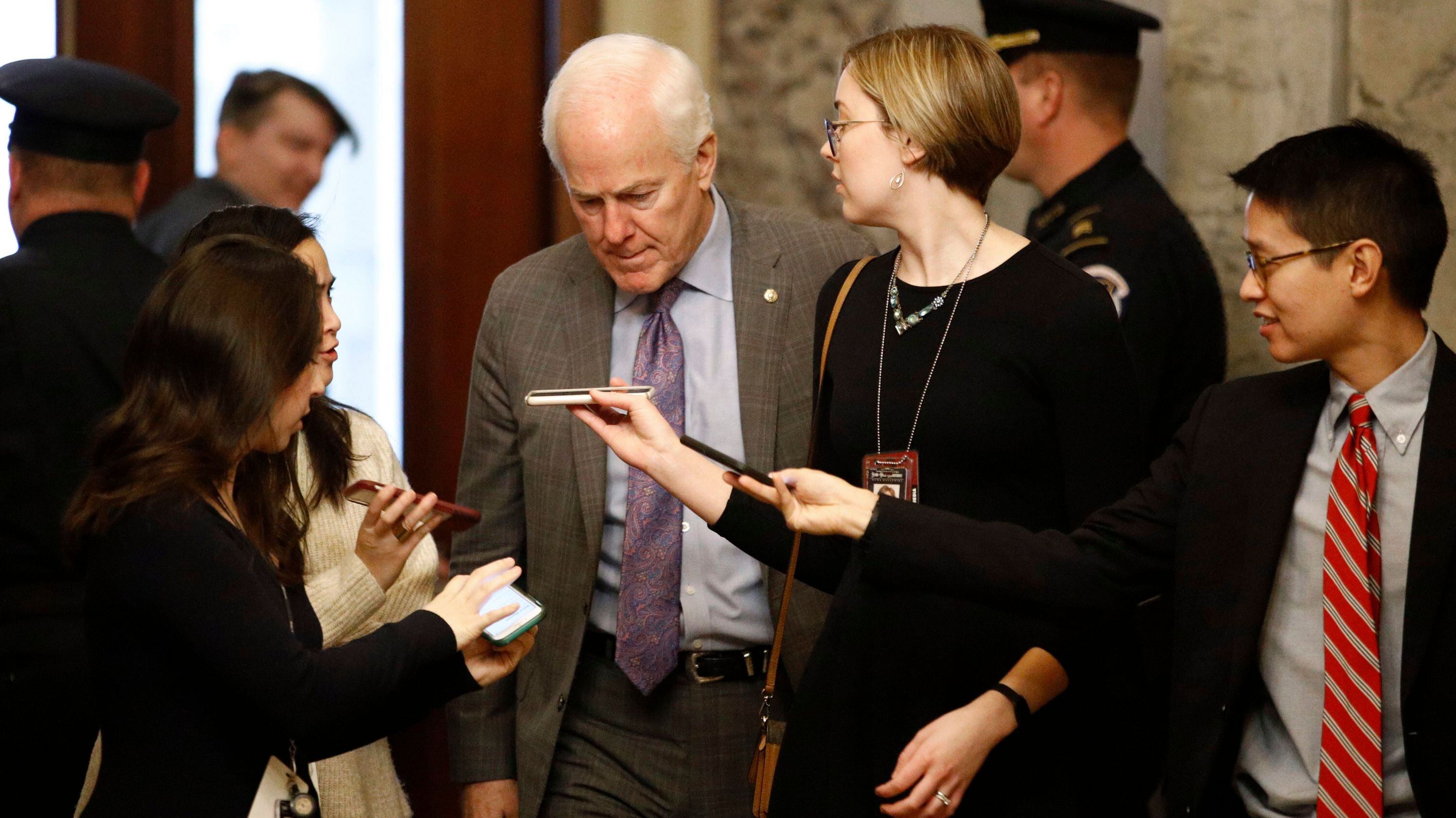
As day six of the impeachment trial headed into the evening hours, Republican Senator John Cornyn of Texas told Cheddar his experience as a judge and lawyer tells him "in every trial, there are sort of twists and turns, things we can't expect to be answered instantaneously, but will be answered by the time the trial will come to an end."
"I expect to give both sides an opportunity to put this in context. We don't even know what this book says," he said, referencing a book written by ex-national security advisor John Bolton. So far, President Trump's lawyers had yet to bring up Bolton's book in today's session, the manuscript of which was leaked over the weekend and left Republican senators reportedly "blindsided."
Sen. Cornyn added that though he believes The New York Times is biased against the Trump administration, he "frankly would like to see the book itself, but I'm sure the parties will have a chance to answer that." Bolton denied that he, his publisher, or his literary agent coordinated with the Times.
The president's defense team, which had 22 hours left in the trial schedule at the start of today's session, focused on what they described as the threat of the increased use of impeachment, questions of due process, and the ability of the president to withhold information from Congress through executive privilege. Across the way, the White House reportedly prepared for a split in the party that could lead to a request for testimony from Bolton.
Republicans did not bring Bolton up in the first five hours of the day. Defense lawyer Jane Raskin did spend time on the president's personal lawyer Rudy Giuliani and warned senators not to be "distracted" by how Democrats portrayed his involvement.
Executive privilege was brought up continuously throughout the afternoon as defense lawyers underscored the president's reasoning for barring aides from testifying in the name of "immunity."
At times, Senators appeared inattentive through the early portions of the day's sessions. Democratic Senators Bernie Sanders of Vermont and Cory Booker of New Jersey had their hands clasped under their chins for much of the time.
Some remained engaged throughout the session, such as Senator Amy Klobuchar of Minnesota, who, at one point, asked her neighbor Senator Chris Coons of Connecticut for what looked like a pocket copy of the U.S. Constitution, which she read from as the former independent counsel who investigated President Bill Clinton, Ken Starr, read from the preamble of the document. Most senators at the center of the debate for adding witnesses took down pages of notes, like Republican Senators Lisa Murkowski of Alaska and Susan Collins of Maine.
As the day wore on, the White House defense team focused on Hunter Biden, whose work in Ukraine was central to Trump's fateful July phone call with Ukraine President Volodymyr Zelensky.
But the reverberations from the John Bolton manuscript remained the day's main storyline with two Republican Senators, Mitt Romney and Susan Collins, saying that the disclosures could spur other Republicans to seek new evidence and hear witnesses, like Bolton.
If that happens, the fast acquittal that Donald Trump was hoping for will be much slower to arrive, and the president could face the prospect of delivering the State of the Union address with the threat of a trial still hanging over his head.
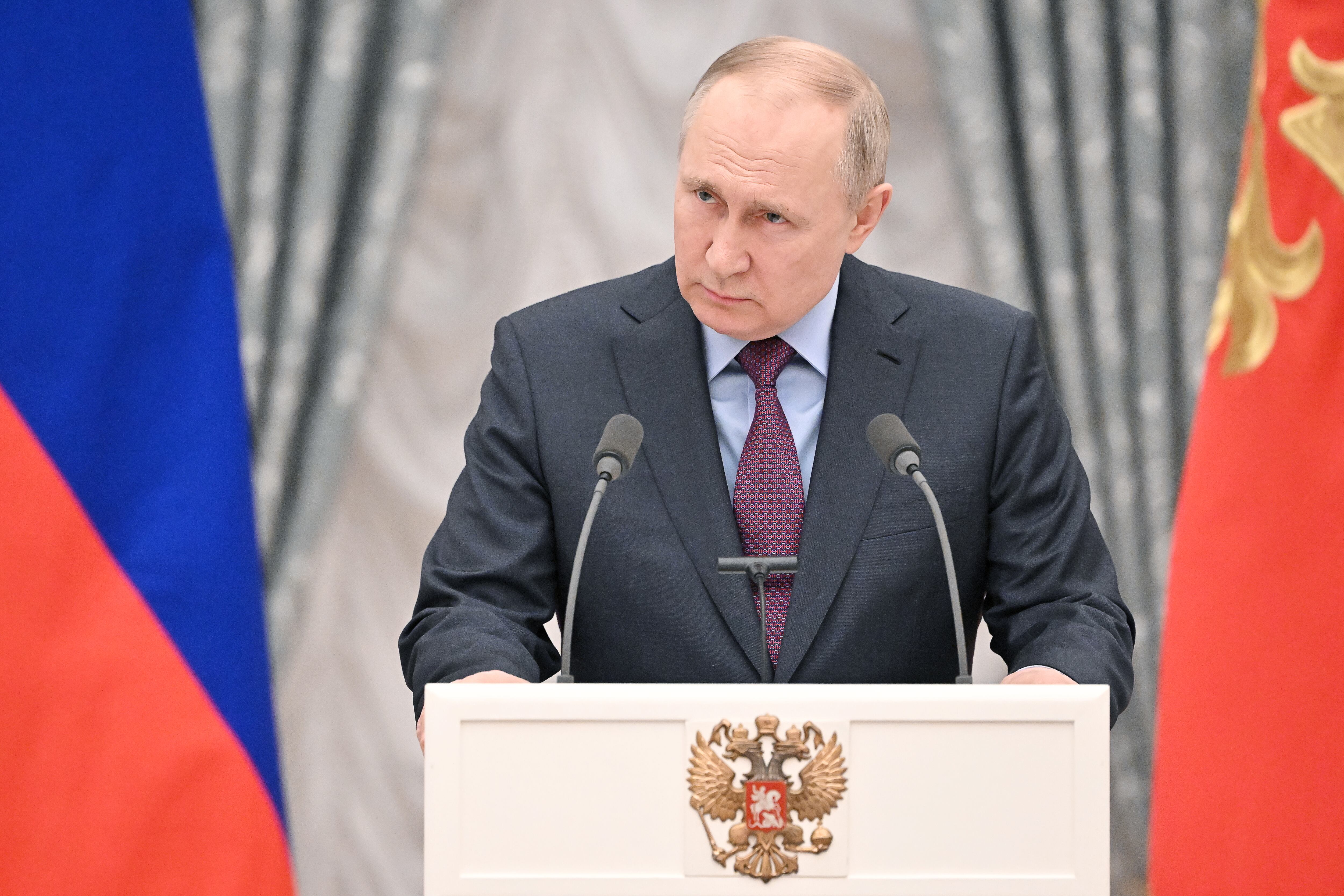
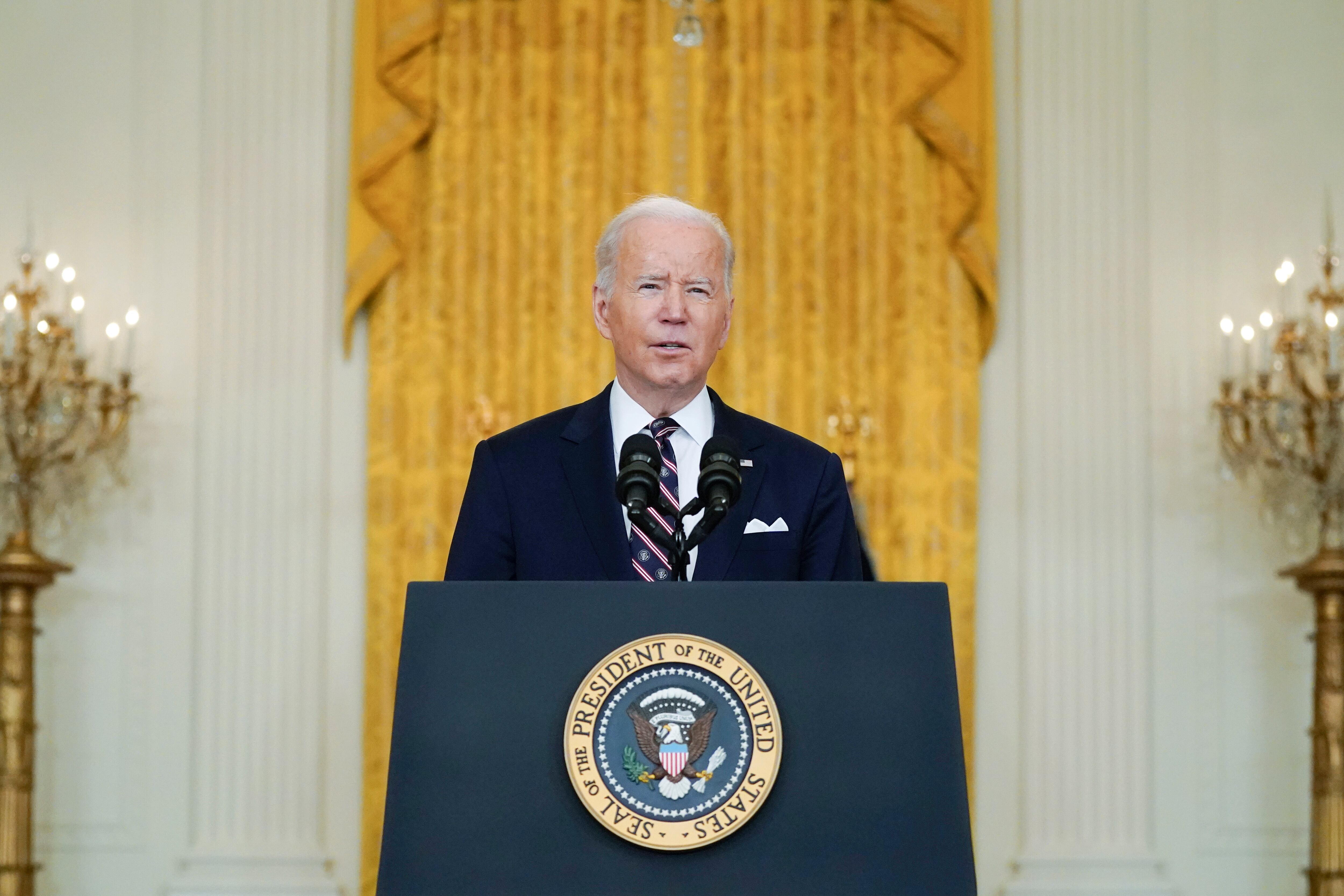
President Joe Biden said Tuesday that the U.S. will begin to impose sanctions on Russia, calling recent troop movement into Ukraine an 'invasion.' Biden and other government officials including from the State Department have begun to classify the Russian troop movement as an invasion after Russian President Vladimir Putin ordered troops to two independent Ukrainian areas in an alleged "peacekeeping" mission — which the West considers an act of aggression. Biden said Russia will continue to pay 'an even steeper price' if it continues sending troops into Ukraine. What happens next? Will Putin find a way around these sanctions? Ariel Cohen, senior fellow at the Atlantic Council, joins Closing Bell to discuss Biden's remarks, how the West will protect Ukraine since it doesn't belong to NATO, and more.
Russian lawmakers have given President Vladimir Putin a military force authorization in Ukraine, and President Biden has described Putin's announcement declaring the independence of two provinces within Ukraine and his subsequent deployment of peacekeepers as tantamount to "invasion. David Tafuri, a former Obama campaign foreign policy advisor and Bush State Department official, joined Cheddar News to discuss. "The Ukrainian military occupies more than 70 percent of those provinces still," Tafuri said, noting Putin alleged having a responsibility to defend those regions. "This would put Ukrainian forces and Russian forces right at each other engaged. And that might be how the war starts."
The major indexes ended Tuesday's session sharply lower due to escalating tensions between Russia and Ukraine. Bill Stone, Chief Investment Officer at The Glenview Trust Company, joins Cheddar News' Closing Bell, where he reminds viewers that Wall Street doesn't like uncertainty, and more of the recent losses are due to geopolitics than inflation.
Karim Hijazi, CEO of Prevailion, joins Cheddar News' Closing Bell, where he says that crypto's decentralized nature will pose obstacles for the FBI's new crypto unit, but it will also make progress with items such as managing fraudulent exchanges.
The Retail Industry Leaders Association released a report alleging the safety risks, economic losses, and potential job losses they link to a surge in shoplifting crimes in the United States. Lisa LaBruno, senior EVP of retail operations at the trade organization, joined Cheddar News to discuss the impact of websites that allow for the resale of unverified goods and passing the INFORM Consumers Act to stamp it out. “We need to hold the online marketplaces accountable for being a favored venue for criminals to resell stolen product," LaBruno said. "And that is exactly what the INFORM Act is designed to do."
The East-West faceoff over Ukraine has escalated dramatically, with Russian lawmakers authorizing President Vladimir Putin to use military force outside his country and President Biden and European leaders responding by slapping sanctions on Russian oligarchs and banks.
Stocks closed broadly lower Tuesday after Russia sent forces into Ukraine’s eastern region and the U.S., European Union and U.K. responded with economic sanctions.