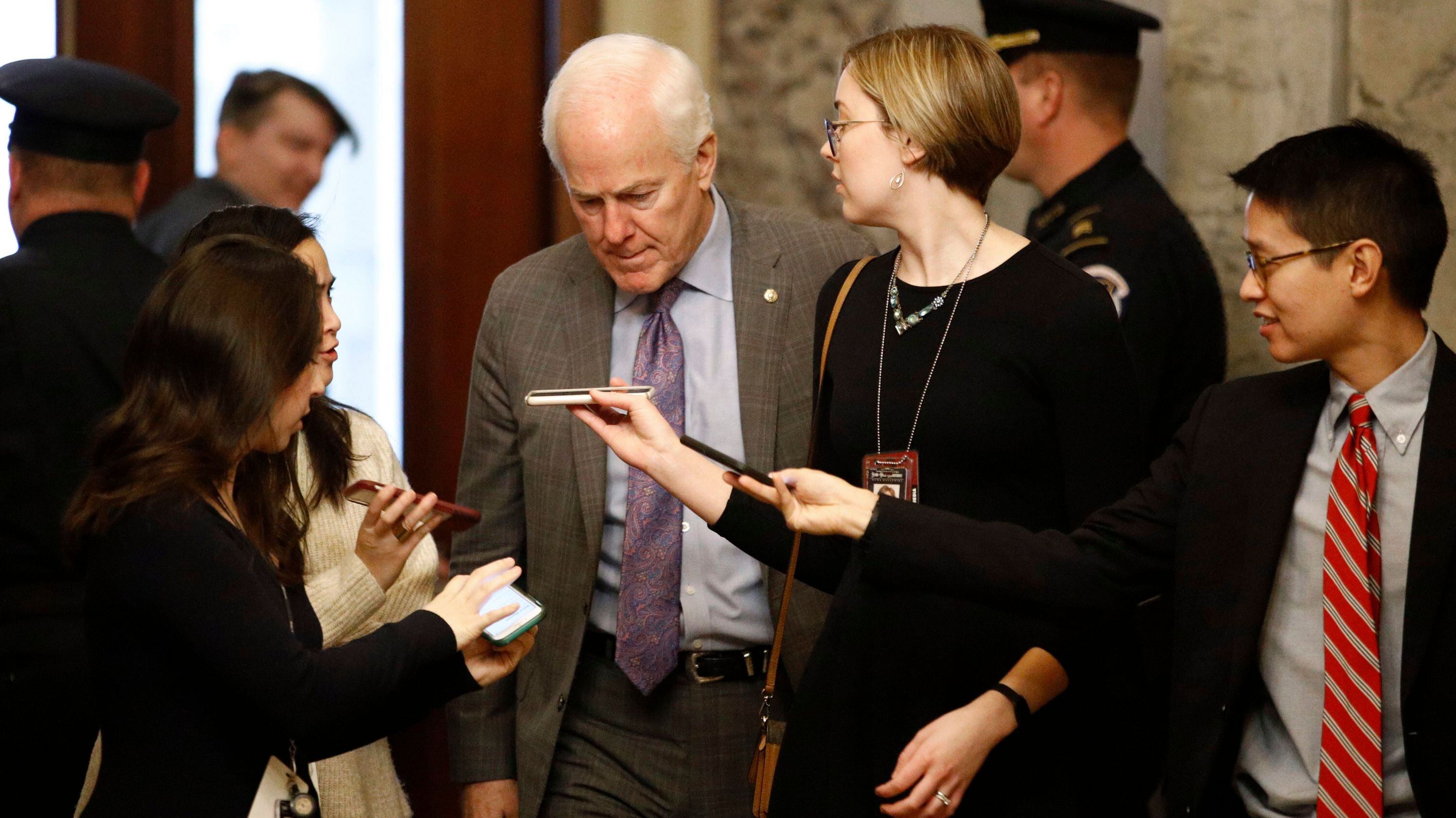
As day six of the impeachment trial headed into the evening hours, Republican Senator John Cornyn of Texas told Cheddar his experience as a judge and lawyer tells him "in every trial, there are sort of twists and turns, things we can't expect to be answered instantaneously, but will be answered by the time the trial will come to an end."
"I expect to give both sides an opportunity to put this in context. We don't even know what this book says," he said, referencing a book written by ex-national security advisor John Bolton. So far, President Trump's lawyers had yet to bring up Bolton's book in today's session, the manuscript of which was leaked over the weekend and left Republican senators reportedly "blindsided."
Sen. Cornyn added that though he believes The New York Times is biased against the Trump administration, he "frankly would like to see the book itself, but I'm sure the parties will have a chance to answer that." Bolton denied that he, his publisher, or his literary agent coordinated with the Times.
The president's defense team, which had 22 hours left in the trial schedule at the start of today's session, focused on what they described as the threat of the increased use of impeachment, questions of due process, and the ability of the president to withhold information from Congress through executive privilege. Across the way, the White House reportedly prepared for a split in the party that could lead to a request for testimony from Bolton.
Republicans did not bring Bolton up in the first five hours of the day. Defense lawyer Jane Raskin did spend time on the president's personal lawyer Rudy Giuliani and warned senators not to be "distracted" by how Democrats portrayed his involvement.
Executive privilege was brought up continuously throughout the afternoon as defense lawyers underscored the president's reasoning for barring aides from testifying in the name of "immunity."
At times, Senators appeared inattentive through the early portions of the day's sessions. Democratic Senators Bernie Sanders of Vermont and Cory Booker of New Jersey had their hands clasped under their chins for much of the time.
Some remained engaged throughout the session, such as Senator Amy Klobuchar of Minnesota, who, at one point, asked her neighbor Senator Chris Coons of Connecticut for what looked like a pocket copy of the U.S. Constitution, which she read from as the former independent counsel who investigated President Bill Clinton, Ken Starr, read from the preamble of the document. Most senators at the center of the debate for adding witnesses took down pages of notes, like Republican Senators Lisa Murkowski of Alaska and Susan Collins of Maine.
As the day wore on, the White House defense team focused on Hunter Biden, whose work in Ukraine was central to Trump's fateful July phone call with Ukraine President Volodymyr Zelensky.
But the reverberations from the John Bolton manuscript remained the day's main storyline with two Republican Senators, Mitt Romney and Susan Collins, saying that the disclosures could spur other Republicans to seek new evidence and hear witnesses, like Bolton.
If that happens, the fast acquittal that Donald Trump was hoping for will be much slower to arrive, and the president could face the prospect of delivering the State of the Union address with the threat of a trial still hanging over his head.
A new analysis reveals that for more than two decades, the West has been the driest it has ever been since 800 A.D. The drought which began in 2000 has brought more devastating wildfires and draining water reserves well below healthy levels. Climate Scientists and Adjunct Associate Research Scientist at Lamont Doherty Earth Observatory at Columbia University,Benjamin Cook, joined Cheddar to discuss more.
Inflation remains hot as the January PPI has increased by 1 percent, twice what analysts had been expecting with a jump of 9.7 over the year. Beth Ann Bovino, the U.S. chief economist, for S&P Global Ratings, joined Cheddar News to discuss the rapid pace of inflation alongside higher wages, predicting the Federal Reserve will act quickly and forcefully this year. "They haven't changed their forecast, yet, that's gonna come out soon. But we expect that a March rate hike is basically pretty much baked in the cake," she said. "We think six rate hikes in total for 2022."
For black history month, Cheddar is highlighting black business leaders who are driving the need for representation forward. On February 10, the U.S. Chamber of Commerce hosted an event called 'Developing the Black-Owned Business Ecosystem.' The virtual event was organized under the lobbying group's two initiatives -- the Equality of Opportunity Initiative, and the Coalition to Back Black Businesses. The event highlighted the developments needed to develop more black-owned businesses in the U.S. Dr. Anthony Wilbon, Dean of the School of Business at Howard University, joined Cheddar News' Closing Bell to discuss his experience as a speaker at the event.
A newly declassified letter by senators Ron Wyden and Martin Heinrich claimed the CIA. has been conducting a Secret Surveillance Program which has been collecting a bulk of data from American citizens. The letter which was written in April of 2021 urges the CIA to come clean about the kind of data it collects and how many Americans have been impacted. According to these two senators, the program did not have the safeguards of congressional oversight.
Art Hogan, Chief Market Strategist at National Securities, joined Cheddar News' Closing Bell, where he says investors are taking a wait-and-see approach when it comes to the situation between Russia and the Ukraine and elaborates on the impact higher oil prices stemming from the conflict would have on the market.
Last week, Senators Ron Wyden of Oregon and Martin Heinrich of New Mexico, Democrats on the Senate Intelligence Committee, wrote a a letter airing concerns that the CIA is collecting the data of American citizens without their consent. The lawmakers fear that the program might be exploiting private data. Morgan Wright, the chief security advisor at cybersecurity firm SentinelOne, joined Cheddar News to discuss the ramifications of the letter. "We don't have all the dots in one place to connect them," said Wright, cautioning against jumping to conclusions.
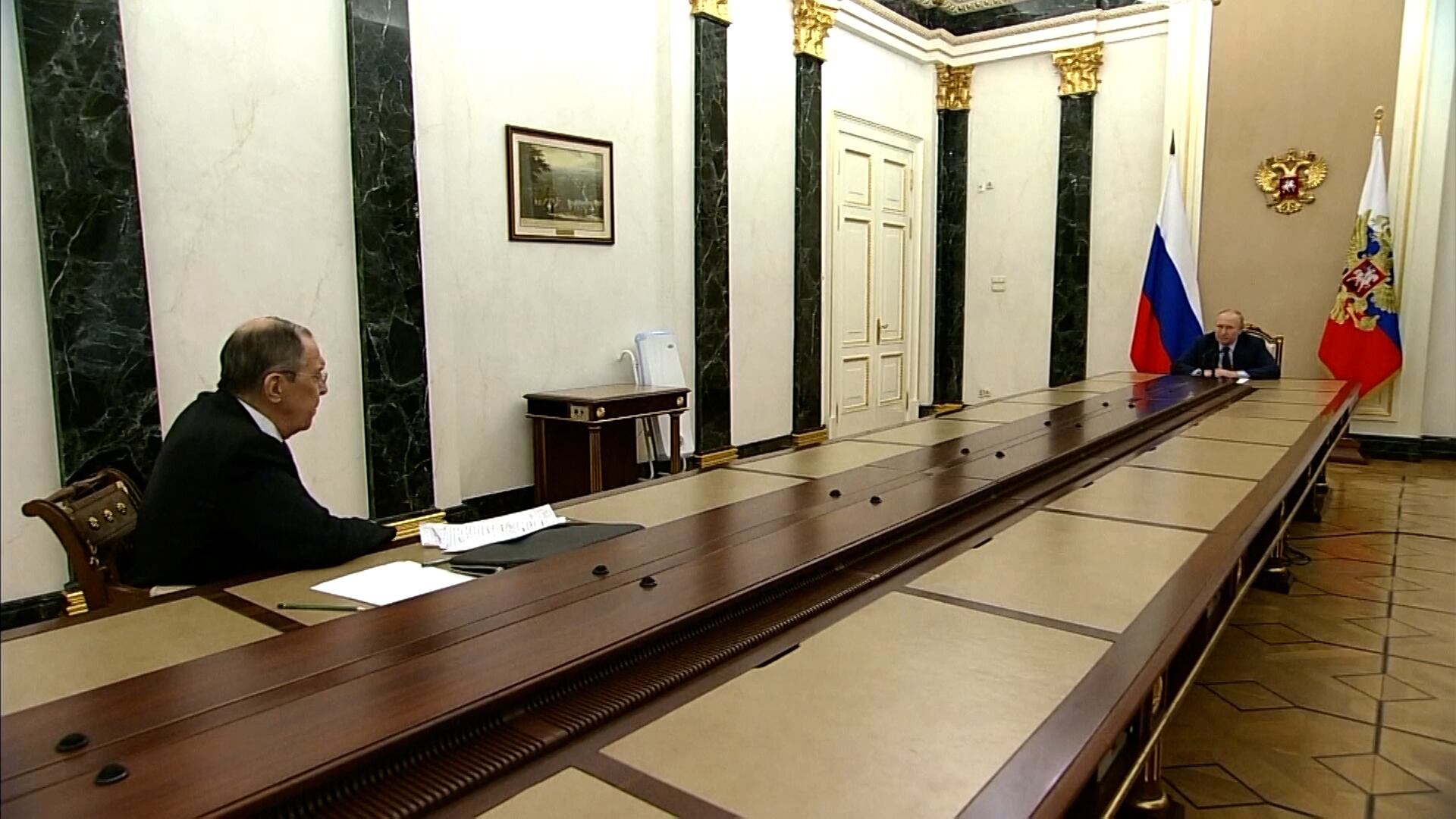
Russian President Vladimir Putin and his Foreign Minister Sergey Lavrov said that diplomacy is still possible, while U.S. officials warn that an attack on Ukraine is imminent. Cheddar News speaks with James Astill, Washington bureau chief of The Economist on the latest developments in Eastern Europe.
As the number of Russian troops rose to 130,000 along its Ukrainian border, hopes for a diplomatic solution remain among world leaders. Jason McMann, head of geopolitical risk analysis at Morning Consult, joined Cheddar News to break down the fluid situation. "We saw signs pointing towards an increase in tensions between Ukraine and Russia, whereas today we're seeing some signs that the Russian government may be willing to continue down a path of diplomatic negotiations to try and find some sort of non-military solution," he said.