GOP Faces Existential Problem: How to Court Millennials Who Dislike Trump
*By Carlo Versano*
Millennials now comprise the largest voting bloc in the country, and the [majority](http://www.pewsocialtrends.org/2019/01/17/generation-z-looks-a-lot-like-millennials-on-key-social-and-political-issues/) of them do not approve of the sitting president.
That poses a problem for the GOP as it seeks to broaden its tent in anticipation of a future when Donald Trump is not on the ballot.
Trump's political calculus to appeal to his base ー an older, whiter, more conservative demographic ー is coming at the expense of his popularity among millennials, said Kristen Soltis Anderson, a Republican pollster and author of "The Selfie Vote: Where Millennials Are Leading America."
But Republicans' struggles to court younger voters predate Trump, and stem from the party being misaligned with younger generations on many cultural or social issues, Anderson said.
For millennials, who may already have been predisposed to favor more socially liberal candidates, the financial crisis became the defining moment that shaped their political ideologies, and many who lived through that event are now more open to the idea of big government and its role as problem-solver and regulator. That is in direct conflict with the long-held message of the GOP: the private sector solves the country's problems and creates wealth.
The irony, as Anderson noted, is that Trump could have been a president behind whom millennials could rally. His background as a non-ideological figure who once held some socially liberal views and came to Washington to shake things up may very well have scored him points with millennial voters, she said. "That kind of disruption could have been appealing to young people."
Instead, Trump took the opposite tack, making a hard right into divisive tribalism that does not appeal to such a diverse generation.
"Millennials like that America has become more diverse," Anderson said. "They're not afraid of social change."
To be fair, Trump's political strategy speaks to a larger problem for Republicans and Democrats alike in wooing moderate voters: the two-party primary system is built in such a way that any successful candidate has to play to the party's base in order to secure the nomination. That base is typically older and more set in its ways ー not leaving a lot of room for a message that would resonate with younger generations.
Anderson believes the GOP still has an opportunity to build a brand as the savvy, tech-forward party making government more efficient and accountable in an era when the internet has made speed, efficiency, and accountability qualities that voters value. But it is not a message that the Trump administration appears interested in advancing.
"That may be a Republican Party of days gone by," she said.
For full interview [click here](https://cheddar.com/videos/how-the-gop-could-win-over-millennial-voters-ahead-of-2020).
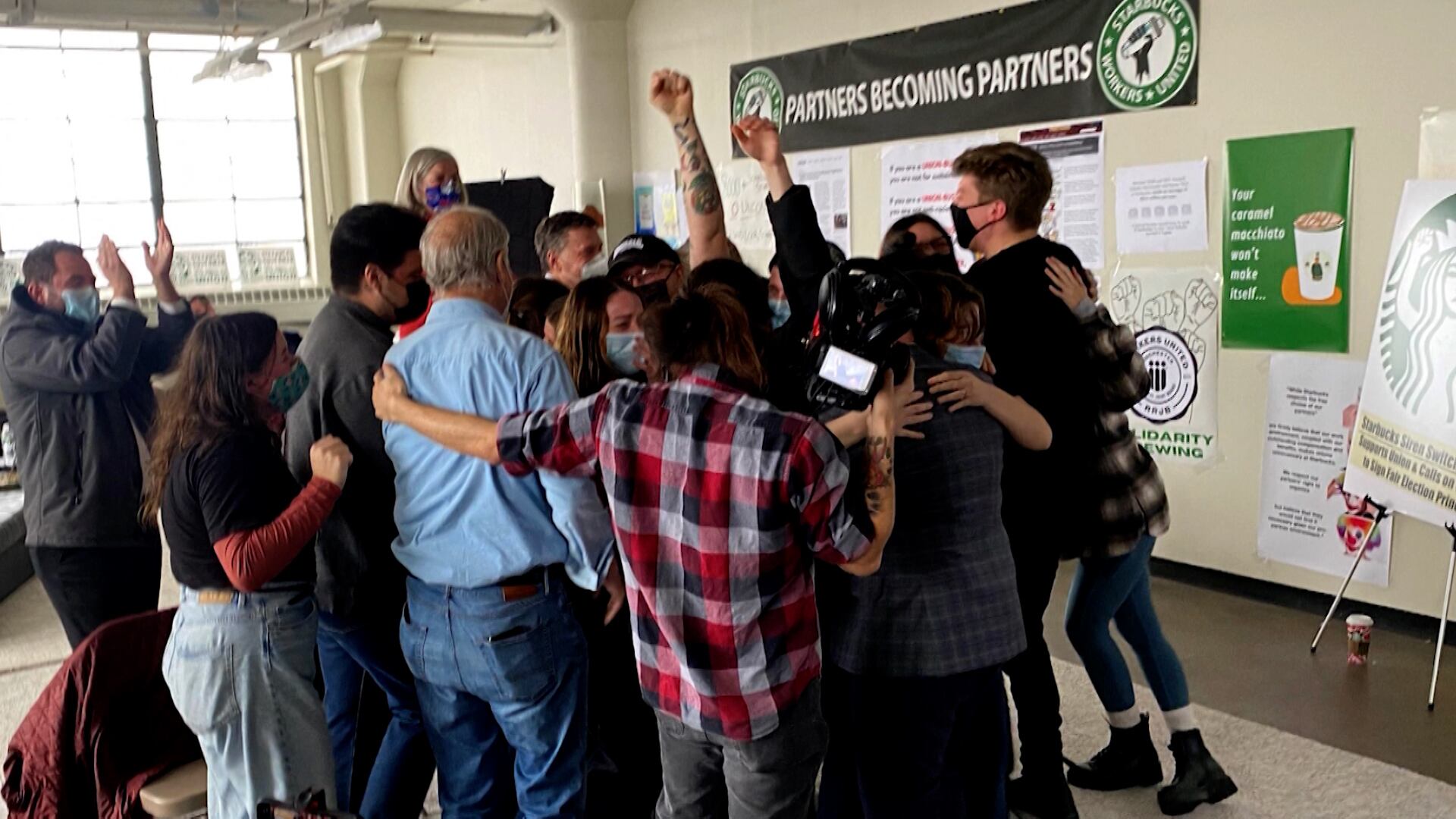
A second Starbucks location in the U.S. has officially voted to unionize. On Monday, the National Labor Relations Board announced workers at the Starbucks store located in the Buffalo, NY suburb of Cheektowaga voted 15-9 in favor of being represented by Workers United, an affiliate of the Service Employees International Union. The New York Times reports votes were tallied in December but remained inconclusive as the union challenged the ballots of several employees it said did not work at the store. A Starbucks spokesperson has said that it may appeal the labor board's decision, which comes as several other Starbucks stores across the country are also pushing to form a union. Danka Dragic, shift supervisor for the second Starbucks store in the country to unionize, joined Cheddar News' Closing Bell to discuss.
Earlier today, Minnesota Republican Representative, Tom Emmer, introduced a bill that would prevent the Federal Reserve from issuing a central bank digital currency directly to American consumers. According to the Congressman from Minnesota, requiring Americans to open a fed account to access a digital currency, would "put the Fed on insidious path akin to China's digital authoritarianism." Rep. Tom Emmer joined Cheddar's None of The Above to discuss more.
Sixteen of the country's most prestigious universities have been hit with a lawsuit claiming those schools illegally conspired to eliminate competitive financial aid offers for students. Just some of the schools mentioned include Yale, Brown, Columbia, UPenn, and Cornell. Author of "Who Gets In and Why" and Professor of practice at Arizona State University, Jeff Selingo, joined Cheddar to discuss more.
Navient, a major student loan collecting company, agreed to cancel $1.7 billion in debt owed by more than 66,000 borrowers across the U.S. and pay over $140 million in other penalties to settle allegations of abusive lending practices.
The recently expired child tax credit helped a wide swathe of families throughout the U.S. Megan Pratz looks into the impact the payments had, and how the end of the program will have a drastic effect on families that could still use the help with child care.
The Supreme Court has stopped the Biden administration from enforcing a requirement that employees at large businesses be vaccinated against COVID-19 or undergo weekly testing and wear a mask on the job.
Buckingham Palace says that Prince Andrew’s honorary military titles and royal patronages have been returned to Queen Elizabeth II with her “approval and agreement.”
Prime Minister Boris Johnson has apologized for attending a garden party during Britain’s first coronavirus lockdown, but brushed aside opposition demands that he resign for breaching the rules his own government had imposed on the nation.