GOP Faces Existential Problem: How to Court Millennials Who Dislike Trump
*By Carlo Versano*
Millennials now comprise the largest voting bloc in the country, and the [majority](http://www.pewsocialtrends.org/2019/01/17/generation-z-looks-a-lot-like-millennials-on-key-social-and-political-issues/) of them do not approve of the sitting president.
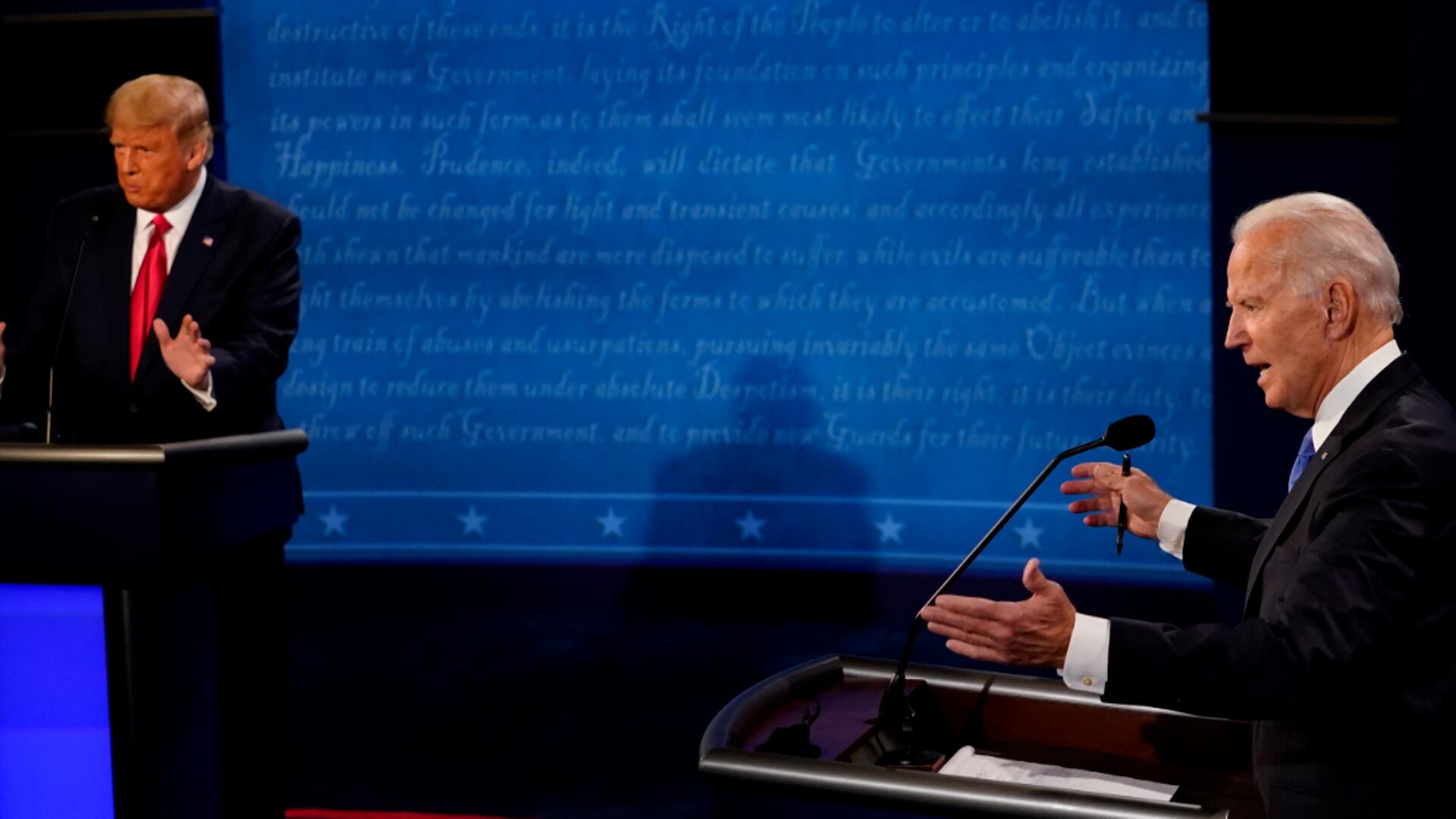
That poses a problem for the GOP as it seeks to broaden its tent in anticipation of a future when Donald Trump is not on the ballot.
Trump's political calculus to appeal to his base ー an older, whiter, more conservative demographic ー is coming at the expense of his popularity among millennials, said Kristen Soltis Anderson, a Republican pollster and author of "The Selfie Vote: Where Millennials Are Leading America."
But Republicans' struggles to court younger voters predate Trump, and stem from the party being misaligned with younger generations on many cultural or social issues, Anderson said.
For millennials, who may already have been predisposed to favor more socially liberal candidates, the financial crisis became the defining moment that shaped their political ideologies, and many who lived through that event are now more open to the idea of big government and its role as problem-solver and regulator. That is in direct conflict with the long-held message of the GOP: the private sector solves the country's problems and creates wealth.
The irony, as Anderson noted, is that Trump could have been a president behind whom millennials could rally. His background as a non-ideological figure who once held some socially liberal views and came to Washington to shake things up may very well have scored him points with millennial voters, she said. "That kind of disruption could have been appealing to young people."
Instead, Trump took the opposite tack, making a hard right into divisive tribalism that does not appeal to such a diverse generation.
"Millennials like that America has become more diverse," Anderson said. "They're not afraid of social change."
To be fair, Trump's political strategy speaks to a larger problem for Republicans and Democrats alike in wooing moderate voters: the two-party primary system is built in such a way that any successful candidate has to play to the party's base in order to secure the nomination. That base is typically older and more set in its ways ー not leaving a lot of room for a message that would resonate with younger generations.
Anderson believes the GOP still has an opportunity to build a brand as the savvy, tech-forward party making government more efficient and accountable in an era when the internet has made speed, efficiency, and accountability qualities that voters value. But it is not a message that the Trump administration appears interested in advancing.
"That may be a Republican Party of days gone by," she said.
For full interview [click here](https://cheddar.com/videos/how-the-gop-could-win-over-millennial-voters-ahead-of-2020).
Women's March ATX rally, Saturday, Oct., 2, 2021, at the Texas State Capitol in Austin, Texas. An expected decision by the U.S. Supreme Court in the coming year to severely restrict abortion rights or overturn Roe v. Wade entirely is setting off a renewed round of abortion battles in state legislatures. (AP Photo/Stephen Spillman, File)
Inflation in the U.S. is only getting hotter. The 12-month inflation rate for December 2021 was the highest in nearly 40 years - continuing the trend seen at the close of 2021.
The Consumer Price Index increased 7% in the 12-month period ending in December, marking the fastest increase since 1982. Scott Wren, Senior Global Market Strategist at Wells Fargo Investment Institute, joined Cheddar's Movers for more.
If President Biden runs for re-election in 2024, he may not have anyone to debate. The Republican National Committee sent a letter to the commission on presidential debates, saying the RNC will require candidates to pledge not to participate in those general election debates. Paris Dennard, RNC national spokesperson, joins Cheddar News to discuss.
Student loan collection company Navient agreed to cancel $1.7 billion in debt and paid more than $140 million in other penalties to settle a lawsuit over abusive lending practices. Josh Shapiro, the attorney general of Pennsylvania who led negotiations in the settlement, joined Cheddar to go over the details of the company's predatory lending. "What Navient would do is charge [borrowers] these exorbitantly high rates, even though they knew people couldn't pay them or they would likely default on them," he explained.
The January 6 committee has subpoenaed four tech giants for more information on what they did and didn't do leading up to last year's deadly Capitol insurrection. Google, Facebook, Twitter, and Reddit were asked to assist the investigation in August, but the committee says their responses have been 'inadequate.' Craig Timberg, a national technology reporter at the Washington Post, joins Cheddar News' Closing Bell for more details about the subpoenas, why this is happening now, and how it might impact social media companies moving forward.
With the Australian Open set to begin on Monday, Novak Djokovic is once again being threatened with deportation from Australia after his visa was briefly reinstated and revoked again over alleged discrepancies. Djokovic’s team will sit for an Immigration hearing on Saturday.
Makena Kelly, politics reporter at The Verge, joins Cheddar News to discuss what's next for net neutrality as Biden's other nominee for the FCC, Gigi Sohn, awaits votes from the committee and Senate.
Jewell Jackson McCabe, chair of the Keep Love Alive Campaign and founder of the National Coalition of 100 Black Women, and Marvin Owens, chief engagement officer of Impact Shares and former senior director of Economic Development at the NAACP, join Cheddar News to reflect on racial issues still prevalent in America.
Hagar Chemali, Host of 'Oh My World' on Youtube and Former Spokesperson for the U.S. mission to the UN, joined Wake Up With Cheddar to share her expert insight into what the future of diplomacy could look like as the Russia-Ukraine crisis deepens.