By Mary Clare Jalonick and Lisa Mascaro
Senate Republicans on Friday blocked creation of a bipartisan panel to study the Jan. 6 attack on the Capitol, turning aside the independent investigation in a show of party loyalty to former President Donald Trump and an effort to shift the political focus away from the violent insurrection by his GOP supporters.
The Senate vote was 54-35 — six short of the 60 votes needed to take up a House-passed bill that would have formed a 10-member commission evenly split between the two parties. It came a day after emotional appeals from police who fought with the rioters, the family of an officer who died afterward and lawmakers in both parties who fled Capitol chambers as the rioters broke in.
Six Republicans voted with Democrats to move forward, and eleven senators missed the rare Friday vote, some of whom said they had scheduling conflicts. The vote is likely to mean that questions about who should bear responsibility for the attacks will continue to be filtered through a partisan lens rather than addressed by an independent panel modeled after the commission that investigated the Sept. 11, 2001, terrorist attacks.
Though the Jan. 6 commission bill passed the House earlier this month with the support of almost three dozen Republicans, most GOP senators said they believe the commission would eventually be used against them politically. And Trump, who still has a firm hold on the party, has called it a “Democrat trap.”
Speaking to his Republican colleagues, Senate Democratic leader Chuck Schumer said after the vote they were “trying to sweep the horrors of that day under the rug” out of loyalty to Trump.
He left open the possibility of another vote in the future on establishing a bipartisan commission, declaring, “The events of Jan. 6 will be investigated."
Friday's vote was emblematic of the profound mistrust between the two parties since the siege, especially among Republicans, as some in the party have downplayed the violence and defended the rioters who supported Trump and his false insistence that the election was stolen from him.
The attack was the worst on the Capitol in 200 years and interrupted the certification of Democrat Joe Biden’s win over Trump. The protesters constructed a mock gallows in front of the Capitol and called for the hanging of Vice President Mike Pence, who was overseeing the certification of the presidential vote. Lawmakers hid on the floor of the House as they tried to break in, and senators evacuated their chamber mere minutes before it was ransacked.
Four of the rioters died that day, and Capitol Police Officer Brian Sicknick collapsed and died afterward of what authorities said were natural causes. Dozens of police officers were wounded, some with permanent injuries, and two police officers took their own lives in the days after the riots.
While initially saying he was open to the idea of the commission, Senate Republican leader Mitch McConnell turned firmly against it in recent days. He has said he believes the panel's investigation would be partisan despite the even split among party members.
McConnell, who once said Trump was responsible for provoking the mob attack on the Capitol, said of Democrats, “They’d like to continue to litigate the former president, into the future.”
Still, six in his caucus defied him, arguing that an independent look is needed. A seventh, Pat Toomey of Pennsylvania, missed the vote because of a family commitment but would have also voted to move forward with the legislation.
Alaska Sen. Lisa Murkowski said Thursday evening that she needs to know more about what happened that day and why.
“Truth is hard stuff, but we’ve got a responsibility to it,” she told reporters. “We just can’t pretend that nothing bad happened, or that people just got too excitable. Something bad happened. And it’s important to lay that out.”
Of her colleagues opposing the commission, Murkowski said some are concerned that “we don’t want to rock the boat.”
GOP opposition to the bipartisan panel has revived Democratic pressure to do away with the filibuster, a time-honored Senate tradition that requires a vote by 60 of the 100 senators to cut off debate and advance a bill. With the Senate evenly split 50-50, Democrats need support of 10 Republicans to move to the commission bill.
The Republicans' political arguments over the violent siege — which is still raw for many in the Capitol, almost five months later — have frustrated not only Democrats and some of their Republican colleagues but also those who fought off the rioters. Sicknick’s mother, girlfriend and two police officers who battled the rioters alongside him went office to office and asked Republicans to support the commission.
Michael Fanone, a Metropolitan Police Department officer who responded to the attack, joined Sicknick's family on Capitol Hill Thursday. In between meetings with Republican senators, he said a commission is “necessary for us to heal as a nation from the trauma that we all experienced that day.” Fanone has described being dragged down the Capitol steps by rioters who shocked him with a stun gun and beat him.
Sandra Garza, the partner of Capitol Police Officer Brian Sicknick, who collapsed and died after battling the rioters, said of the Republican senators, “You know they are here today and with their families and comfortable because of the actions of law enforcement that day."
“So I don’t understand why they would resist getting to the bottom of what happened that day and fully understanding how to prevent it. Just boggles my mind,” she said.
Video of the rioting shows two men spraying Sicknick and another officer with a chemical, but the Washington medical examiner said he suffered a stroke and died from natural causes.
Garza attended the meetings with Sicknick’s mother, Gladys Sicknick. In a statement Wednesday, Mrs. Sicknick suggested the opponents of the commission "visit my son’s grave in Arlington National Cemetery and, while there, think about what their hurtful decisions will do to those officers who will be there for them going forward.”
Many Democrats are warning that if Republicans are willing to use the filibuster to stop an arguably popular measure, it shows the limits of trying to broker compromises, particularly on bills related to election reforms or other aspects of the Democrats' agenda.
For now, though, Democrats don't have the votes to change the rule. West Virginia Sen. Joe Manchin and Arizona Sen. Kyrsten Sinema, both moderate Democrats, have said they want to preserve the filibuster.
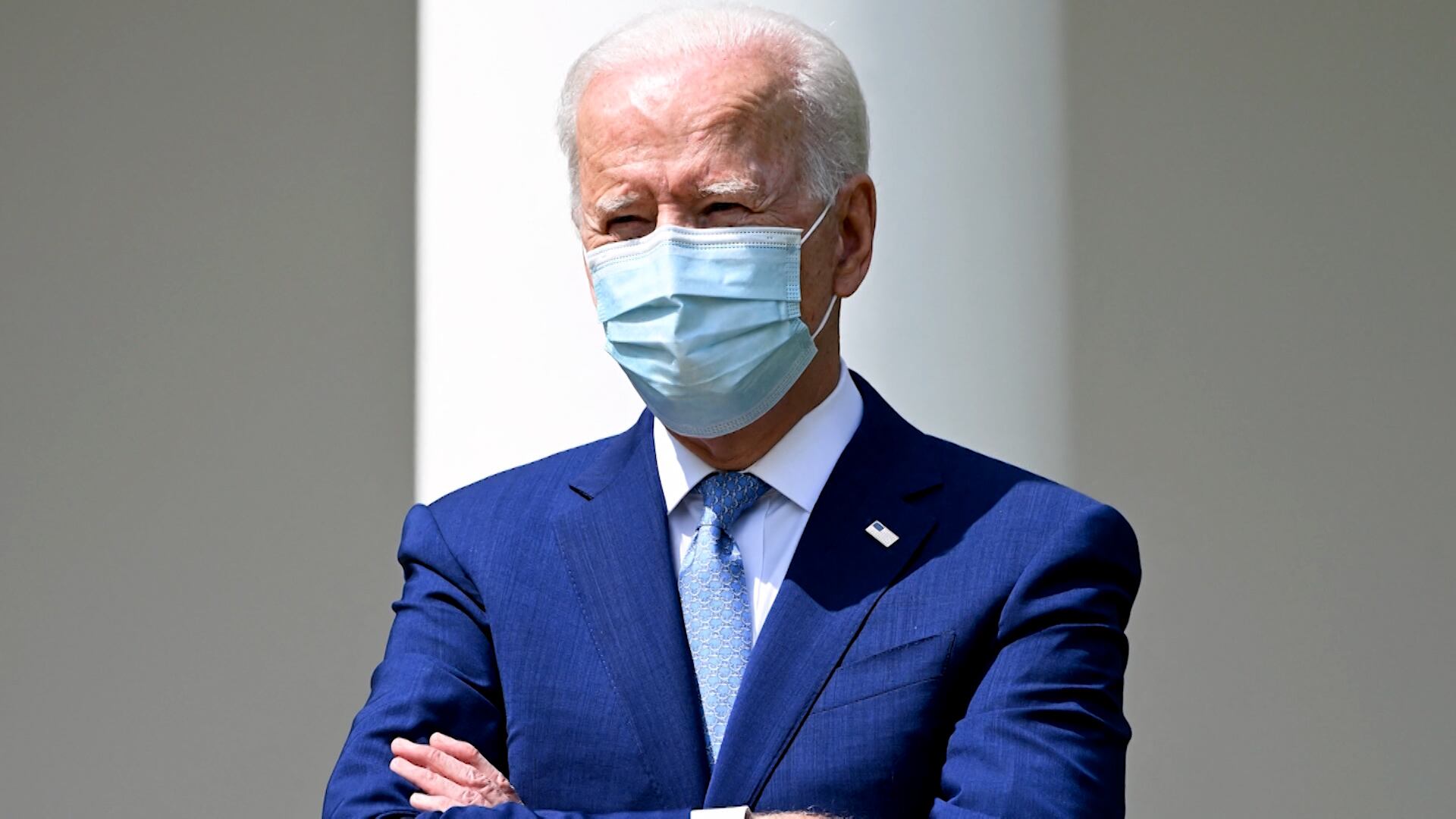
Biden, asked about the commission at a stop in Cleveland, said Thursday, “I can’t imagine anyone voting against” it.
___
Associated Press writers Alan Fram, Colleen Long and Padmananda Rama contributed to this report.
Updated on May 28, 2021, at 2:09 p.m. ET with with Schumer, Toomey, additional background.