Google Street View Gives a Glimpse into Power of A.I.
The power of A.I. can reach deeper than just recommending which show to binge on Netflix. It can also be used to analyze millions of images to predict things like income, political leanings, and buying habits. Steve Lohr, Technology and Economics Reporter at The New York Times, joined us to discuss artificial intelligence's full potential when it comes to predictive analytics.
Lohr's recent piece in The New York Times highlights a Stanford study that used 50 million images from Google Street View to give a glimpse of A.I.'s ability to gather data. He explains that researchers identified 22 million cars to draw conclusions about information such as which political candidate a particular zip code favored. The project took just 2 weeks to classify all the cars. In his piece, Lohr points out that without the help of AI, it would take human experts over 15 years to accomplish that task.
This type of data collection raises concerns over privacy and issues of data access. He says most of predictive analysis has been used for commercial purposes and selling products. The use of data becomes scary when it becomes integrated into decisions such as hiring, he says, because the mistakes become more costly.
U.S. stocks closed Thursday at session lows to end the month of March, posting their worst quarter since the pandemic crash of 2020. However, March was the first positive of 2022. MJP Wealth Advisors President Brian Vendig joined Cheddar News' Closing Bell to discuss.
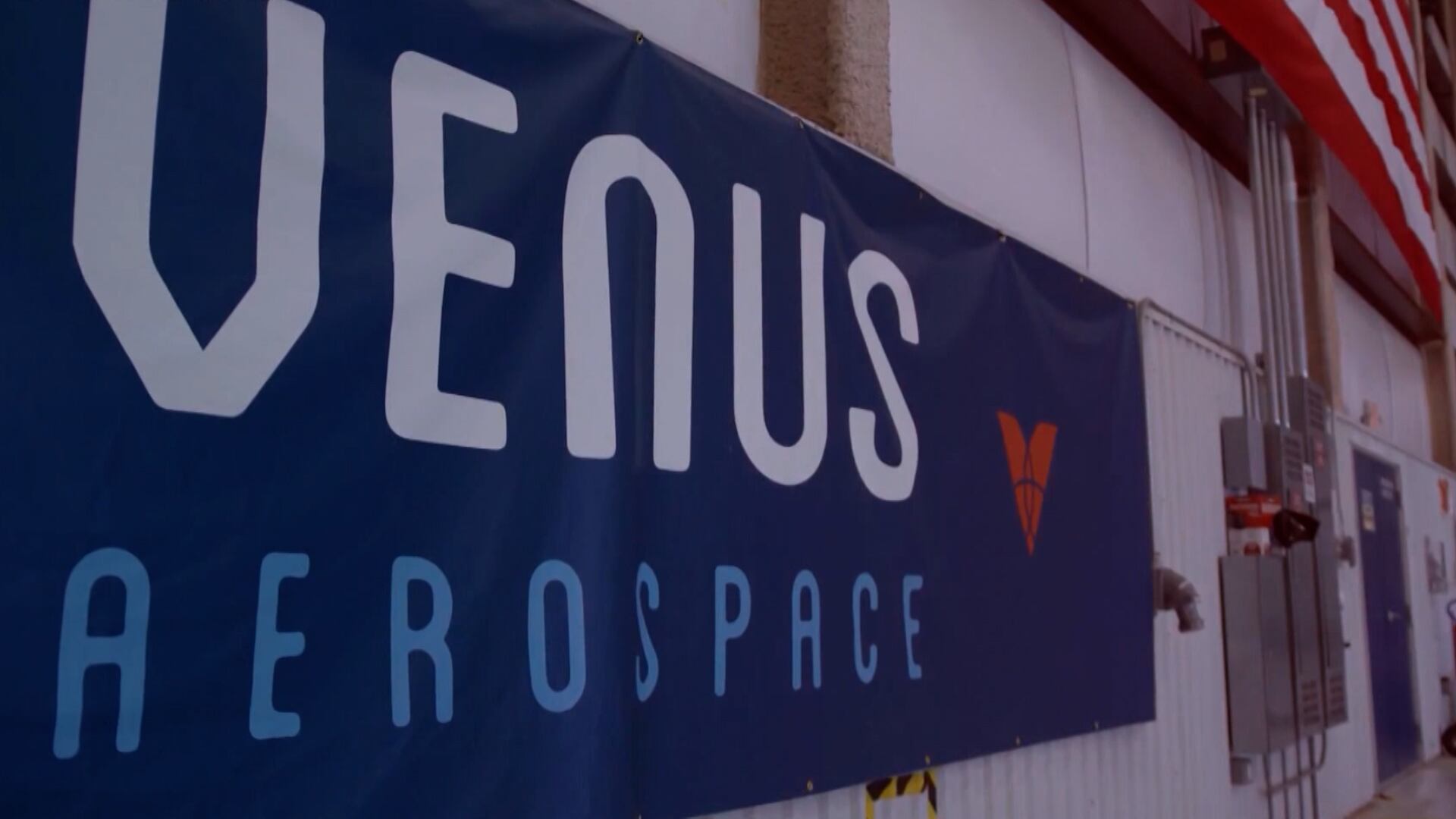
Venus Aerospace is joining the space tourism race in a nonconventional way. Instead of taking passengers to Mars or the Moon, the startup’s goal is to take passengers around the Earth — in less than an hour. Sarah "Sassie" Duggleby, CEO and co-founder, joined Cheddar News to talk about her company's innovative approach to travel and when she expects to carry passengers. "We would hope in the next five years we'll have our plane fully developed and then start entering into all the FAA certifications and qualifications in order to get to commercial flights," she said.
Ride-hailing service Uber has unveiled its plans to become a travel super app, which will include options for users to make plane and train arrangements directly.
If you've sold or exchanged any crypto in 2021, the IRS wants to know. Henry Yoshida, Co-founder & CEO, OF Rocket Dollar joined Cheddar's Opening Bell to discuss which crypto activities are taxable and how to best spend your tax refund.
The $2 trillion crypto market will soon be subject to much greater governmental oversight. SEC Chair Gary Gensler announced this week that his agency plans to register and regulate digital currencies. He also revealed that the U.S. will focus on three different areas - crypto platforms, stablecoins, and crypto tokens. Jarrod Loadholt, partner at the law firm Ice Miller, LLP, joined Cheddar News' Closing Bell to discuss.
Blueprints and paper maps might soon be a thing of the past as more cities potentially turn to digital twin technology to create virtual models of urban environments. Michael Jansen, CEO of the digital twin platform CityZenith, broke down how this technology works, what it's being used for, and how it might be a game-changer for the future of urban planning.
"Our focus at CityZenith is on helping cities to decarbonize," Jansen said. "We joined the World Economic Forum recently to work in their net-zero carbon cities program. So what digital twins can do here with cities is aggregate all this complex data around that issue: transport, building emissions, etc., and scenario-ize how they interrelate and then how to optimize the entire process of decarbonizing, which is itself complex."