*By Justin Chermol and Carlo Versano*
When General Motors announced a major restructuring that would result in mass layoffs and plant closures, the American automaker managed to do what few others have: unite the left and right in anger and disappointment.
Rep. Debbie Dingell (D-MI) represents a suburban Detroit district that will be affected by the reductions. She told Cheddar in an interview Wednesday that she was surprised by the timing, given that the auto industry is cyclical. Both Democrats and Republicans think "they are the worst corporation in this country."
"They have no fans right now," she said.
GM's newest strategy is twofold: the company is shrinking its sedan footprint in response to market conditions and consumer tastes, as well as investing in an electric, self-driving future it's terming "Zero Crashes, Zero Emissions, Zero Congestion."
Ford ($F), GM's main American rival, announced in April that it will scale about 90 percent of its auto production to trucks, utilities, and commercial vehicles by 2020. The company went on to explain that it would discontinue four of its sedan models and invest more in autonomous technology.
Back in June, in a cautionary note, GM [wrote](https://assets.bwbx.io/documents/users/iqjWHBFdfxIU/rJBrNbApznVU/v0) to the Department of Commerce, warning increased tariffs could lead to a "smaller GM."
Despite its foresight, GM didn't cite tariffs as a reason for the layoffs in its statement Monday. Instead, CEO Mary Barra said almost the opposite ー that the economy was so strong that it would be preferable to make changes now rather than trying to restructure during a slowdown. Automakers learned that lesson the hard way during the financial crisis.
Dingell said that while she indicated to President Trump that she would support a "NAFTA 2.0" trade bill, she has changed her mind in the wake of GM's restructuring.
"I will not support a trade bill that lets that company put any more jobs in Mexico," she said. "We need to keep those jobs here in the United States."
After the announcement, [President Trump](https://twitter.com/realDonaldTrump/status/1067494680416407552) and Prime Minister [Justin Trudeau](https://twitter.com/JustinTrudeau/status/1067082236686753792?ref_src=twsrc%5Etfw%7Ctwcamp%5Etweetembed%7Ctwterm%5E1067082236686753792&ref_url=https%3A%2F%2Fwww.cnn.com%2F2018%2F11%2F26%2Fbusiness%2Fgm-oshawa-plant%2Findex.html) both took to Twitter to call reductions in the U.S. and Canada a massive "disappointment." Since then, the two leaders have spoken on the phone to discuss the issue.
While pundits and industry analysts debate whether the era of the personally-owned car is coming to an end ー and perhaps where American automakers fall in the new mobility hierarchy ー the effects of GM's decisions will still weigh heavily on local communities that depend on it as the anchor business. And that, in turn, makes it a political issue for the president. President Trump dispatched his chief economic adviser Larry Kudlow to meet with Barra.
As for the future of the auto-industry, Rep. Dingell said she understands the harsh realities her constituents are facing: "It's no longer a car industry, its a mobility industry. And the mobility industry is changing."
"The model is going to change but you are still going to be building vehicles and there will be new jobs," she said.
President Trump appeared in Wisconsin on Thursday to praise Foxconn for its decision to build a manufacturing plant in the state. But many Wisconsin taxpayers are wary of the $4 billion in tax incentives that Gov. Scott Walker engineered to woo the Taiwan-based company. This comes just days after the president criticized Wisconsin-based Harley Davidson for moving some of its production abroad. "These new taxes on imports ... are driving other businesses away," says Eric Boehm, reporter at Reason.com.
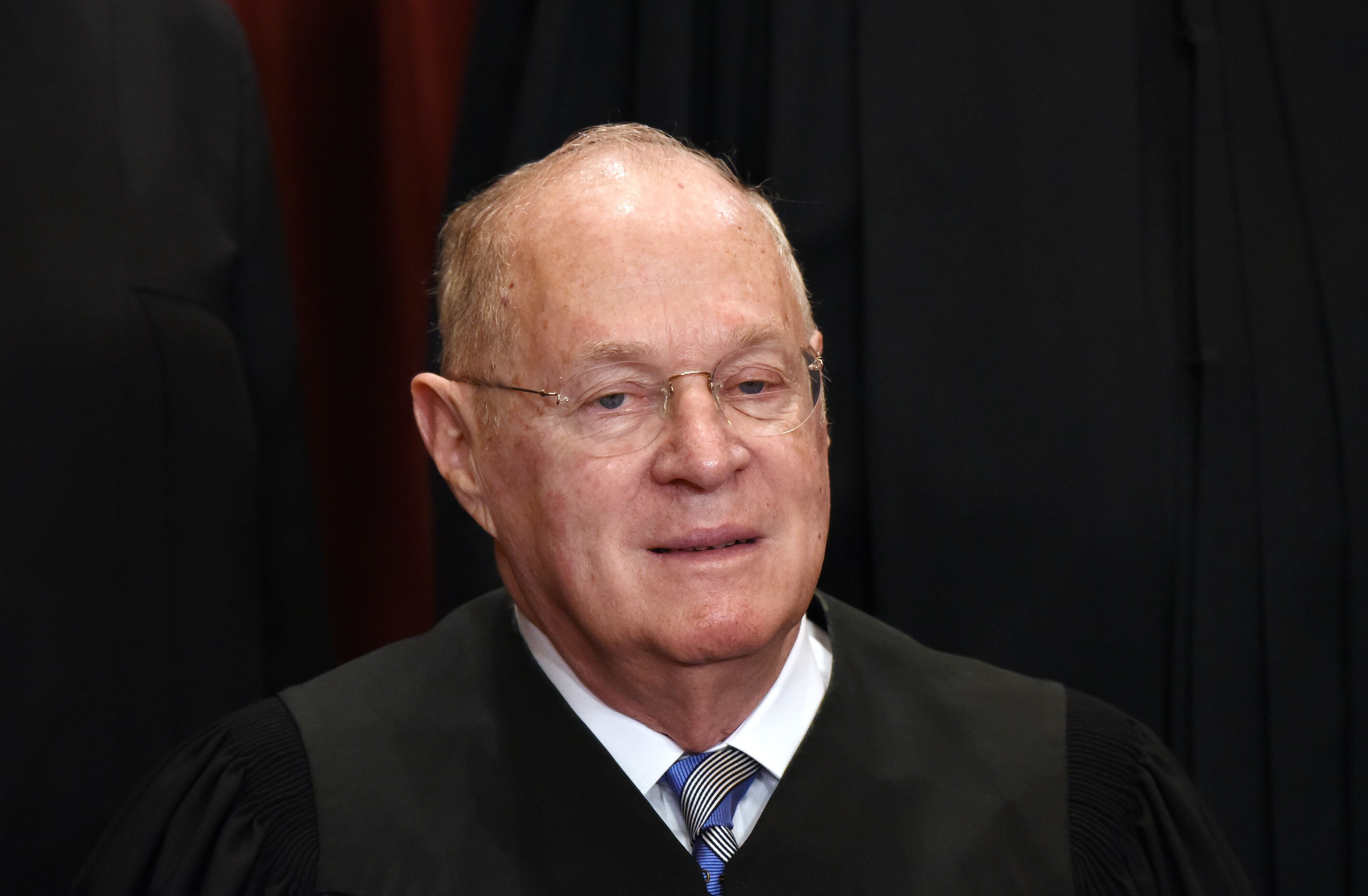
If Republicans are able to force a vote before November on whoever is nominated to fill Justice Anthony Kennedy's seat on the Supreme Court, it still may not affect midterm election results all that much. That's according to Kyle Kondik, managing editor at Sabato’s Crystal Ball. “Frankly, if the seat was open, it may be more of a motivator for Republicans to show up.”
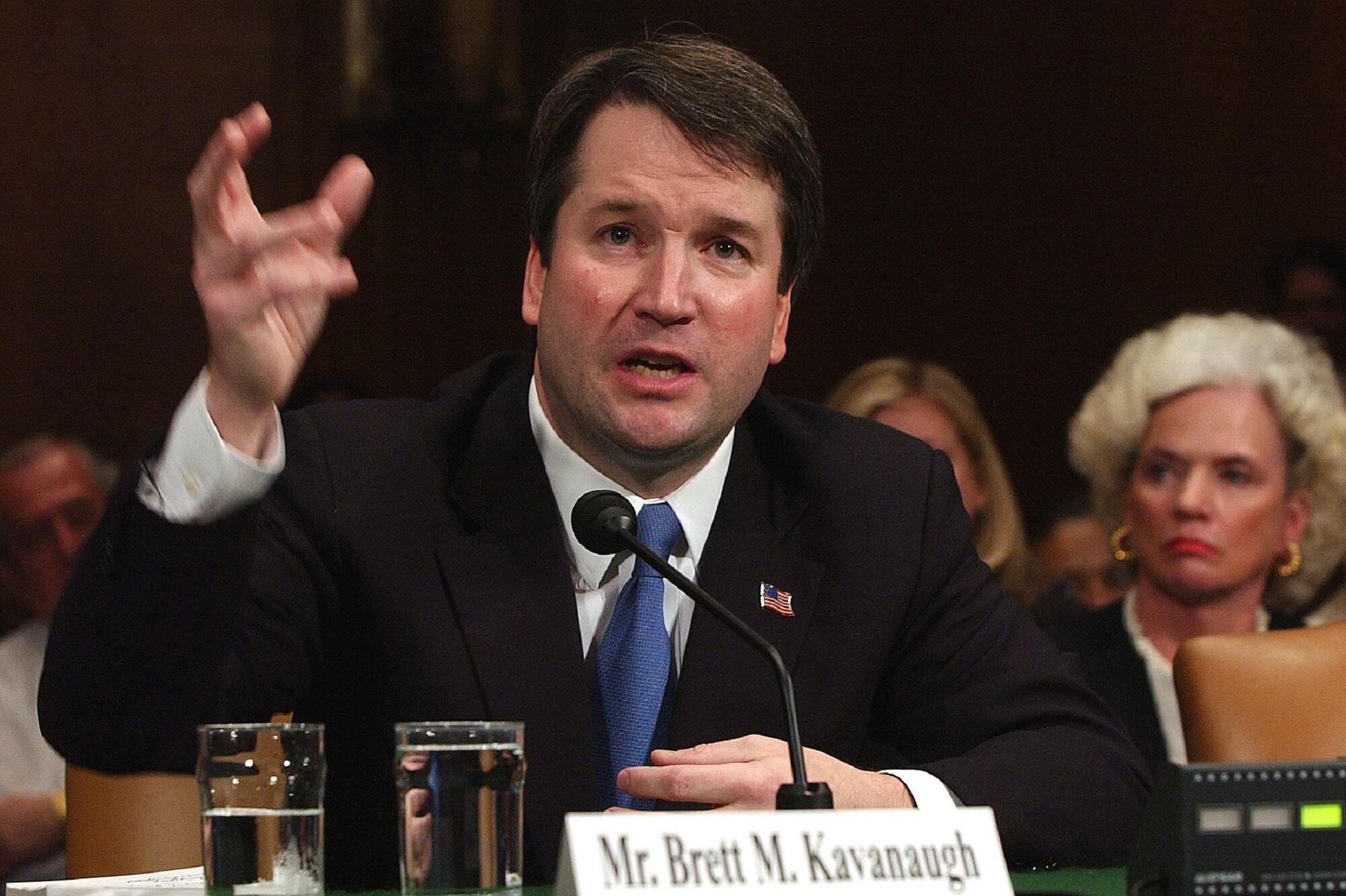
The U.S. District Appeals Court Judge has a history of conservative, pro-business rulings and has “Republican partisan chops,” according to Heather Timmons, White House correspondent for Quartz. And while Democrats might try to delay confirming any nomination of another conservative judge, Timmons said “what they can do about it is pretty minimal.”
The White House announced plans to ease restrictions on Chinese investment in U.S. technology companies on Wednesday. The Trump administration won't block companies with 25 percent or more of Chinese ownership from buying into the U.S. tech sector. Markets rebounded on the news.
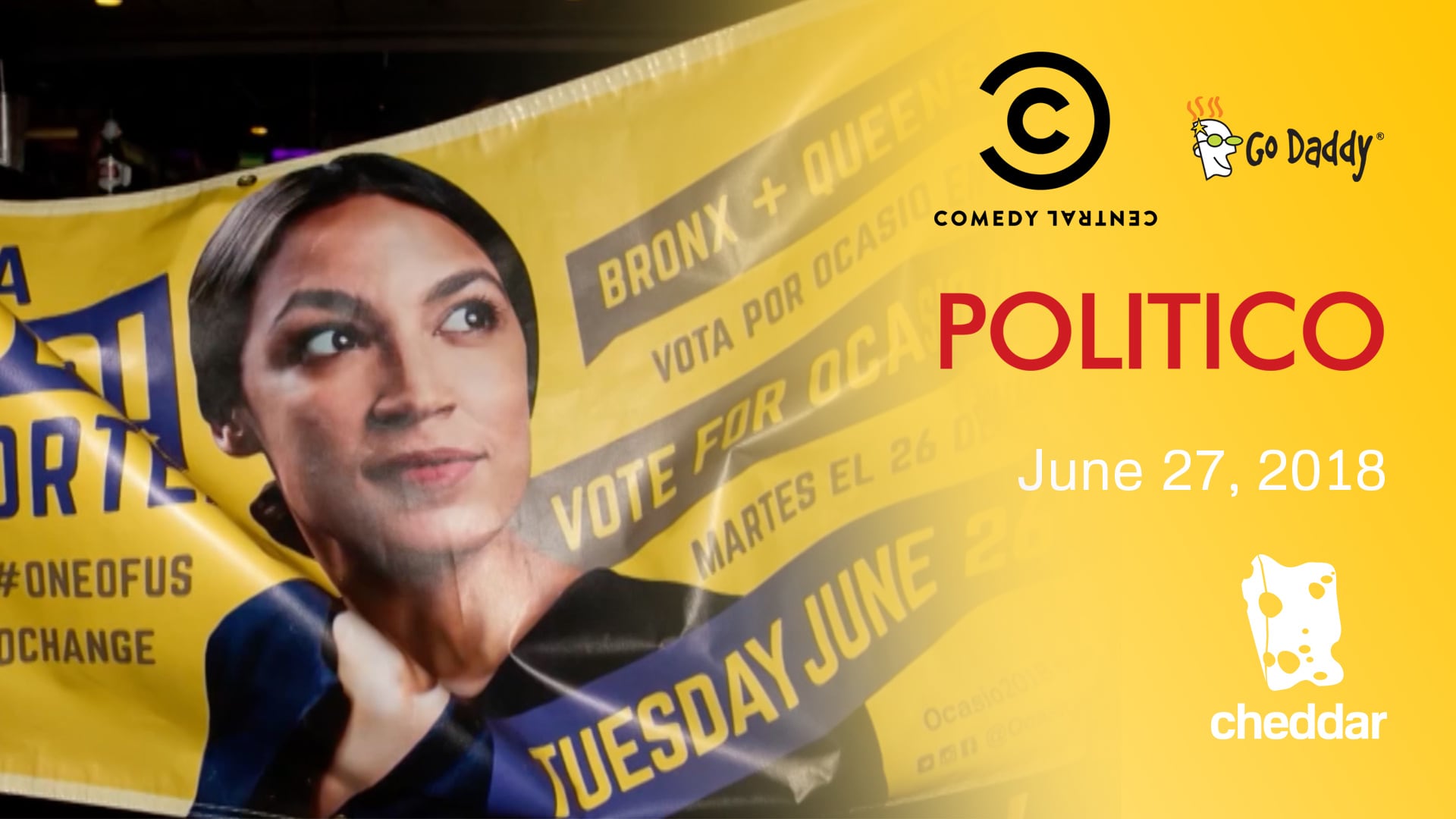
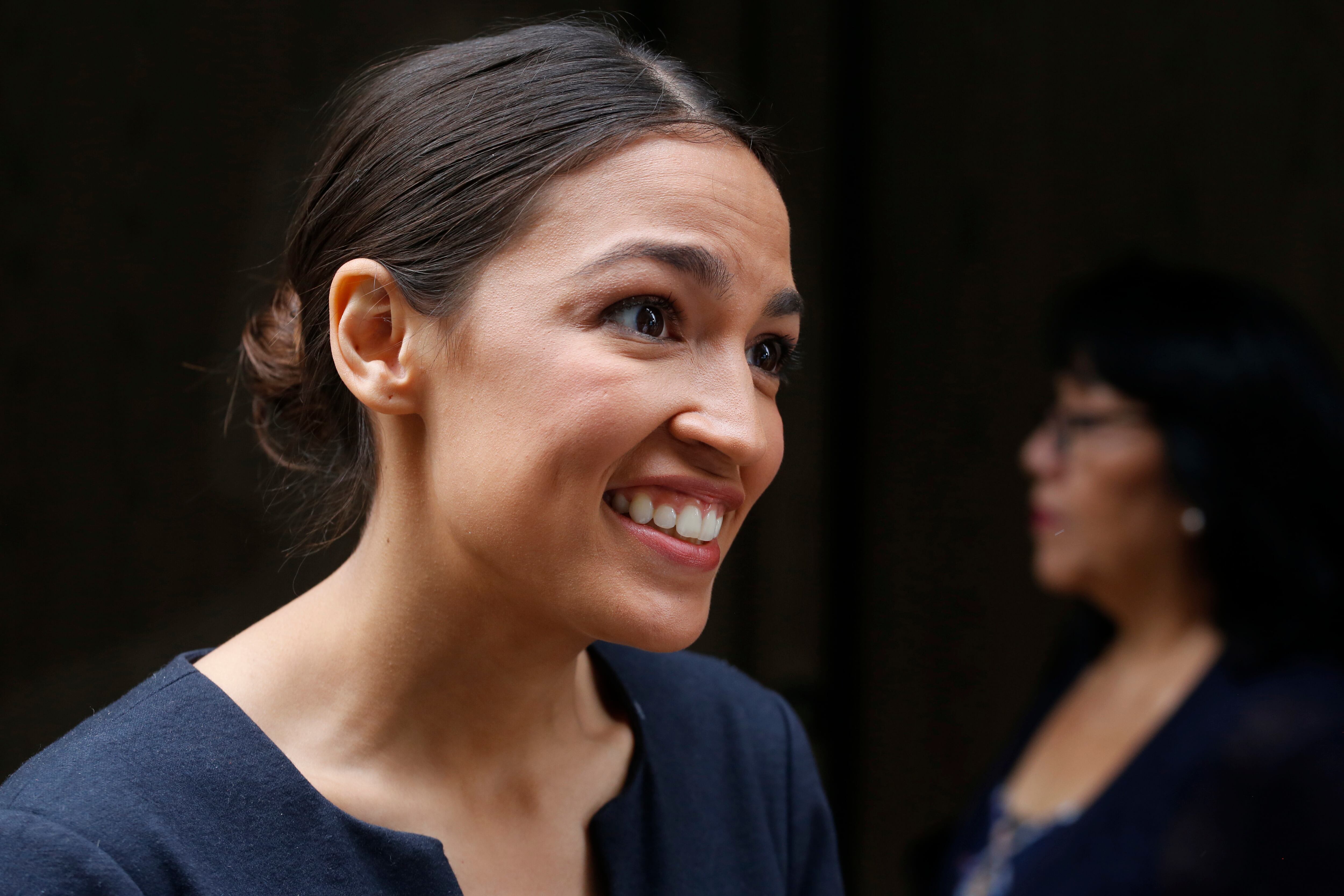
The results are in from Tuesday's primary elections. Zach Montellaro, campaign reporter at Politico, joins Cheddar to weigh in on the shocking political upset in New York's 14th district. Political newcomer Alexandria Ocasio-Cortez defeated Rep. Joe Crowley, the fourth most powerful Democrat in the House.
Plus, Conagra Brands is buying Pinnacle Foods in a cash-and-stock deal worth $10.9 billion. The deal will create the second largest frozen food company in the U.S., just behind Nestle. Conagra owns Healthy Choice and Pinnacle owns Birds Eye.
Alexandria Ocasio-Cortez unseated the incumbent Democratic Congressman Joe Crowley in the primary for New York's 14th District Tuesday. The 28-year-old progressive's victory came as a surprise to many, including President Trump who tweeted this was a “big one that nobody saw coming.”
The web hosting company, which in most cases supports a "free and open internet," made the "incredibly difficult" decision to pull the white supremacist organization's site last year. CEO Scott Wagner said it was a rare instance of content that promotes violence. GoDaddy ousted that website in the immediate aftermath of violence in Charlottesville, Vir.
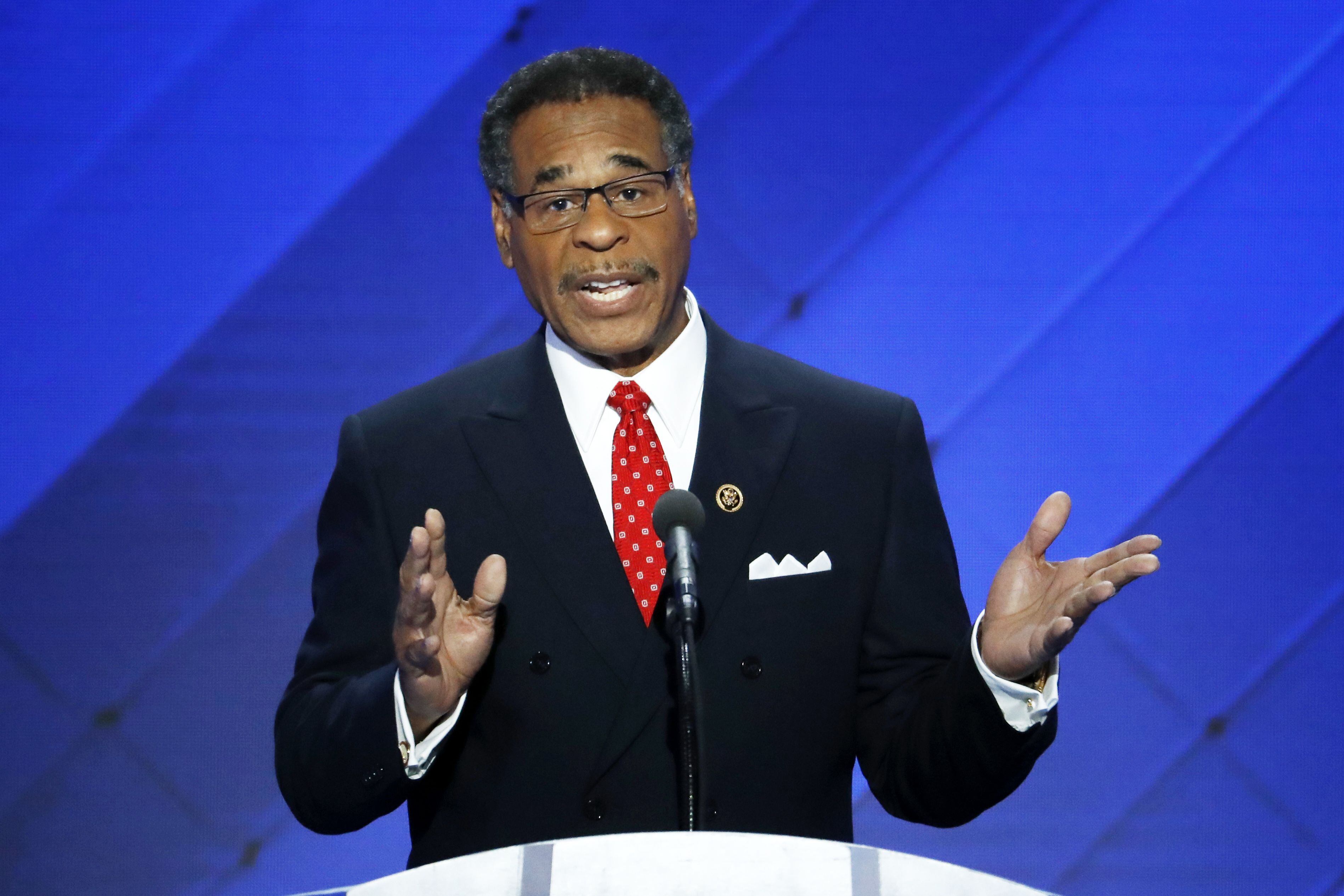
President Trump attacked Harley-Davidson after the company decided to shift some of its motorcycle production overseas to avoid EU tariffs. Congressman Emanuel Cleaver (D-MO) gives us his take on Trump's comments.
The Missouri congressman and former Kansas City mayor said that Harley-Davidson's decision to move some of its motorcycle production abroad is just the first sign of a slowdown in the American economy and that President Trump's tariffs are to blame.
Instagram is now estimated at over $100 billion in value. Venmo rolls out an actual plastic debit card with Mastercard. The FDA approves its first marijuana-derived medication. The newest member of the Bush family is Sully the service dog. The yellow lab has been assigned to President George H.W. Bush, who is 94, and recovering from recent hospitalizations.
A UK court ruled that the company had made "substantial changes" to how it runs its business and is now "fit and proper" to operate in one of its largest markets. The court renewed Uber's license for 15 months, subject to strict conditions. London's transport authority refused to renew Uber's license in September, citing its working conditions and lack of strong safety measures.