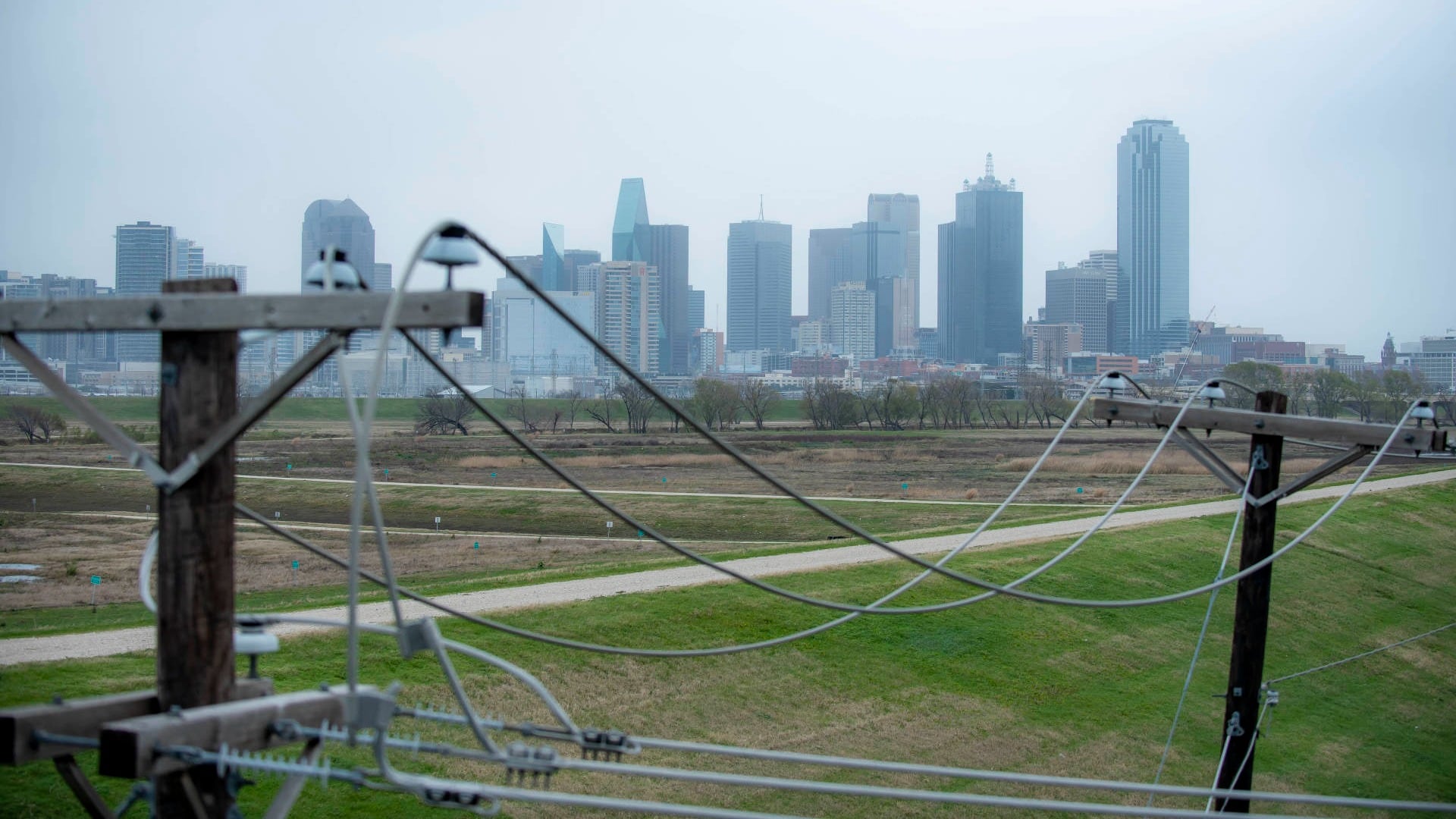
The Dallas skyline is visible from Sylvan Avenue in Dallas, Texas on Thursday, December 22, 2022. (Emil T. Lippe for The Washington Post via Getty Images)
Ford, General Motors, Google Nest, and several energy companies are partnering to support the growth of "virtual power plants" (VPPs) — or networks of decentralized power sources designed to kick in when the grid falls short. RMI, a nonprofit seeking to decarbonize the energy system, is spearheading the effort.
“Virtual power plants are poised for explosive growth, and RMI is committed to being at the forefront of their success by launching VP3,” said RMI CEO Jon Creyts in a press release. “Our analysis shows that VPPs can reduce peak power demand and improve grid resilience in a world of increasingly extreme climate events."
How does this work? Virtual power plants pool together both energy producers and consumers under a single entity, from wind and solar farms to home heaters that use smart thermostats. The idea is that these networks can coordinate to both provide and conserve energy as needed, depending on demand on the grid. This could entail using advanced software to prompt members to reduce their consumption.
On the supply side, producers in a VPP are able to better "monitor, forecast, optimize and trade their power," explains Next, one of Europe's largest VPP operators. "This way, fluctuations in the generation of renewables can be balanced by ramping up and down power generation and power consumption of controllable units."
So if a wind farm is overproducing, and a solar park is under producing, they can coordinate their output to provide a balanced load. It also allows them to potentially trade together on the same market, putting them in competition with large central power plants. It could also provide additional power options for large industrial consumers, such as automakers.
“Virtual power plants present an exciting opportunity to unlock additional value for homes, businesses and communities, helping to drive greater energy independence and grid decarbonization,” said Mark Bole, vice president and head of GM's V2X and Battery Solutions. “This collaboration underscores GM’s commitment to creating a more resilient grid, with EVs and virtual power plants playing a key role in helping to advance our all-electric future.”
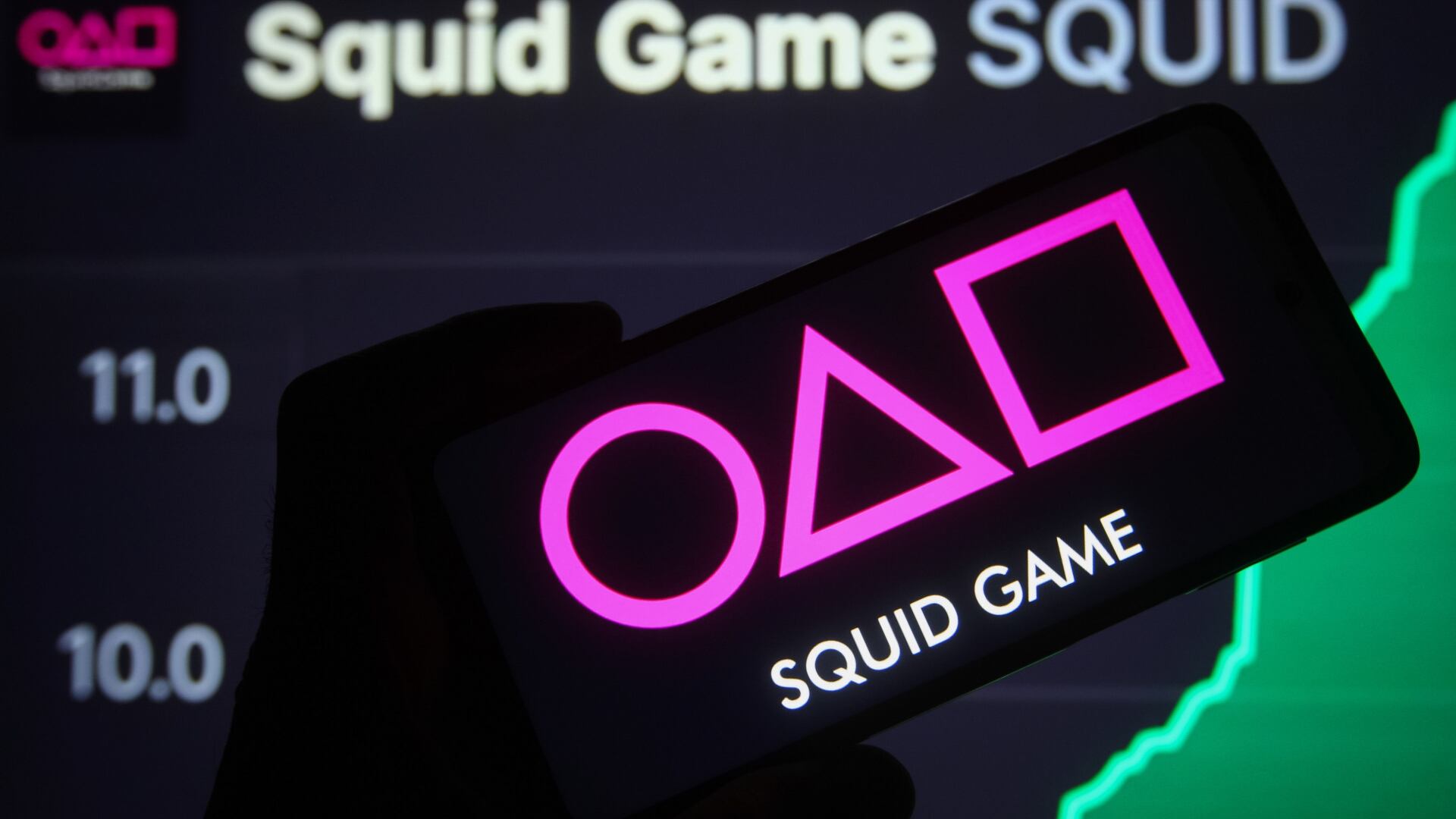
Earlier this week, crypto investors who got in on a 'Squid Game'-inspired coin were shocked when the asset turned out to be part of a scam. The people involved made off with close to $3 million after the Netflix-inspired coin's valuation went from $0.01 to $3,000 and back down to $0 within several days. CoinDesk Anchor Christine Lee joins Cheddar News' Closing Bell to discuss the pump-and-dump scheme, how investors can be on the lookout for similar scams, and what crypto platform Binance is doing to investigate the incident.
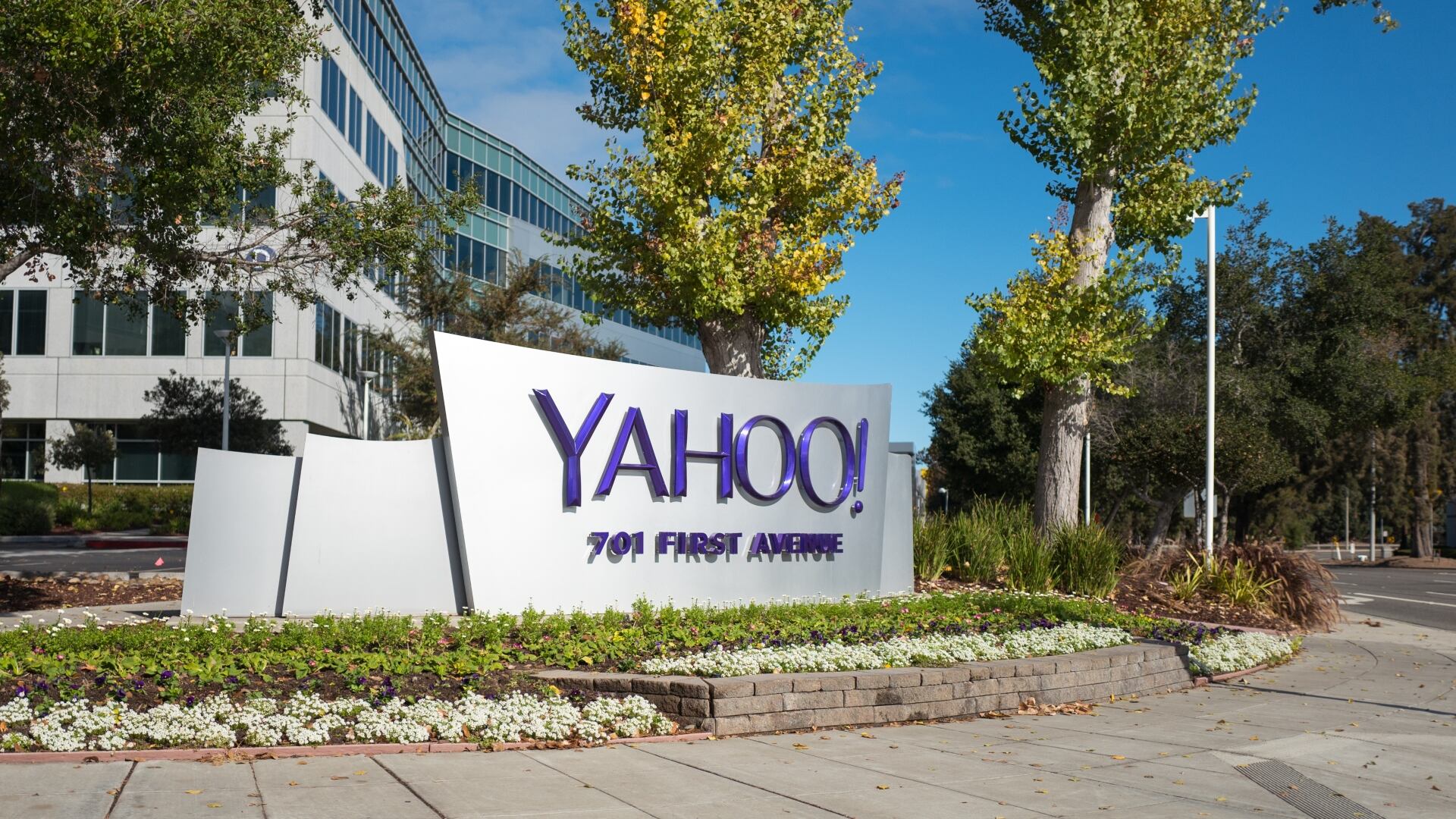
More American tech companies continue to pull their businesses out of China as the Communist Party cracks down on firms — both foreign and domestic. Yahoo and Fortnite have become the latest companies to withdraw from the country, and the withdrawals come just days after Microsoft announced it would take LinkedIn offline. Shehzad Qazi, managing director at China Beige Book International, joined Cheddar to provide some insight into how the crackdowns in China would also impact the tech companies at home in the United States.
Sian Morson, founder and editor of The Blkchain, talks about the challenges digital artists of color face getting opportunities to advance their careers and ways NFTs are redistributing wealth.
A new report out by the Center for Countering Digital Hate shows how just ten publishers are responsible for the bulk of climate change misinformation on social media--and companies like Facebook and Google are making money off them. Imran Ahmed, CEO of the Center for Countering Digital Hate, joined Cheddar to discuss.
Yahoo has officially pulled out of China after its two-decade relationship with the mainland. This comes as a result of China's tech crackdown which has been impacting several sectors. As of November 1st, the country has also implemented one of the strictest data privacy laws. Tech Reporter at MarketWatch Jon Swartz joined Cheddar to discuss more.
Dr. Rachel Cleetus, Policy Director and Lead Economist of the Climate and Energy Program for the Union of Concerned Scientists, joined Cheddar News to discuss the COP26 summit.
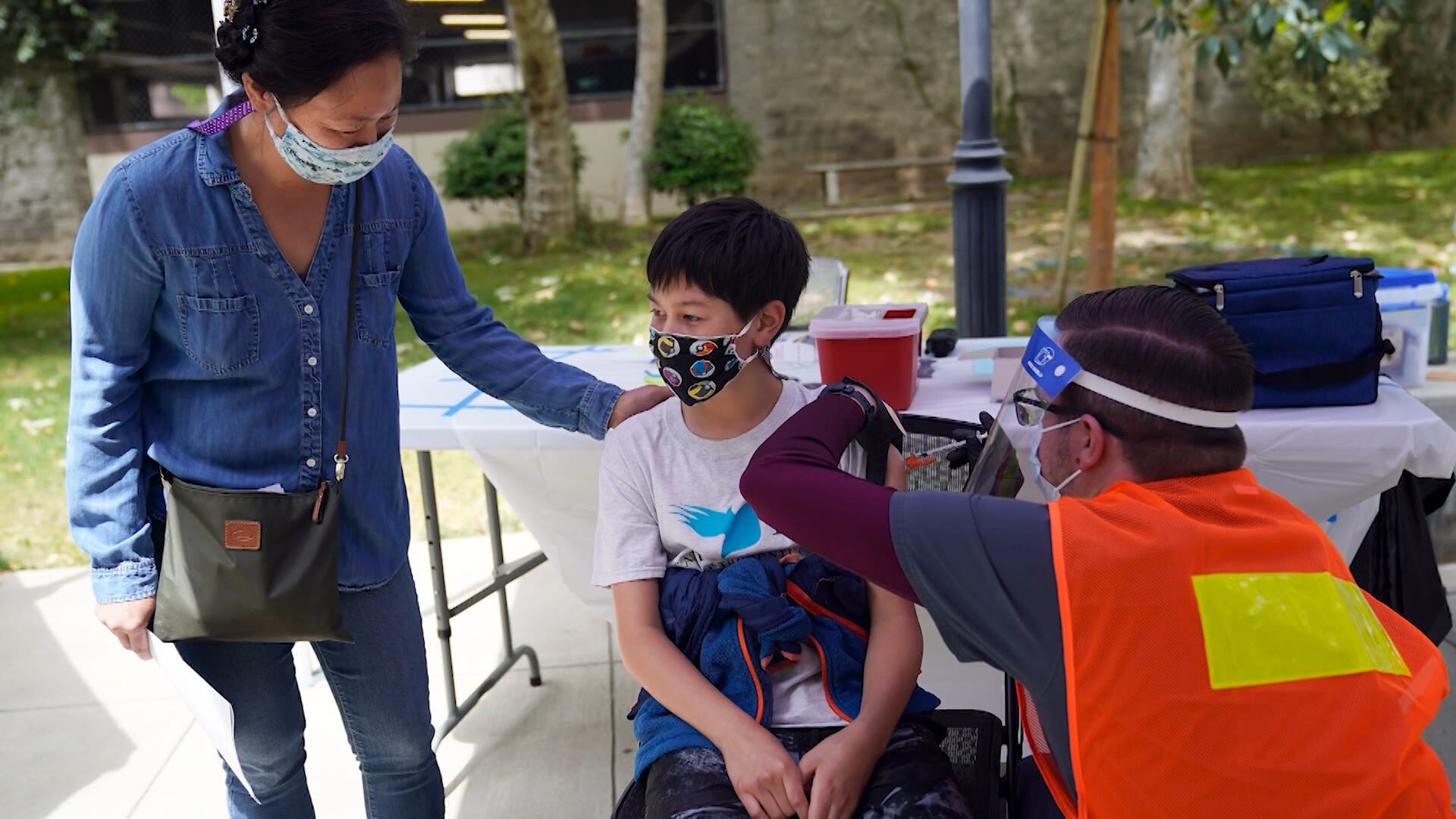
A CDC advisory committee as unanimously voted to recommend the Pfizer Covid-19 vaccine in children ages 5 to 11. Dr. Amesh Adalja, Infectious Disease Specialist and Senior Scholar at Johns Hopkins Center for Health Security, joined Cheddar News to discuss.
A Freitag pod with Carlo and Baker, talking about the upcoming federal vax-or-test deadline, the most shocking upset of this week's elections, an incredible story of selflessness and Love, Hate, Ate.