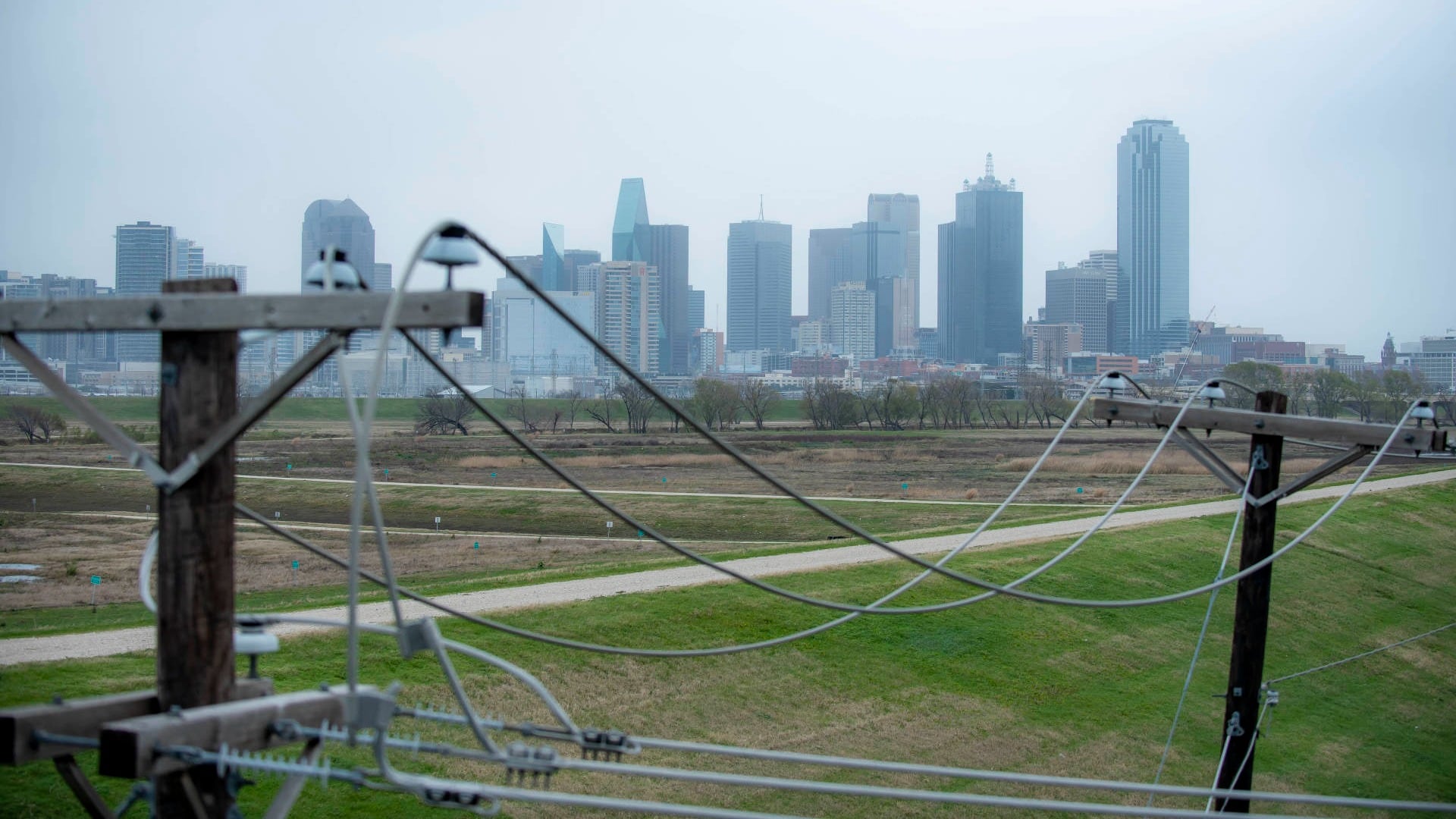
The Dallas skyline is visible from Sylvan Avenue in Dallas, Texas on Thursday, December 22, 2022. (Emil T. Lippe for The Washington Post via Getty Images)
Ford, General Motors, Google Nest, and several energy companies are partnering to support the growth of "virtual power plants" (VPPs) — or networks of decentralized power sources designed to kick in when the grid falls short. RMI, a nonprofit seeking to decarbonize the energy system, is spearheading the effort.
“Virtual power plants are poised for explosive growth, and RMI is committed to being at the forefront of their success by launching VP3,” said RMI CEO Jon Creyts in a press release. “Our analysis shows that VPPs can reduce peak power demand and improve grid resilience in a world of increasingly extreme climate events."
How does this work? Virtual power plants pool together both energy producers and consumers under a single entity, from wind and solar farms to home heaters that use smart thermostats. The idea is that these networks can coordinate to both provide and conserve energy as needed, depending on demand on the grid. This could entail using advanced software to prompt members to reduce their consumption.
On the supply side, producers in a VPP are able to better "monitor, forecast, optimize and trade their power," explains Next, one of Europe's largest VPP operators. "This way, fluctuations in the generation of renewables can be balanced by ramping up and down power generation and power consumption of controllable units."
So if a wind farm is overproducing, and a solar park is under producing, they can coordinate their output to provide a balanced load. It also allows them to potentially trade together on the same market, putting them in competition with large central power plants. It could also provide additional power options for large industrial consumers, such as automakers.
“Virtual power plants present an exciting opportunity to unlock additional value for homes, businesses and communities, helping to drive greater energy independence and grid decarbonization,” said Mark Bole, vice president and head of GM's V2X and Battery Solutions. “This collaboration underscores GM’s commitment to creating a more resilient grid, with EVs and virtual power plants playing a key role in helping to advance our all-electric future.”
Bitcoin is slowly coming back to life after plunging recently, but everyone's favorite cryptocurrency needs to chart a 77% rally in the next four weeks to reach the widely forecast year-end value of $100,000. Bitcoin was trading more than 0.8% percent lower on Thursday morning, Ethereum was also declining. David Nage, portfolio manager at Arca, joins Cheddar News to talk discuss the market.
Jack Dorsey is stepping down as CEO of Twitter. In a statement, he says he is leaving because the company is ready to move on from its founders. Twitter's chief technology office Parag Agrawal will take over as CEO. Ian Sherr, editor at large at CNET, joins Cheddar News to talk about the announcement.
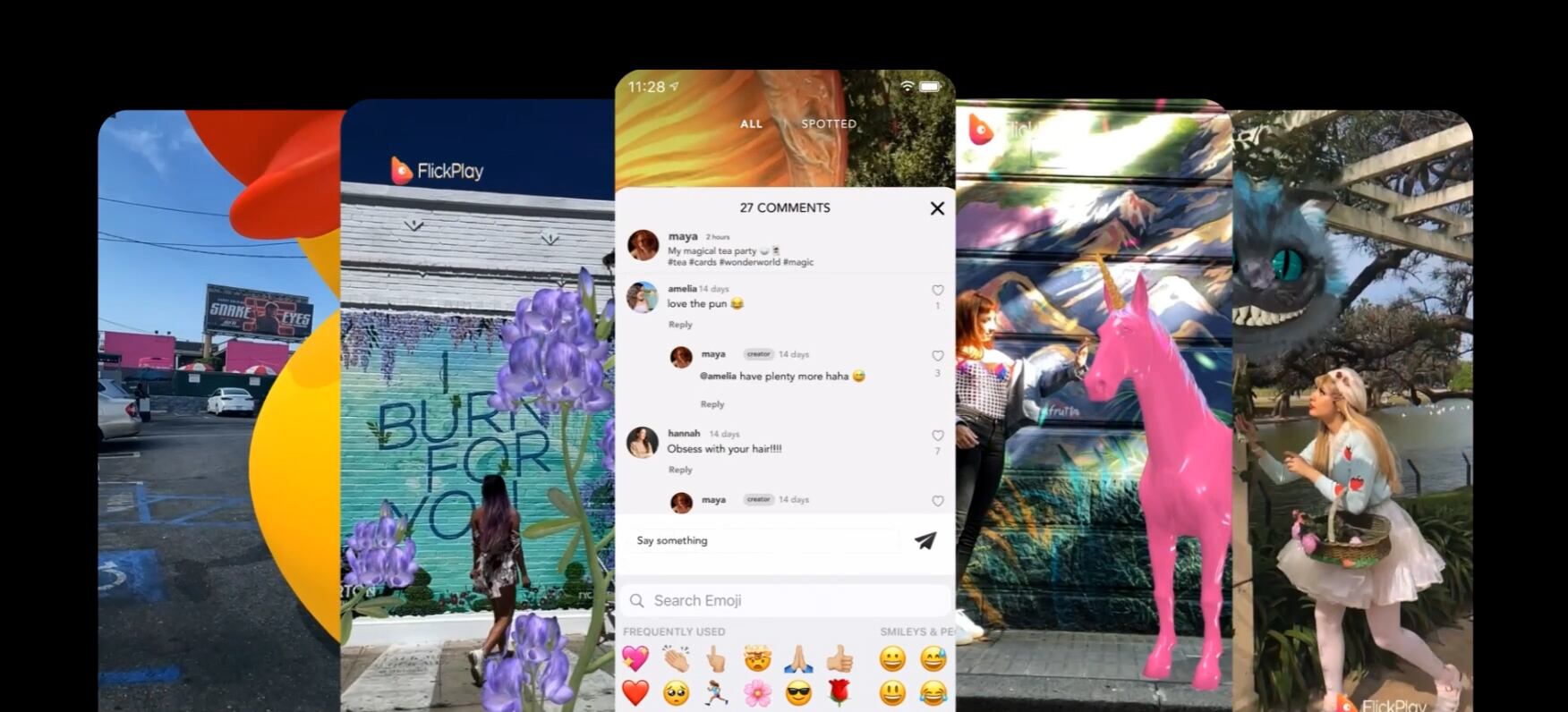
Visitors in Santa Monica are now getting a whole new look into the new metaverse world. Starting on December 1st, the Downtown Santa Monica District Is Getting Fully Immersed in AR and VR. It's All in Partnership with 'Flick Play' which is the first-ever 'Play to Earn' Metaverse App that Basically Takes the Gamification of 'Pokemon Go' and combines It with more social aspects of an App like Tiktok. Founder of the FlickPlay App Pierina Merino, joined Cheddar to discuss more.
On a platform as massive as TikTok, there are bound to be some negative implications. While we know that social media sites can have harmful health effects for teens and adolescents, the research on TikTok's health effects is slim to none. Skye Barbic, assistant professor at the University of British Columbia joins Cheddar News.
If your kid was on Santa's "nice list" this year, maybe you're willing to shell out $1,900 for Tesla's new Cyberquad. The automaker's all-electric ATV for children 8 years old and up is available to order now and is expected to begin shipping in two to four weeks.
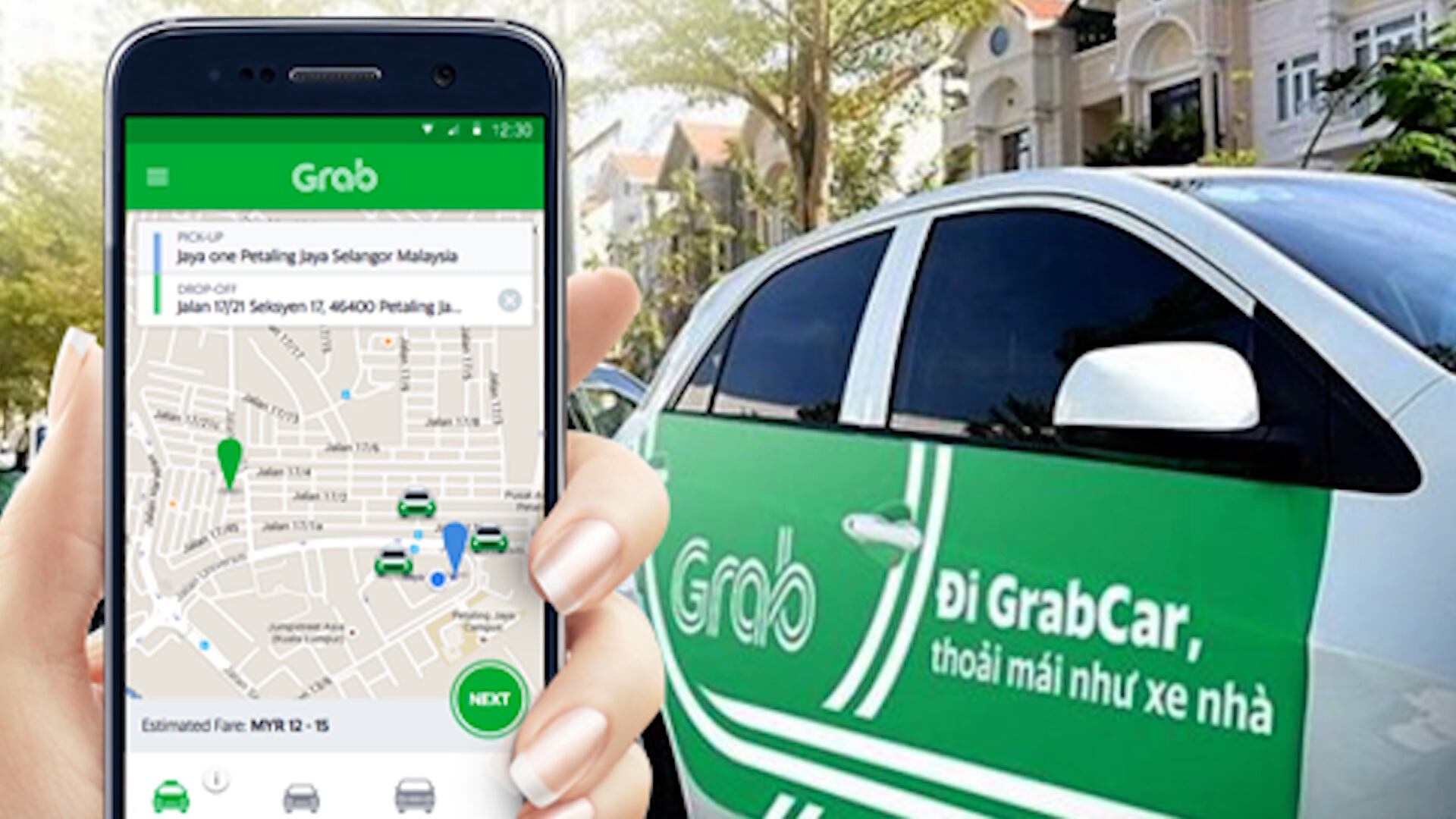
Grab, a Southeast Asia-based ride sharing, e-wallet, and delivery service, made its public debut on the Nasdaq via SPAC merger. CFO Peter Oey joined Cheddar's Brad Smith to talk about the IPO and why it was an ideal time for the company to go public. Oey noted that while Grab operates in 465 cities in eight Southeast Asian countries, there is still more opportunity to grow and expand while balancing profitability and growth.
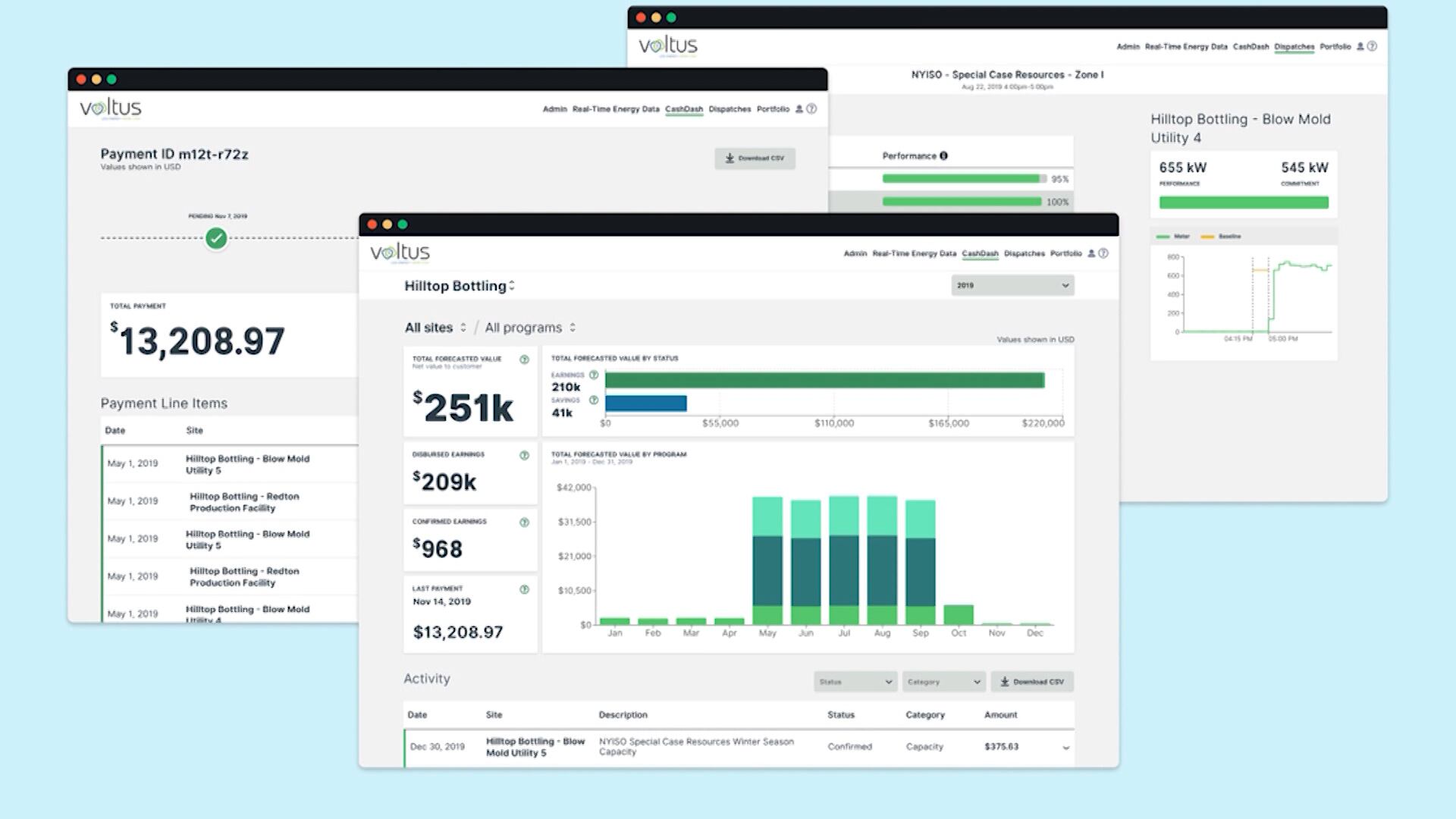
Voltus is going public by combining with a special purpose acquisition company, Broadscale Acquisition Corp., in a deal that values the electricity market technology startup at about $1.3 billion dollars. The company aims to deliver less expensive, more reliable, and more sustainable electricity to its more than 600 customers, including Home Depot, Coca-Cola, and Simon Property Group. Gregg Dixon, co-founder and CEO of Voltus and Andrew Shapiro, chairman and CEO of Broadscale Acquisition Corp., joined Cheddar News to discuss the deal.
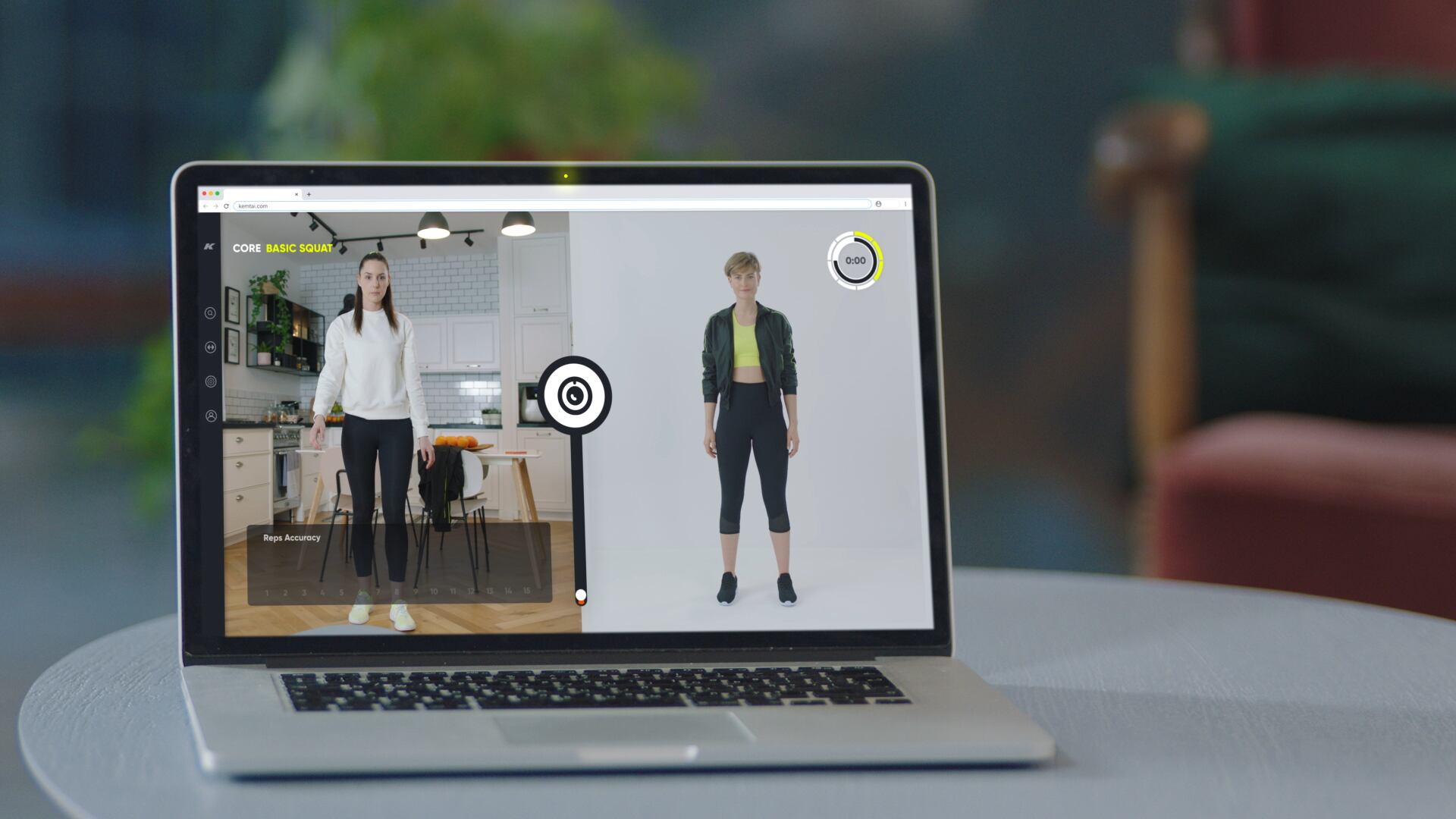
On this episode of Cheddar Innovates: Kemtai Co-Founder breaks down how computer vision and artificial intelligence can improve your workout form; Wove Co-Founder explains how it's creating a one-of-a-kind engagement ring design process; A look at Curiosity Stream's 'History By The Numbers.'
Mike Telem, Co-Founder at Kemtai, joins Cheddar Innovates to discuss how the platform is using computer vision and artificial intelligence as a virtual personal trainer through a laptop's camera, and how this technology can be adapted for physical therapy.