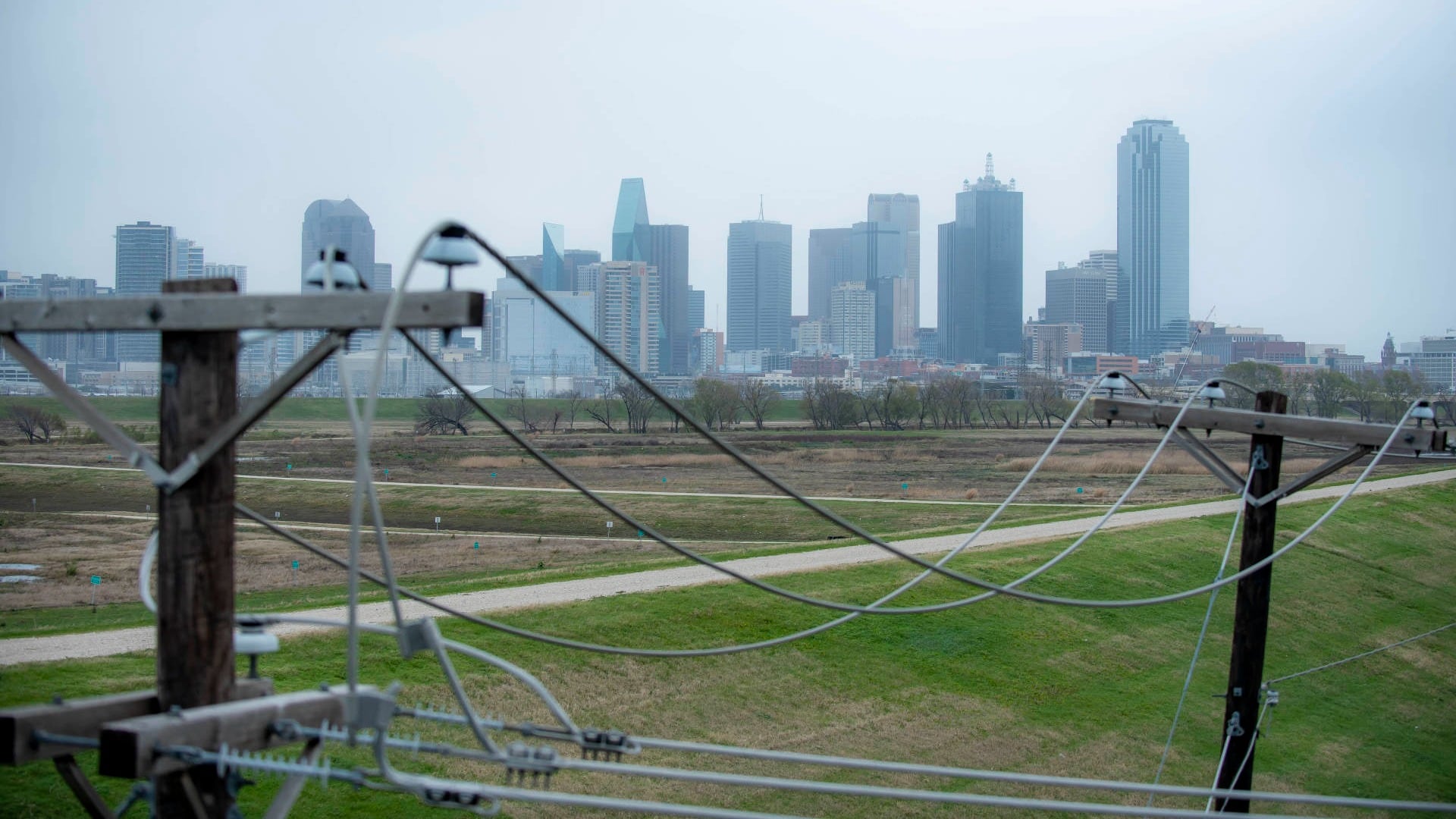
The Dallas skyline is visible from Sylvan Avenue in Dallas, Texas on Thursday, December 22, 2022. (Emil T. Lippe for The Washington Post via Getty Images)
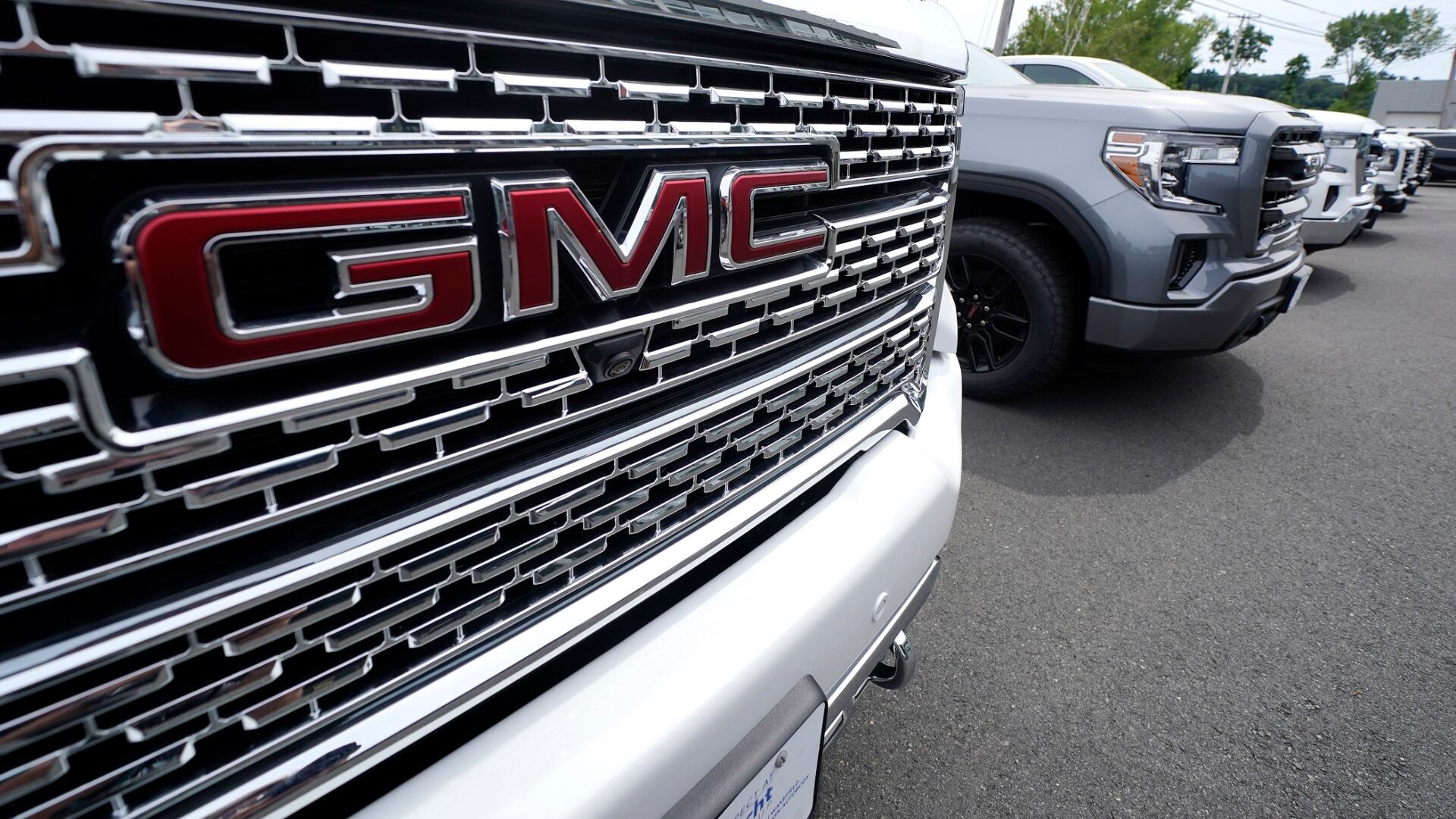
Ford, General Motors, Google Nest, and several energy companies are partnering to support the growth of "virtual power plants" (VPPs) — or networks of decentralized power sources designed to kick in when the grid falls short. RMI, a nonprofit seeking to decarbonize the energy system, is spearheading the effort.
“Virtual power plants are poised for explosive growth, and RMI is committed to being at the forefront of their success by launching VP3,” said RMI CEO Jon Creyts in a press release. “Our analysis shows that VPPs can reduce peak power demand and improve grid resilience in a world of increasingly extreme climate events."
How does this work? Virtual power plants pool together both energy producers and consumers under a single entity, from wind and solar farms to home heaters that use smart thermostats. The idea is that these networks can coordinate to both provide and conserve energy as needed, depending on demand on the grid. This could entail using advanced software to prompt members to reduce their consumption.
On the supply side, producers in a VPP are able to better "monitor, forecast, optimize and trade their power," explains Next, one of Europe's largest VPP operators. "This way, fluctuations in the generation of renewables can be balanced by ramping up and down power generation and power consumption of controllable units."
So if a wind farm is overproducing, and a solar park is under producing, they can coordinate their output to provide a balanced load. It also allows them to potentially trade together on the same market, putting them in competition with large central power plants. It could also provide additional power options for large industrial consumers, such as automakers.
“Virtual power plants present an exciting opportunity to unlock additional value for homes, businesses and communities, helping to drive greater energy independence and grid decarbonization,” said Mark Bole, vice president and head of GM's V2X and Battery Solutions. “This collaboration underscores GM’s commitment to creating a more resilient grid, with EVs and virtual power plants playing a key role in helping to advance our all-electric future.”
Jared Madfes, Partner at Tribe Capital, joins Cheddar's Closing Bell, where he says crypto investors should continue to focus on the long-term despite the recent price boost in the hours following Wednesday's Fed decision.
Mobile bill payment application Papaya recently raised $50 million in a series B round led by Bessemer Venture Partners.
Papaya lets users take a photo of any bill, and the app's AI-powered 'bill understanding technology' pays the bill in seconds. The company says its goal is to help people spend more time on things that matter, by making bill-paying as painless and quick as possible. Papaya CEO and co-founder Patrick Kann joined Cheddar News' Closing Bell to discuss.
If you're looking for a date, 2022 might be your year. Online dating platform Bumble is buzzing with dating predictions from its latest survey. Shan Boodram, sex and relationships expert at Bumble, joined Cheddar to discuss some of the findings and what people can expect from the future dating landscape. Some of the results showed that public displays of affection are back on the rise as more people get vaccinated and that more users are opting for alcohol-free first dates. She also explained the trend of "explori-dating," a way that users are attempting to get out of their comfort zone. "People are willing to date outside of their city to get to that," she said.
Anthony Martini, Chief Music Officer of Slip.stream, and Jesse Korwin, CMO of Slip.stream, talk about the challenges creators have uploading music on Twitch and how 'Slip.stream' prioritizes artists by streamlining the licensing process.
On this episode of Cheddar Innovates: Nucleus CEO breaks down what the future of the genomics industry looks like; Biomilq Co-Founders explains how they are is recreating the process of milk production outside the body to combine both nutrition and practicality for new moms; A look at Curiosity Stream's 'Top Science Stories 2021.'
On this episode of Cheddar Innovates: Omorpho Co-Founder explains the innovation driving gravity sportswear; Cool Beans CEO breaks down the science behind 'good mood food;' A look at Curiosity Stream's 'Building The James Webb Telescope.'
The U.S. postal service has confirmed that it secretly developed and tested a blockchain-based mobile voting system ahead of the 2020 election. Susan Greenhalgh, senior advisor on election security, Free Speech for People, joins Cheddar News to discuss the cybersecurity complications of a mobile voting system.