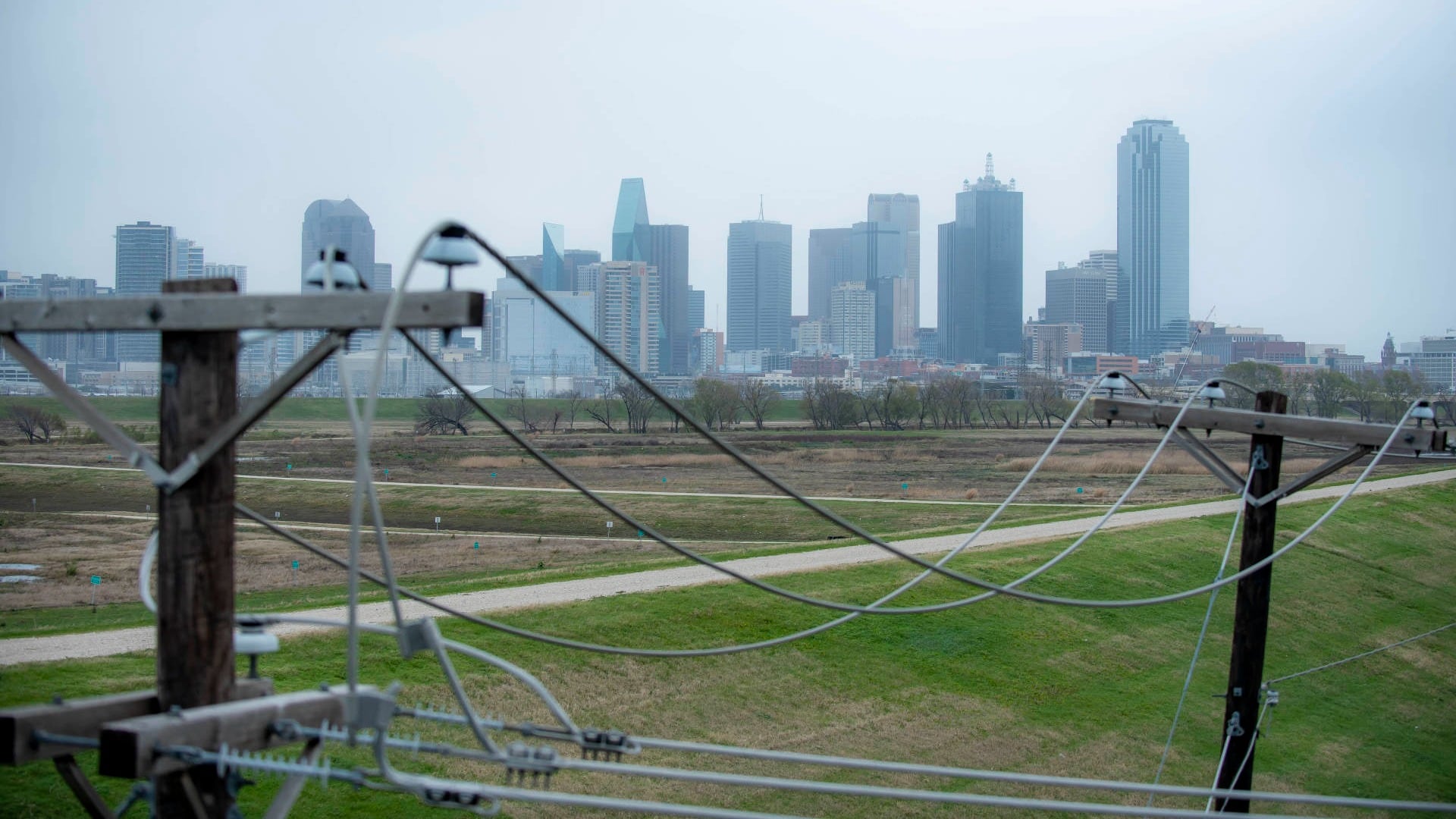
The Dallas skyline is visible from Sylvan Avenue in Dallas, Texas on Thursday, December 22, 2022. (Emil T. Lippe for The Washington Post via Getty Images)
Ford, General Motors, Google Nest, and several energy companies are partnering to support the growth of "virtual power plants" (VPPs) — or networks of decentralized power sources designed to kick in when the grid falls short. RMI, a nonprofit seeking to decarbonize the energy system, is spearheading the effort.
“Virtual power plants are poised for explosive growth, and RMI is committed to being at the forefront of their success by launching VP3,” said RMI CEO Jon Creyts in a press release. “Our analysis shows that VPPs can reduce peak power demand and improve grid resilience in a world of increasingly extreme climate events."
How does this work? Virtual power plants pool together both energy producers and consumers under a single entity, from wind and solar farms to home heaters that use smart thermostats. The idea is that these networks can coordinate to both provide and conserve energy as needed, depending on demand on the grid. This could entail using advanced software to prompt members to reduce their consumption.
On the supply side, producers in a VPP are able to better "monitor, forecast, optimize and trade their power," explains Next, one of Europe's largest VPP operators. "This way, fluctuations in the generation of renewables can be balanced by ramping up and down power generation and power consumption of controllable units."
So if a wind farm is overproducing, and a solar park is under producing, they can coordinate their output to provide a balanced load. It also allows them to potentially trade together on the same market, putting them in competition with large central power plants. It could also provide additional power options for large industrial consumers, such as automakers.
“Virtual power plants present an exciting opportunity to unlock additional value for homes, businesses and communities, helping to drive greater energy independence and grid decarbonization,” said Mark Bole, vice president and head of GM's V2X and Battery Solutions. “This collaboration underscores GM’s commitment to creating a more resilient grid, with EVs and virtual power plants playing a key role in helping to advance our all-electric future.”
CES, the largest tech convention in the world, kicks off this Wednesday ending on Friday, one day earlier than originally planned. The annual event features more than 2,000 exhibitors showing off their latest tech products in Las Vegas. Richard Lawler, Senior News Editor, The Verge joined Wake Up with Cheddar to preview the large event.
Amazon employees and activists staged a worldwide strike today--calling on the tech giant to raise wages, pay more taxes and reduce its carbon footprint. The 'Make Amazon Pay' protests took place at factories, warehouses, data centers and corporate offices all around the world. Ian Sherr, Editor at Large, The Verge, joined Wake Up with Cheddar to discuss.
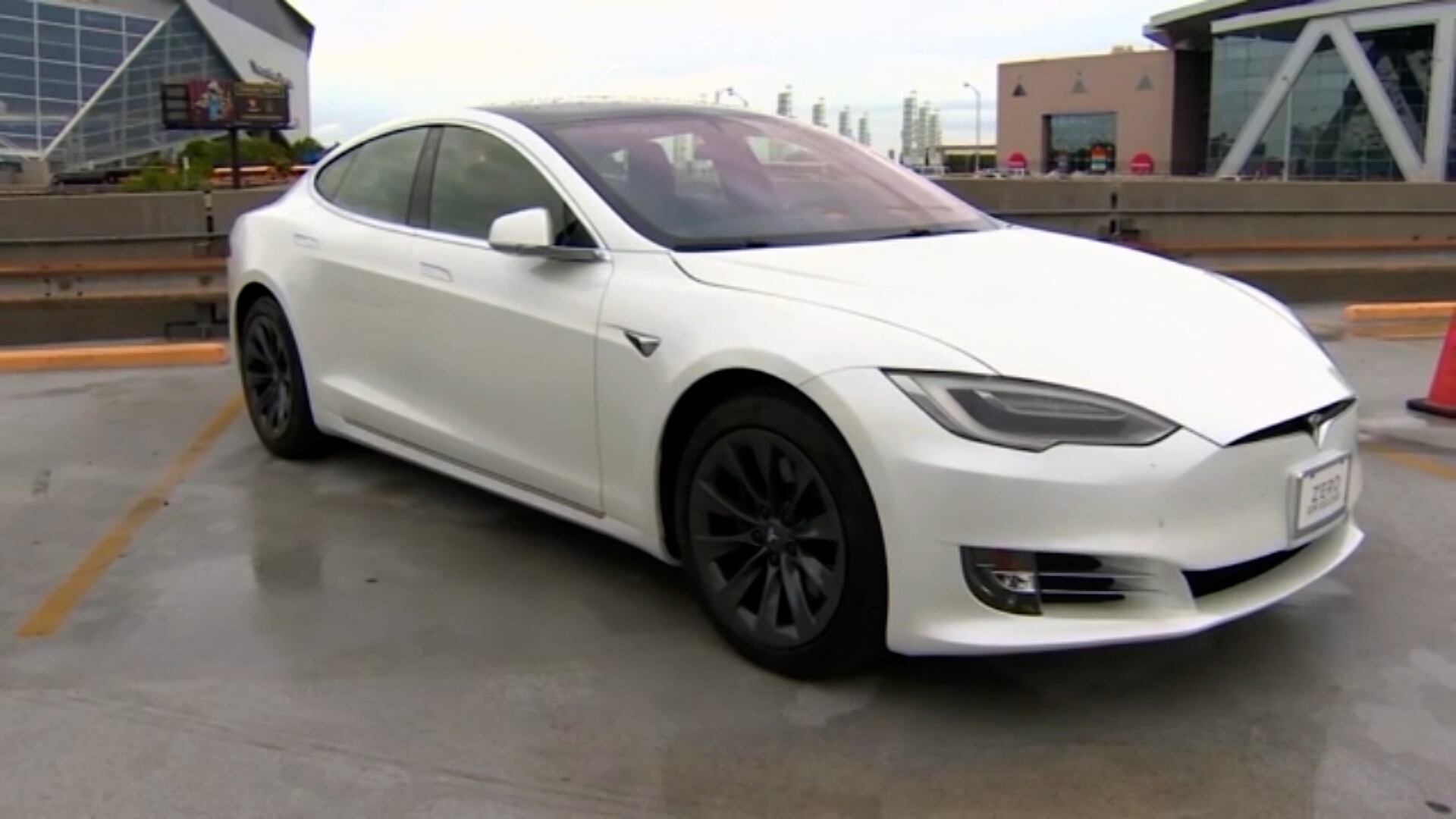
Tesla posted solid delivery numbers over the last year, with deliveries surpassing over 930,000, an 87 percent jump from the same period in 2020. Anthony Sassine, CFA, Senior Investment Strategies, KraneShares joined Wake Up with Cheddar to discuss the top EV stocks as well as how Tesla will stay relevant in the crowded space.
Apple became the first publicly traded U.S. company to hit the $3 trillion valuation mark after its stock price jumped to $182.86 in morning trading before slipping back just under the mark. The tech giant has tripled its worth since 2018.
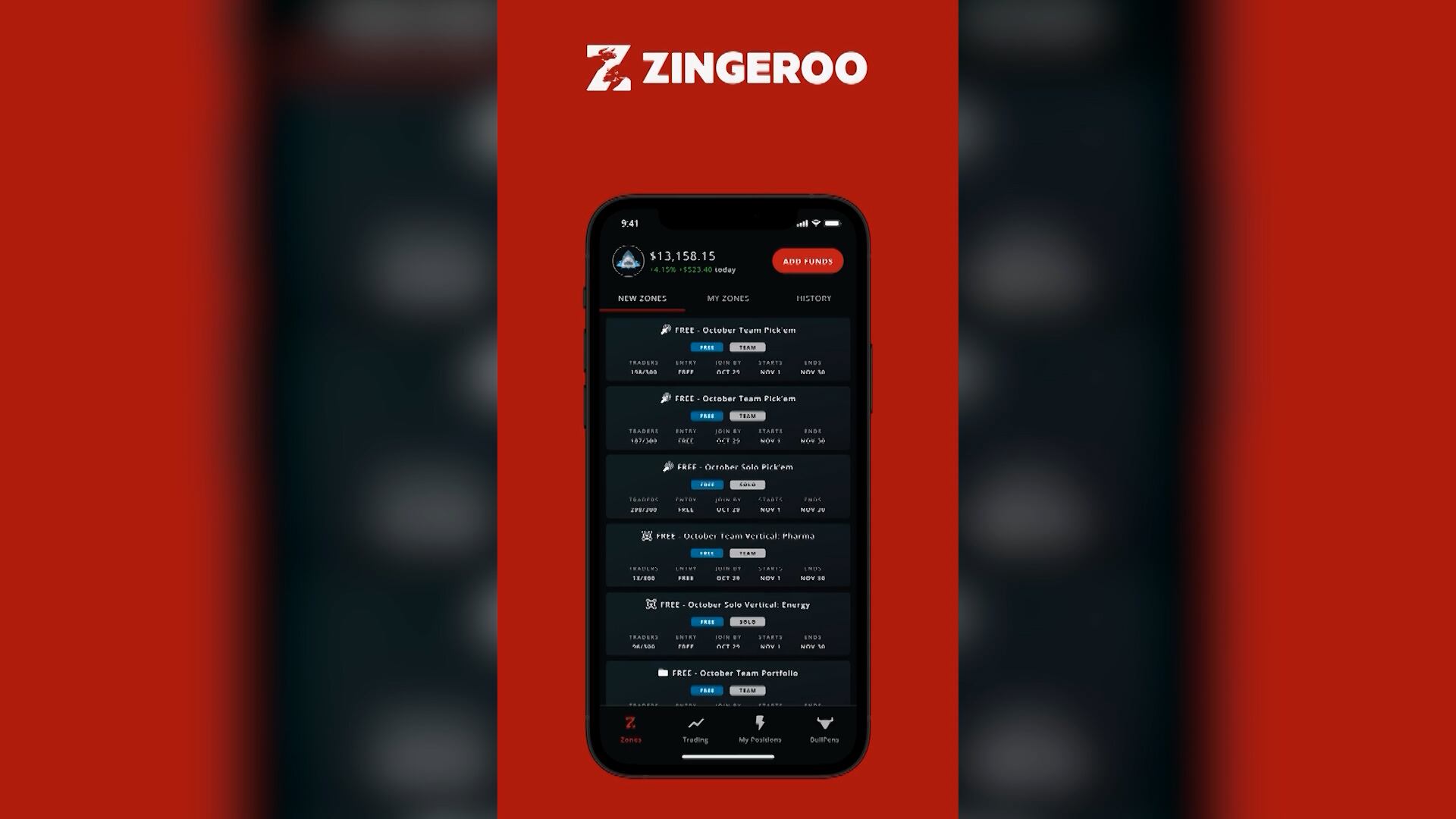
There is a new player in the mobile app stock trading space.
Zingeroo recently announced a funding round of $8.5 million. The company says it aims to bring 'friendly competition' to stock trading, by literally breaking trading down into daily and weekly competitions between friends. Zingeroo also says it hopes its new approach can make trading more accessible, educational, and social than ever before. Zingeroo co-founder and CEO Zoe Barry joins Cheddar News' Closing Bell for more.
As cell carriers AT&T and Verizon planned to roll out nationwide 5G service this week, the FAA and U.S. DOT are asking the companies to pause their plans so more research can be done on the impact 5G has on aircraft technology. The companies are refusing, citing French regulations that limit wireless signals around airports while allowing research to continue. This week's launch wasn't the first time concerns have delayed 5G — last year, Airbus and Boeing express concerns, pushing the deadline into November, December, and then into this year. So what happens now — and what happens next? Will 5G roll out this year as expected? Jon Swartz, Senior Reporter at MarketWatch, joins Cheddar News' Closing Bell to discuss the state of the planned 5G rollout, why the FAA and U.S. Department of Transportation are asking carriers to stall the launch, and more.