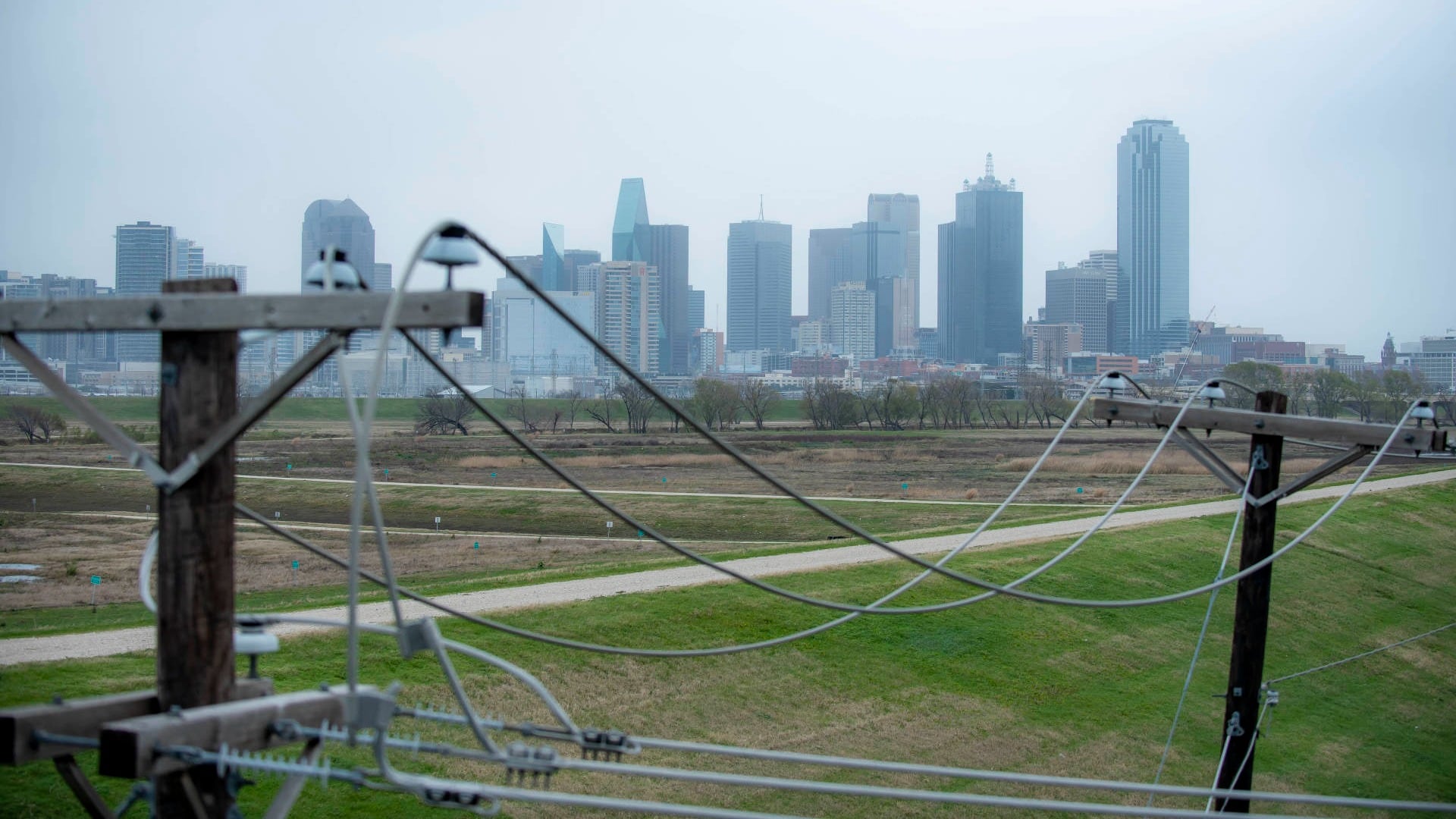
The Dallas skyline is visible from Sylvan Avenue in Dallas, Texas on Thursday, December 22, 2022. (Emil T. Lippe for The Washington Post via Getty Images)
Ford, General Motors, Google Nest, and several energy companies are partnering to support the growth of "virtual power plants" (VPPs) — or networks of decentralized power sources designed to kick in when the grid falls short. RMI, a nonprofit seeking to decarbonize the energy system, is spearheading the effort.
“Virtual power plants are poised for explosive growth, and RMI is committed to being at the forefront of their success by launching VP3,” said RMI CEO Jon Creyts in a press release. “Our analysis shows that VPPs can reduce peak power demand and improve grid resilience in a world of increasingly extreme climate events."
How does this work? Virtual power plants pool together both energy producers and consumers under a single entity, from wind and solar farms to home heaters that use smart thermostats. The idea is that these networks can coordinate to both provide and conserve energy as needed, depending on demand on the grid. This could entail using advanced software to prompt members to reduce their consumption.
On the supply side, producers in a VPP are able to better "monitor, forecast, optimize and trade their power," explains Next, one of Europe's largest VPP operators. "This way, fluctuations in the generation of renewables can be balanced by ramping up and down power generation and power consumption of controllable units."
So if a wind farm is overproducing, and a solar park is under producing, they can coordinate their output to provide a balanced load. It also allows them to potentially trade together on the same market, putting them in competition with large central power plants. It could also provide additional power options for large industrial consumers, such as automakers.
“Virtual power plants present an exciting opportunity to unlock additional value for homes, businesses and communities, helping to drive greater energy independence and grid decarbonization,” said Mark Bole, vice president and head of GM's V2X and Battery Solutions. “This collaboration underscores GM’s commitment to creating a more resilient grid, with EVs and virtual power plants playing a key role in helping to advance our all-electric future.”
Coming off of a fourth-quarter delivering just over 300,000 cars, Tesla is expected to report tremendous earnings after the bell on Wednesday. Al Root, a senior writer for Barron’s, spoke with Cheddar’s Baker Machado about the anticipated earnings report and speculated about what Elon Musk will discuss during the call with investors, including a Cybertruck update, new factories, a possible new vehicle, and/or new larger form batteries. "There's a menu of things he could talk about, and any combination of those would be good," said Root.
The American Federation Teachers Union has announced its latest partnership with NewsGuard in efforts to help educators play a greater role in deciphering facts from fiction that students see online. They say the goal is to help students build critical-thinking skills while also teaching them the importance of media literacy. Executive Vice President of Partnerships at NewsGuard, Sarah Bandt, joined Cheddar to talk more.
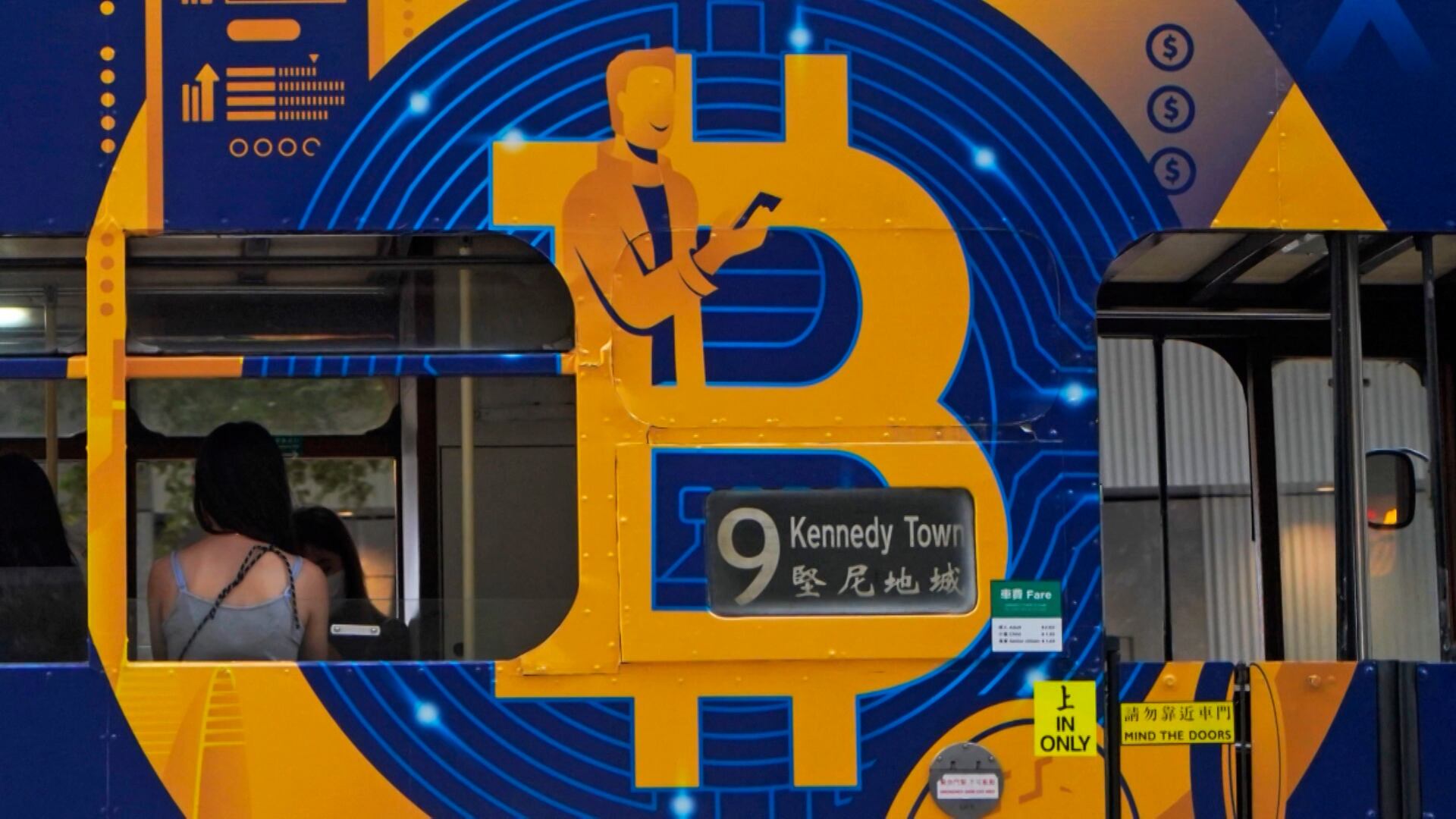
James Whitley, Core Contributor at cypher, joins Cheddar News' Closing Bell, where he discusses the underlying factors that support a bounce-back for Bitcoin despite the token's recent slump.
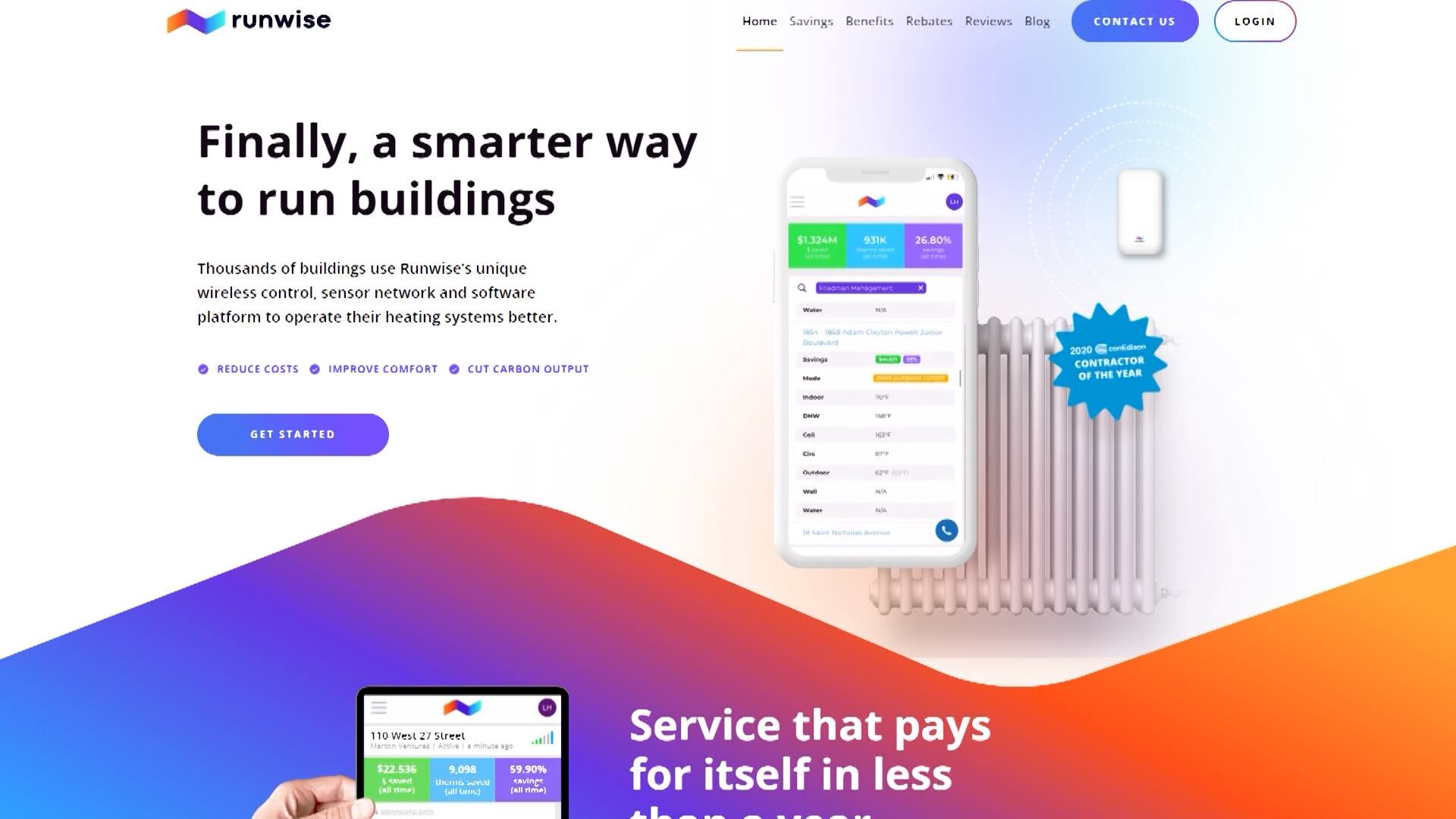
Commercial and residential buildings account for 13% of carbon emissions in the U.S., according to the EPA, and one company says it has a solution. Runwise says it has updated the boiler and heating systems of thousands of buildings, and that its technology not only lowers carbon output but also saves landlords money. Lee Hoffman, Co-Founder and COO of Runwise, joined Cheddar Climate to discuss.
Following sales tech startup Scratchpad raising $33 million in Series B Funding, CEO and co-founder Pouyan Salehi joined Cheddar to discuss how his company's software works to help salespeople with an all-in-one workspace, integrating with Salesforce to optimize notes, spreadsheets, and other relevant information so businesses can forecast and make the best decisions. "If you look at other crafts like artists, they'll have studios; chefs, they'll have kitchens; scientists will have labs, and we just asked, well, if you look at sales as a craft, why doesn't something exist that is designed solely for a salesperson?" Salehi said about his workspace app.
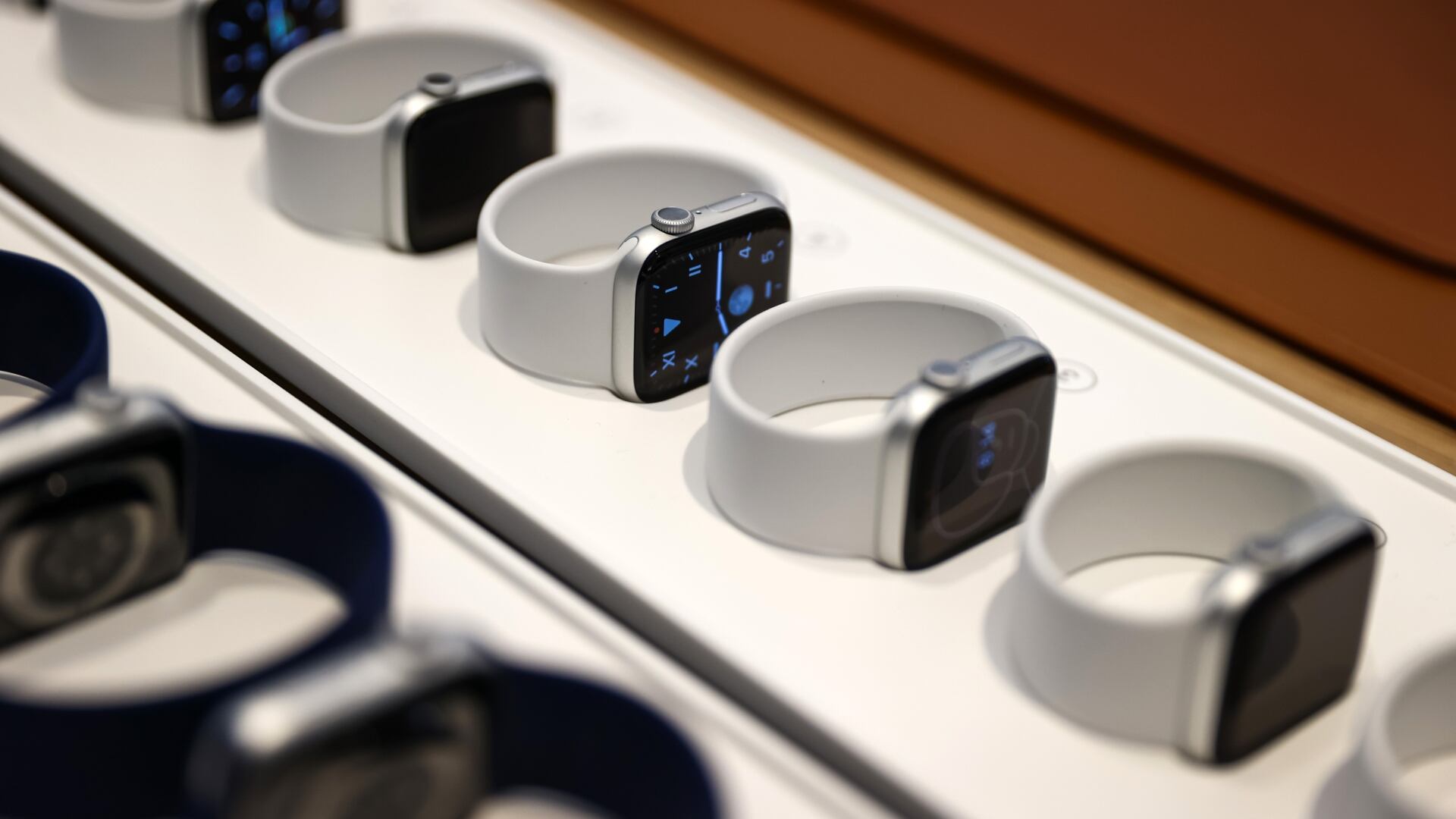
Google could be gearing up to release its own wearable device as rumors swirl about a potential smartwatch with the Pixel brand. Jon Prosser, the creator of Front Page Tech, who tweeted a possible leak about the product, joined Cheddar's "Closing Bell" to discuss potential the benefits of it entering the same space as the Apple Watch. Prosser said, while he doesn't expect it to launch until at least 2023, the Pixel Watch will be "one of the most vital, most important wearables that we can have on the market," noting that it won't likely challenge Apple for much market share but will set the standard for other Android wearables to come.