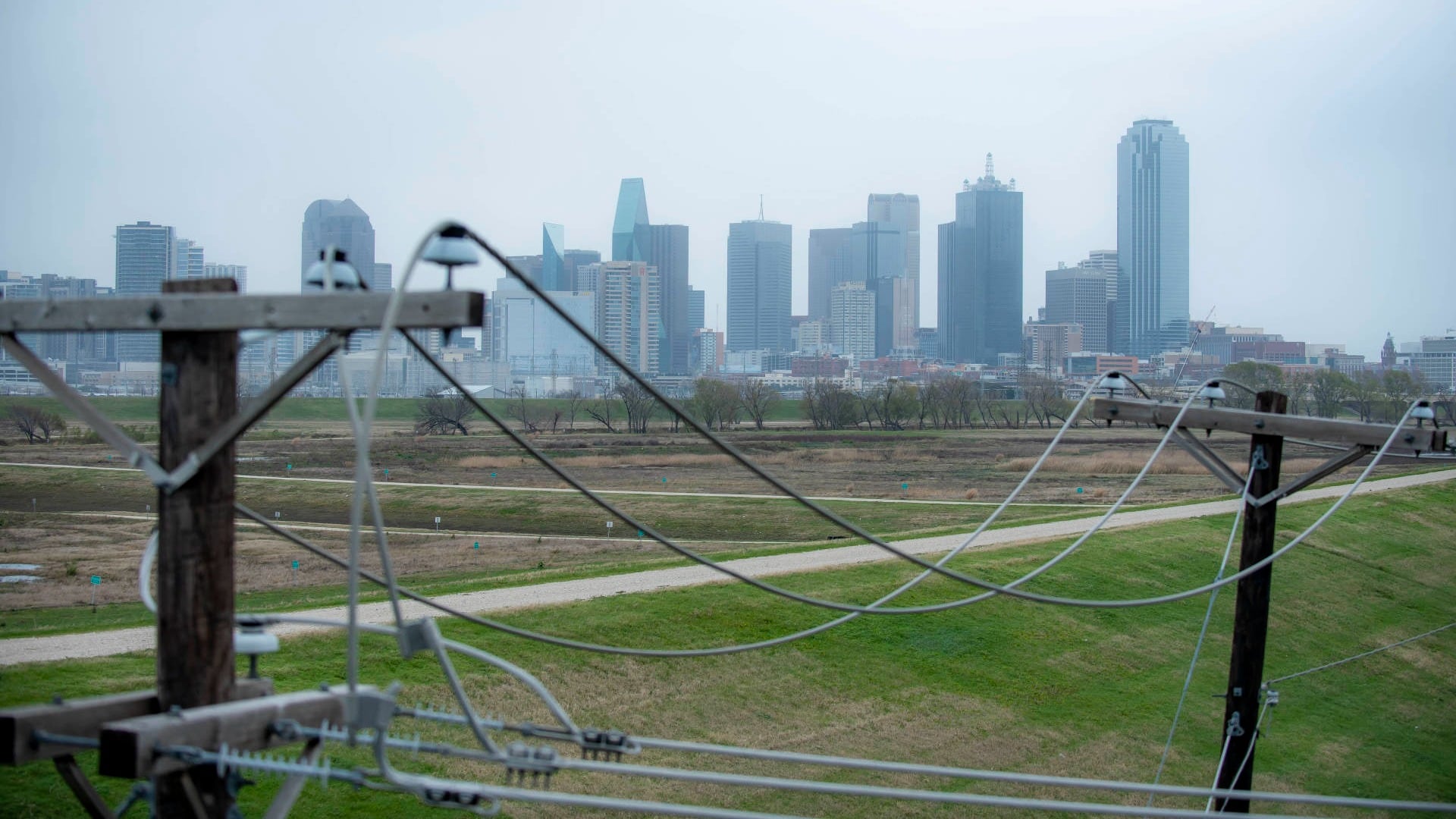
The Dallas skyline is visible from Sylvan Avenue in Dallas, Texas on Thursday, December 22, 2022. (Emil T. Lippe for The Washington Post via Getty Images)
Ford, General Motors, Google Nest, and several energy companies are partnering to support the growth of "virtual power plants" (VPPs) — or networks of decentralized power sources designed to kick in when the grid falls short. RMI, a nonprofit seeking to decarbonize the energy system, is spearheading the effort.
“Virtual power plants are poised for explosive growth, and RMI is committed to being at the forefront of their success by launching VP3,” said RMI CEO Jon Creyts in a press release. “Our analysis shows that VPPs can reduce peak power demand and improve grid resilience in a world of increasingly extreme climate events."
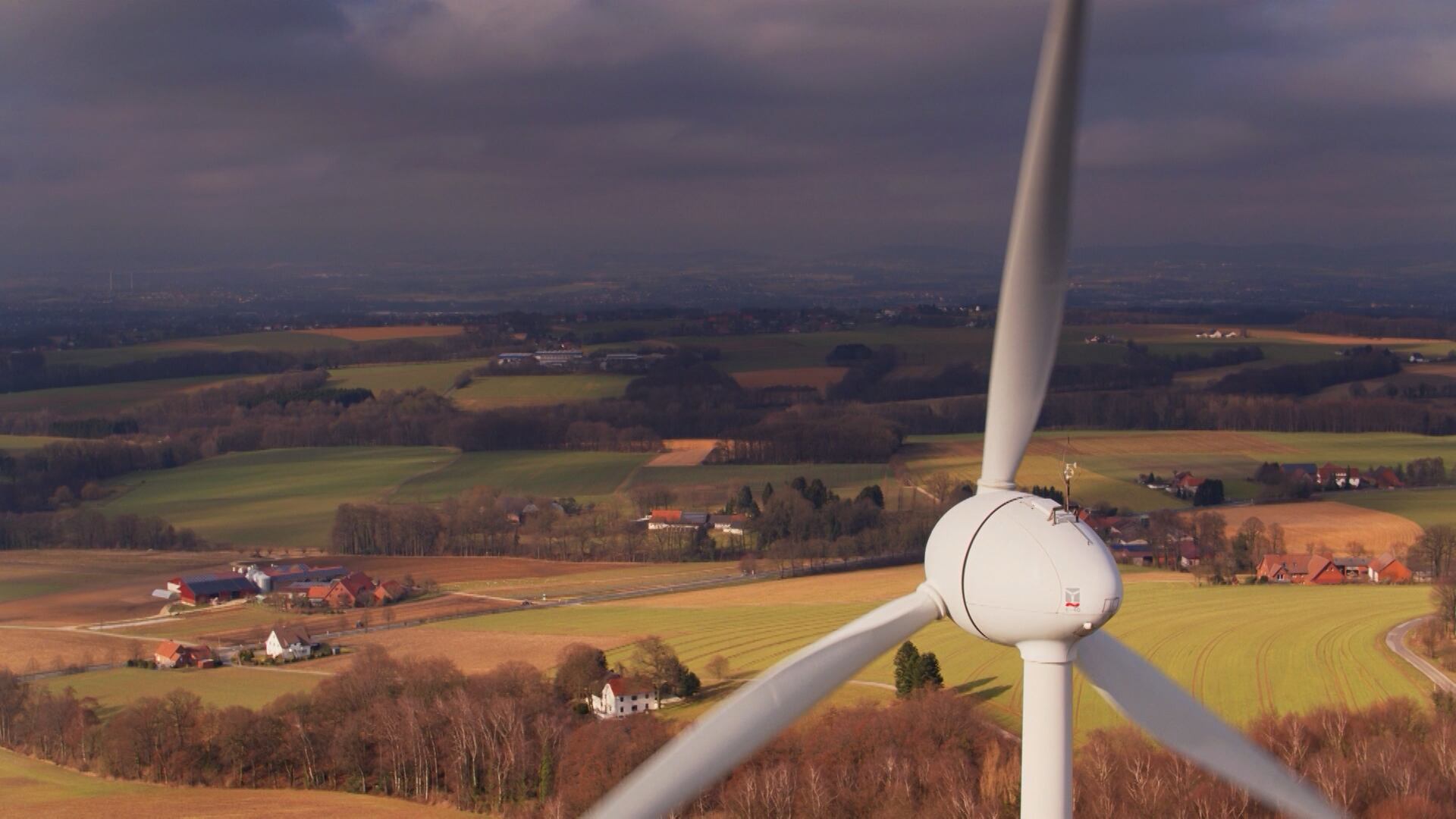
How does this work? Virtual power plants pool together both energy producers and consumers under a single entity, from wind and solar farms to home heaters that use smart thermostats. The idea is that these networks can coordinate to both provide and conserve energy as needed, depending on demand on the grid. This could entail using advanced software to prompt members to reduce their consumption.
On the supply side, producers in a VPP are able to better "monitor, forecast, optimize and trade their power," explains Next, one of Europe's largest VPP operators. "This way, fluctuations in the generation of renewables can be balanced by ramping up and down power generation and power consumption of controllable units."
So if a wind farm is overproducing, and a solar park is under producing, they can coordinate their output to provide a balanced load. It also allows them to potentially trade together on the same market, putting them in competition with large central power plants. It could also provide additional power options for large industrial consumers, such as automakers.
“Virtual power plants present an exciting opportunity to unlock additional value for homes, businesses and communities, helping to drive greater energy independence and grid decarbonization,” said Mark Bole, vice president and head of GM's V2X and Battery Solutions. “This collaboration underscores GM’s commitment to creating a more resilient grid, with EVs and virtual power plants playing a key role in helping to advance our all-electric future.”
Energy Impact Partners is a VC firm committed to helping the world move toward a more sustainable future. The tech-focused fund aims to reach $350 million for its Deep Decarbonization Frontier Fund,' which aims to support early-stage companies working on innovative solutions. Energy Impact Partners' Managing Director Andy Lubershane joined Cheddar Climate to discuss.
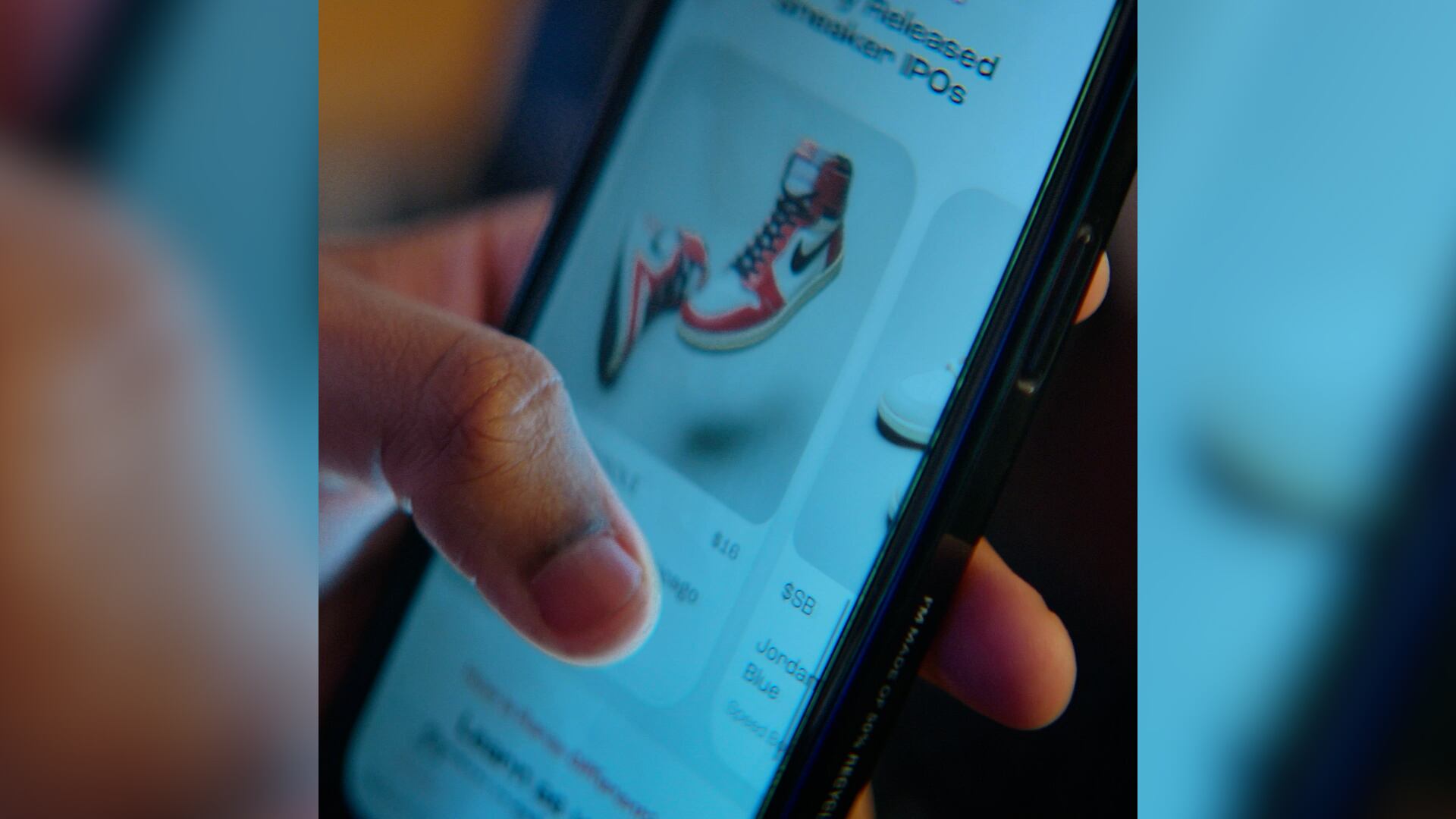
Over the years we have heard a number of ways people can invest. However, have you thought about how you could invest in sneakers? Well, one platform says you can do that and more.RARE is an investment platform for sneakers that allows users to easily invest in the sneaker culture by giving them the opportunity to buy and trade shares of rare shoes and letting users own some of the most sought-after kicks at a fractional level. Rare says the goal is to empower the communities who made sneakers what they are today and give everyone a piece of the pie. CEO of RARES, Gerome Sapp, joined Cheddar to discuss more.
Crypto is increasingly becoming a hotspot for criminals and fraud with cryptocurrency crime reaching a record-breaking high. reports show scammers took $14 billion worth of crypto in 2021 alone. The latest crypto scam is aimed at investors in Binance. Ben Armstrong, the founder of Bitboy Crypto, joins Cheddar News to discuss.
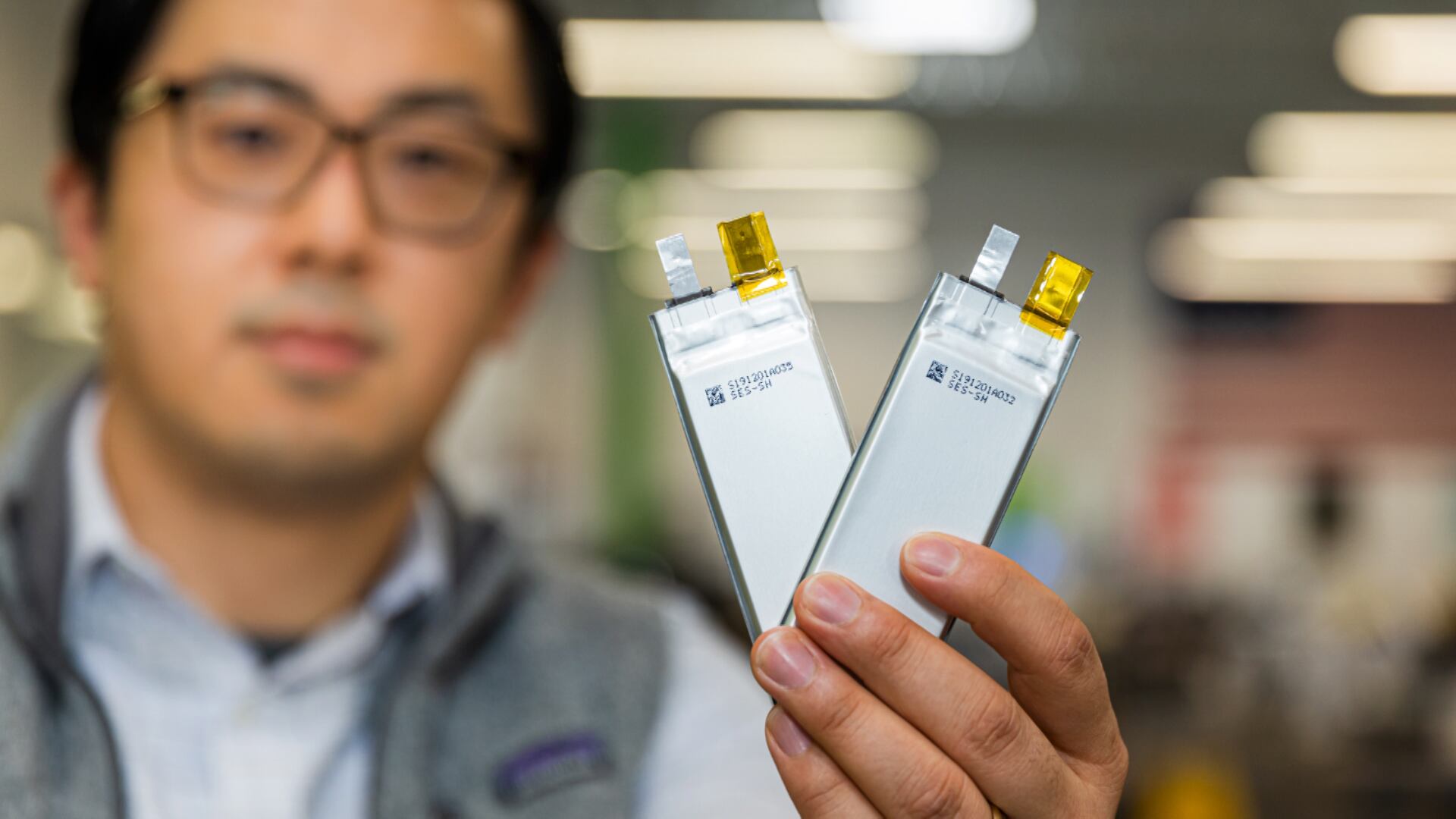
SES Holdings, a leader in production of high-performance hybrid lithium-metal rechargeable batteries for electric vehicles, has arrived on Wall Street. The company went public via SPAC deal and now trades on the New York Stock Exchange under the ticker 'SES.' Qichao Hu, founder & CEO, joined Cheddar Movers to discuss the debut as well as what lies ahead for the company.
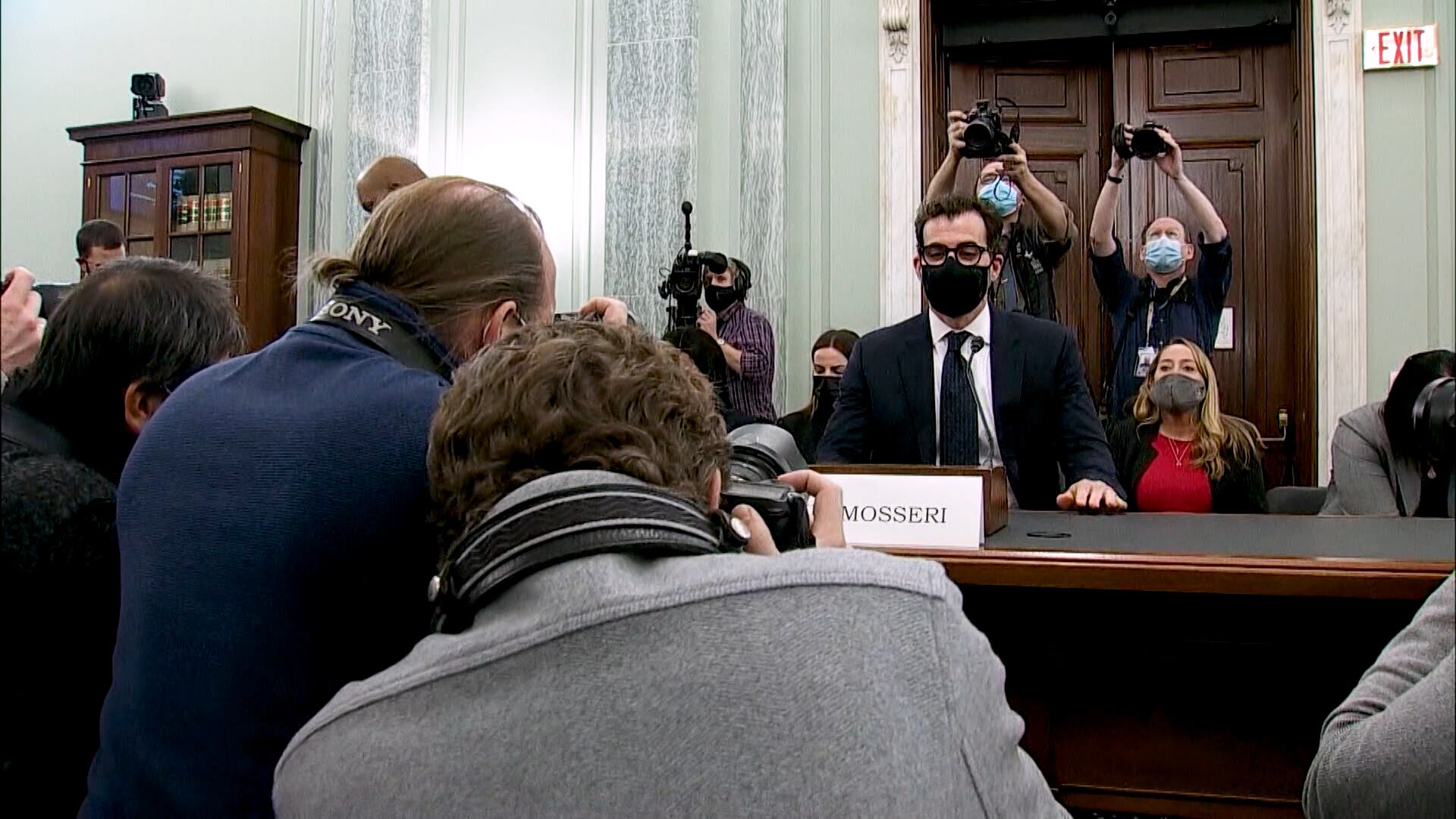
More than 70 religious leaders have come together to sign a letter to urge Mark Zuckerberg and Meta to halt plans for Instagram for Kids. The signers claim that this new platform, currently on pause, could cause spiritual harm to young people. Lucy Kidwell, the screen-free week coordinator for the nonprofit that organized the letter, Fairplay, joined Cheddar News to discuss the issue on Safer Internet Day. "It's not necessarily the content, even, that's on these platforms, but more the structure of the app itself," she said. "It's all focused on comparison, promoting yourself, putting forward this image of perfection and this beautiful life that's really harmful to kids who can't really separate what's real and what's fake and who may not be emotionally mature enough to handle something so complicated."