Earth sizzled in July and became the hottest month in 142 years of recordkeeping, U.S. weather officials announced.
As extreme heat waves struck parts of the United States and Europe, the globe averaged 62.07 degrees (16.73 degrees Celsius) last month, beating out the previous record set in July 2016 and tied again in 2019 and 2020. the National Oceanic and Atmospheric Administration said Friday. The margin was just .02 degrees (.01 Celsius),
The last seven Julys, from 2015 to 2021, have been the hottest seven Julys on record, said NOAA climatologist Ahira Sanchez-Lugo. Last month was 1.67 degrees (0.93 degrees Celsius) warmer than the 20th century average for the month.
“In this case first place is the worst place to be,” NOAA Administrator Rick Spinrad said in a press release. “This new record adds to the disturbing and disruptive path that climate change has set for the globe."
“This is climate change," said Pennsylvania State University climate scientist Michael Mann. “It is an exclamation mark on a summer of unprecedented heat, drought, wildfires and flooding.”
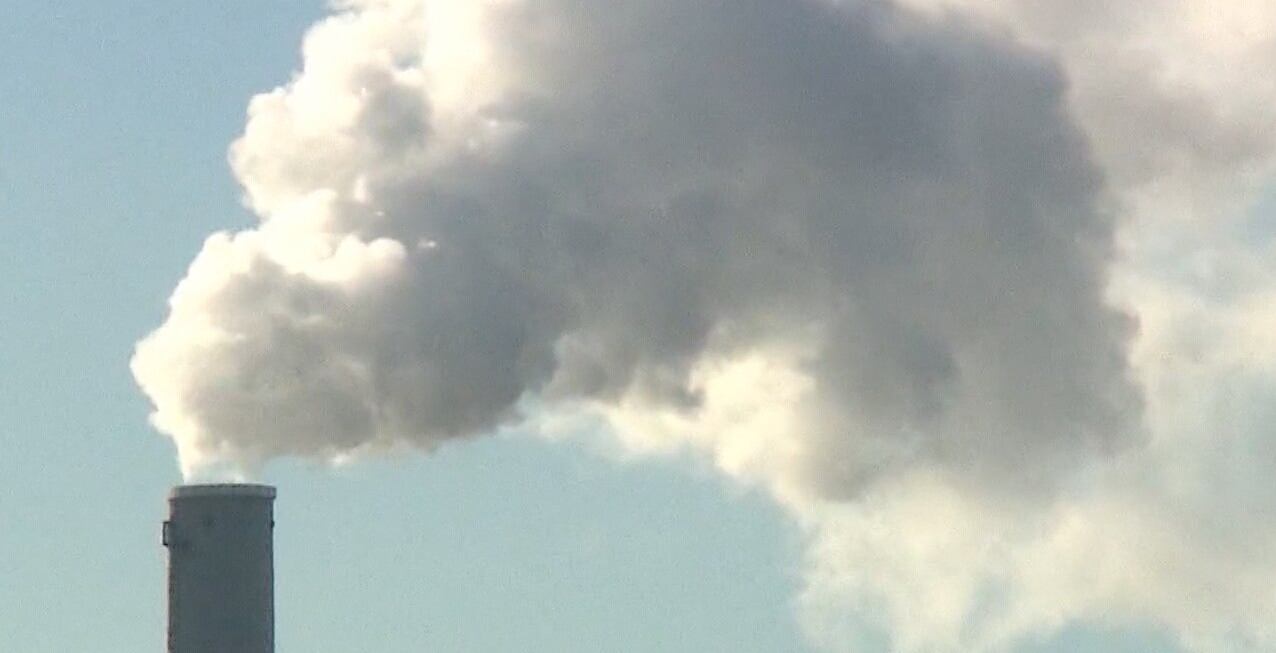
Earlier this week, a prestigious United Nations science panel warned of worsening climate change caused by the burning of coal, oil and natural gas and other human activity.
Warming on land in western North America and in parts of Europe and Asia really drove the record-setting heat, Sanchez-Lugo said. While the worldwide temperature was barely higher than the record, what shattered it was land temperature over the Northern Hemisphere, she said.
Northern Hemisphere temperatures were a third of a degree (.19 degrees Celsius) higher than the previous record set in July 2012, which for temperature records is “a wide margin,” Sanchez-Lugo said.
July is the hottest month of the year for the globe, so this is also the hottest month on record.
One factor helping the world bake this summer is a natural weather cycle called the Arctic Oscillation, sort of a cousin to El Nino, which in its positive phase is associated with more warming, the NOAA climatologist said.
Even with a scorching July and a nasty June, this year so far is only the sixth warmest on record. That's mostly because 2021 started cooler than recent years due to a La Nina cooling of the central Pacific that often reduces the global temperature average, Sanchez-Lugo said.
“One month by itself does not say much, but that this was a La Nina year and we still had the warmest temperatures on record ... fits with the pattern of what we have been seeing for most of the last decade now,” said University of Illinois meteorology professor Donald Wuebbles.
While the world set a record in July, the United States only tied for its 13th hottest July on record. Even though California, Nevada, Oregon and Washington had their hottest Julys, slightly cooler than normal months in Texas, Oklahoma, Kansas, Arkansas, Missouri, Alabama, Maine, Vermont and New Hampshire kept the nation from approaching record heat levels.
The last time the globe had a July cooler than the 20th century average was in 1976, which was also the last year the globe was cooler than that normal.
“So if you’re younger than 45 you haven’t seen a year (or July) where the mean temperature of the planet was cooler than the 20th century average,” said Princeton University climate scientist Gabriel Vecchi.
___
The Associated Press Health and Science Department receives support from the Howard Hughes Medical Institute’s Department of Science Education. The AP is solely responsible for all content.
Dr. Farhan Bhatti, a family physician and Michigan State lead for the Committee to Protect Health Care, joined Cheddar to discuss the newly discovered and highly transmissible omicron variant of COVID-19. Bhatti said it is too early to draw any conclusions about the new variant but there is concern that it could eventually mutate and develop a resistance to vaccines. "Time will tell, but for now, it looks like, still, the best thing that we can do to try to limit the spread of this disease is make sure everybody gets a vaccine and make sure everybody avoids large gatherings indoors and wears masks during the wintertime especially," he said.
Jill and Carlo cover the latest developments with the Omicron variant that are spooking markets once again. Twitter's @Jack is leaving, SCOTUS takes up abortion rights and the world has a brand new republic.
A CDC panel unanimously endorsed Moderna and Pfizer Covid-19 vaccine boosters for all U.S. adults. This comes after the FDA gave its own authorization for everyone 18 and older, scrapping previous eligibility factors like age and underlying conditions. Dr. Shereef Elnahal, President and CEO of University Hospital and former New Jersey Health Commissioner, joined Cheddar News to break down the development.
The Biden Administration is set to buy 10 million courses of Pfizer's Covid pill if it gains emergency use authorization from the FDA. With this purchase, the U.S. will receive more than 13 million courses of antiviral pills aimed at treating Covid and reducing severe illness and death. Pfizer's pill has been shown to reduce risk of hospitalization and death by 89 percent, proving it could be a key tool in the fight against the pandemic. Dr. Soumi Eachempati, Co-Founder, CEO & CMO of Cleared4, joined Cheddar News to discuss.
Dr. David Dodson, Infectious Disease Specialist at Carden & Dodson MD, joined Wake Up With Cheddar to break down what we know so far about the Omicron Covid-19 variant, and why you shouldn't wait for an Omicron-specific shot to get vaccinated.
Friday saw big sell offs, with the Dow Jones posting its worst day since October 2020, falling 905 points, with the Nasdaq and S&P 500 each tumbling more than two percent as well. Much of that due to investor concerns over the new Covid-19 'Omicron' variant first detected in South Africa. Craig Erlam, senior market analyst at Oanda explains what investors should expect this week.
The ocean is an important topic when it comes to the climate. It plays a vital role in shaping our environment, with rising sea levels causing a 35% increase in natural disasters around the world, affecting 1.7 billion people. Dr. Sylvia Earle has been called perhaps the greatest advocate our oceans have ever had, with Time magazine dubbing her its first 'hero of the planet' and the Library of Congress naming her a living legend. She is also the founder of Mission Blue, an organization that inspires action to explore and protect the ocean. Dr. Earle joined Cheddar Climate for more on the importance of caring for the ocean and its impact on climate change.
Scientists are racing to understand the Omicron variant of covid-19 and find out just how dangerous it really is. Omicron, dubbed a variant of concern by the WHO, was first detected in South Africa last week and has already spread to multiple countries, including the UK, Canada, Australia and more. Dr. Jonathan Javitt, CEO of Nrx and adjunct professor at Johns Hopkins School of Medicine, joined Cheddar to discuss what we know and don't know about this new variant.
The House has officially passed the $1.75 trillion social policy and climate big. This new bill is expected to bring some huge investments into working towards fighting climate change. U.S. President of We Don't Have Time, Sweta Chakraborty, joined Cheddar to discuss more.