*By Carlo Versano*
Condé Nast's shift to digital continued this week with an announcement that Glamour, the 80-year-old women's fashion magazine, would cease monthly print publication after its January 2019 issue. It follows similar moves by Teen Vogue and Self, other female-focused brands in the Condé stable. The vaunted magazine publisher lost $120 million last year amid a consolidation of its print properties.
Samantha Barry, the editor-in-chief of Glamour, explained the decision in an interview with Cheddar Wednesday as a natural evolution of the brand ー to make sure it's "front and center" for its readers on the digital platforms they use most. She said she will invest in new initiatives, like digital covers, video series, and special projects for web and social audiences. Condé Nast said no layoffs were planned as part of the shift, [according to Variety](https://variety.com/2018/biz/news/glamour-ceases-print-magagazine-conde-nast-1203033464/).
In order to focus on digitally-native content , Barry "wanted to come off a monthly cycle," she said. She noted that while Glamour's print circulation was robust and stable ー 2.2 million subscribers get the magazine every month ー it paled in comparison to its online audience, which totals 20 million people a month across platforms, according to a company spokesperson.
In particular, Glamour's brand of "service journalism" that addresses wellness, sex, and fertility has been increasingly moving to online platforms. It was anachronistic to think that women were still waiting by their mailboxes each month to read and talk about those issues, Barry said.
While revenues from glossy print ads are generally far higher than what media brands can charge for digital ads, Barry said she plans to offset that difference by diversifying Glamour's revenue model with new opportunities for sponsors, such as branded content and live events like the recent Women of the Year Awards. Barry added that Glamour would continue to produce two to three print issues a year, tied to flagship events like Women of the Year. She also said she was "exploring" a paywall that would be narrow in scope, and target certain areas ー career and negotiating tips, as an example ー but said a decision has not been made.
As a Condé Nast title, Glamour is known for its high-quality content and lush photography. Barry said the shift to digital will not change that. "I want to take all of the quality that we've been doing in photography and fashion and beauty, and invest in that digitally."
The last regular print issue of Glamour will hit newsstands Tuesday.
For full interview click [here](https://cheddar.com/videos/glamour-eic-samantha-barry-says-goodbye-to-print-goes-digital).
Breakthrough Energy Catalyst, a private-public fund backed by Bill Gates, is planning to invest up to $15 billion in clean technology initiatives across the U.S., UK, and European Union. It will target four key areas and help fund large projects that otherwise would not be financially possible. Bobby Hollis, Director of Breakthrough Energy Catalyst, joins Cheddar News' Closing Bell to discuss.
Student loan collection company Navient agreed to cancel $1.7 billion in debt and paid more than $140 million in other penalties to settle a lawsuit over abusive lending practices. Josh Shapiro, the attorney general of Pennsylvania who led negotiations in the settlement, joined Cheddar to go over the details of the company's predatory lending. "What Navient would do is charge [borrowers] these exorbitantly high rates, even though they knew people couldn't pay them or they would likely default on them," he explained.
An economic development agency, the Northwest Arkansas Council, is looking to draw technology professionals to their region of the Southern state with incentives like $10,000 worth of Bitcoin and a new bicycle. Nelson Peacock, president and CEO of the private nonprofit made up of companies like Walmart and Tyson Foods, joined Cheddar to talk about the program to further power his local economy. "By offering the payment in Bitcoin, we're looking to identify those people with interest and expertise in the underlying technologies, the blockchain technologies," he said.
Stocks closed mixed Friday with big bank stocks dragging on the Dow after a few lackluster earnings reports. Both the Nasdaq and the S&P 500 gained, but overall, stocks notched a second losing week in a row to start 2022. Tom Kozlik, Head of Research and Analytics at Hilltop Securities, joins Cheddar News' Closing Bell to discuss today's close, expectations for 2022 earnings reports, whether or not the COVID-19 omicron variant is being properly priced into markets, and more.
After months of investors turning to crypto as a hedge against inflation, instead of the traditional hedge of gold, one crypto exchange is working with a token creator to launch a digital coin backed by a physical asset. GCOIN gives customers a digital title of ownership to 99.99% pure physical gold which is stored in a secured vault. Brent de Jong, GCoin's founder and Kristin Boggiano, Co-Founder and President of CrossTower, a cryptocurrency exchange, join Cheddar News' Closing Bell to discuss the GCOIN rollout, customer interest, why crypto is used as an inflation hedge, and more.
Retail platform operator and delivery company, Foxtrot,
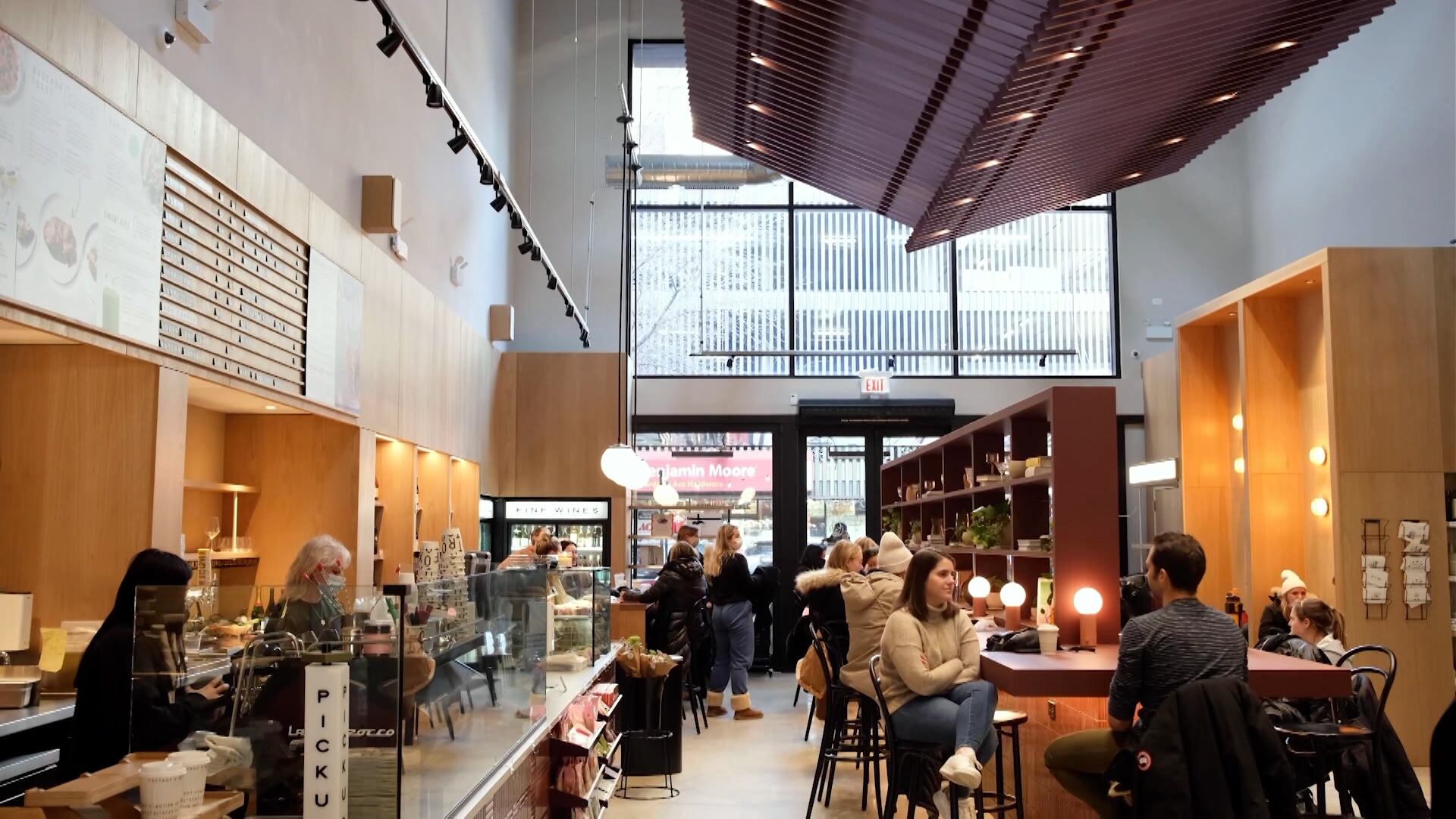
raised $100 million in a Series C round led by D1 Capital Partners. Foxtrot bills itself as the modern convenience store that combines what it calls in-store curated discovery with 30-minute delivery and 5-minute pickup. Since launching first as a digital-only delivery service, the company has since grown into a popular local retailer, opening 16 brick and mortar locations across Chicago, Dallas, and Washington, DC. Foxtrot co-founder and CEO Michael LaVitola joined Cheddar News' Closing Bell to discuss.
As Meta and Microsoft ramp up their AR and VR tech futures, analysts have been waiting on word from Apple, but the consumer tech giant is reportedly delaying such an announcement. Doug Astrop, a managing partner at Exponential Investment Partners, joined Cheddar to dive into the rumors about the possibilities of a foray into the metaverse by Tim Cook's megacorp sometime in 2022 or 2023. "We can't really predict with a great deal of certainty how it's going to play out, but I'm confident Apple's going to be a big player and do very well in any scenario that unfolds," said Astrop.
Monster Beverage is charging into the beer and hard seltzer biz with its $330 acquisition of CANarchy Craft Brewery Collective. The energy drink finalized the deal a week after Constellation Brands Inc. made a deal with Coca-Cola to acquire the Fresca brand.