*By Carlo Versano*
Condé Nast's shift to digital continued this week with an announcement that Glamour, the 80-year-old women's fashion magazine, would cease monthly print publication after its January 2019 issue. It follows similar moves by Teen Vogue and Self, other female-focused brands in the Condé stable. The vaunted magazine publisher lost $120 million last year amid a consolidation of its print properties.
Samantha Barry, the editor-in-chief of Glamour, explained the decision in an interview with Cheddar Wednesday as a natural evolution of the brand ー to make sure it's "front and center" for its readers on the digital platforms they use most. She said she will invest in new initiatives, like digital covers, video series, and special projects for web and social audiences. Condé Nast said no layoffs were planned as part of the shift, [according to Variety](https://variety.com/2018/biz/news/glamour-ceases-print-magagazine-conde-nast-1203033464/).
In order to focus on digitally-native content , Barry "wanted to come off a monthly cycle," she said. She noted that while Glamour's print circulation was robust and stable ー 2.2 million subscribers get the magazine every month ー it paled in comparison to its online audience, which totals 20 million people a month across platforms, according to a company spokesperson.
In particular, Glamour's brand of "service journalism" that addresses wellness, sex, and fertility has been increasingly moving to online platforms. It was anachronistic to think that women were still waiting by their mailboxes each month to read and talk about those issues, Barry said.
While revenues from glossy print ads are generally far higher than what media brands can charge for digital ads, Barry said she plans to offset that difference by diversifying Glamour's revenue model with new opportunities for sponsors, such as branded content and live events like the recent Women of the Year Awards. Barry added that Glamour would continue to produce two to three print issues a year, tied to flagship events like Women of the Year. She also said she was "exploring" a paywall that would be narrow in scope, and target certain areas ー career and negotiating tips, as an example ー but said a decision has not been made.
As a Condé Nast title, Glamour is known for its high-quality content and lush photography. Barry said the shift to digital will not change that. "I want to take all of the quality that we've been doing in photography and fashion and beauty, and invest in that digitally."
The last regular print issue of Glamour will hit newsstands Tuesday.
For full interview click [here](https://cheddar.com/videos/glamour-eic-samantha-barry-says-goodbye-to-print-goes-digital).
Wall Street saw another volatile day after the Federal Reserve left rates unchanged for now, with plans to raise rates in March at its next meeting in order to ease inflation. Fed Chair Jerome Powell said the Fed has not made decisions on the size of rate increases, adding that the Fed is not trying to get inflation below two-percent. Ken Johnson, CFA and Investment Strategy Analyst explains why Powell thinks that high inflation is a significant threat to the labor market.
Ed Butowsky, managing partner at Chapwood Investments, joined Wake Up With Cheddar to break down the disappointing takeaways from Spotify's Q4 earnings report, which sent the stock plunging.
Anu Gaggar, global investment strategist for Commonwealth Financial Network, joined Cheddar News to discuss how global supply chains could be disrupted even further by an armed conflict in Ukraine.
Google parent company Alphabet saw yet another successful quarter reporting its final earnings report for 2021 on Tuesday. The tech giant beat Wall Street expectations across the board with much of that success owed to not only the growth of its cloud business, but also its multi-platform advertising. Joanna O'Connell, Principal Analyst at Forrester explains why advertising may be one of the keys to Alphabet’s future success.
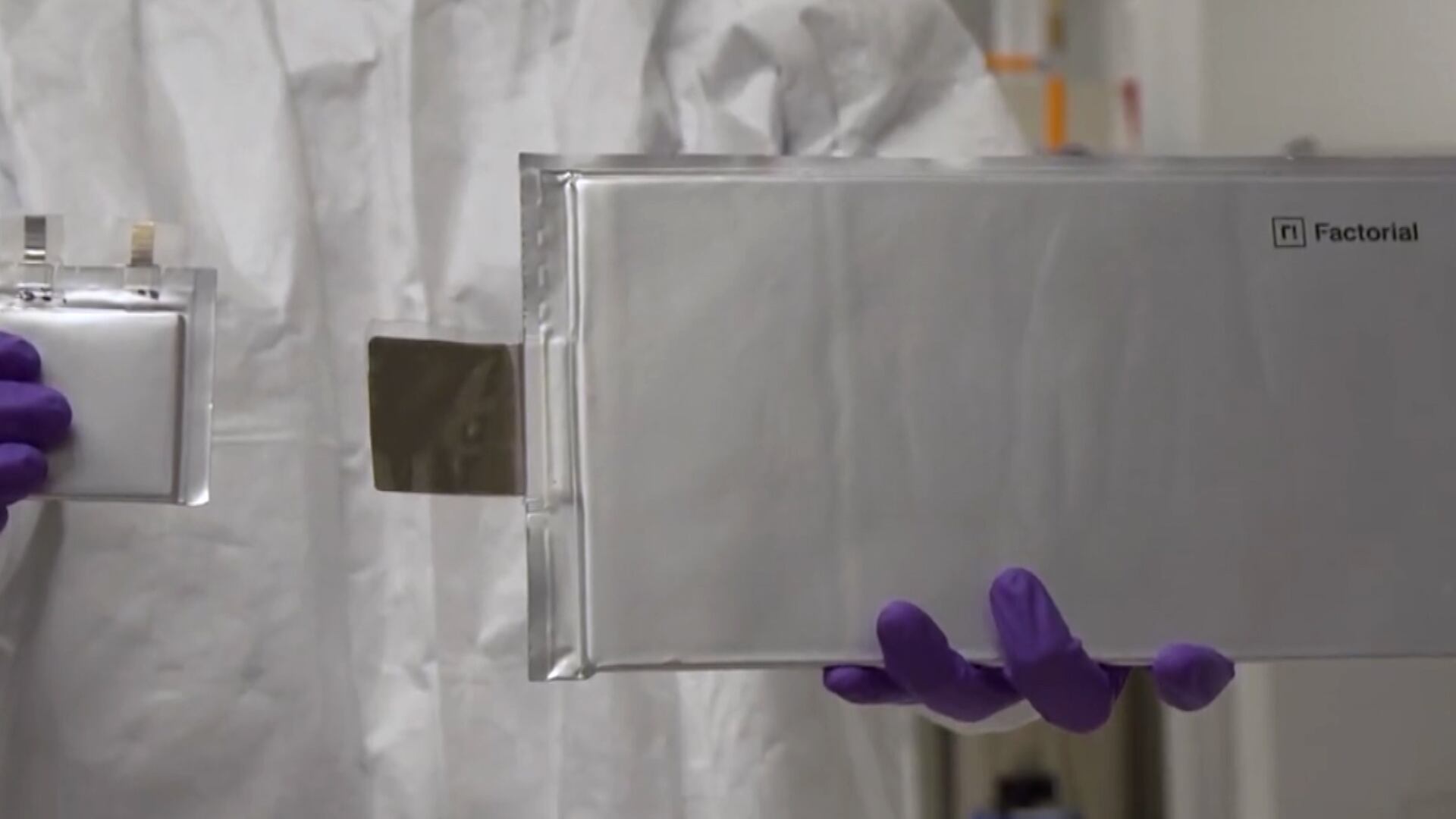
Solid-state battery maker Factorial Energy recently raised $200 million in a Series D round led by Mercedes-Benz and Stellantis. Factorial says the funding will be used to accelerate commercial production and deployment of its solid-state battery technology, which the company says is safer, and offers up to 50% more driving range than current lithium-ion technology. Factorial also has joint development agreements (announced in late 2021) with Mercedes-Benz, Stellantis, and Hyundai, three of the top 10 global automotive manufacturers, to commercialize its batteries. Factorial CEO Siyu Huang joined Cheddar News' Closing Bell to discuss.
Art Hogan, Chief Market Strategist at National Securities, joins Cheddar News' Closing Bell, where he says investors are paying more attention to earnings this week, which is leading to the Dow, S&P, and Nasdaq gaining this week. Hogan also breaks down Spotify and Meta's earnings, both of which came out after the bell.
Google's parent company Alphabet reported blockbuster fourth quarter earnings, boosted by better-than-expected Google ad revenue and Google Cloud revenue. The results sent Alphabet's stock soaring, and the company could come close to hitting a $2 trillion market valuation similar to other tech giants Apple and Microsoft. The company also announced a 20-for-1 stock split, which would make shares more accessible to would-be investors. Mark Lehmann, CEO at JMP Securities, a Citizens Company, joins Closing Bell to discuss Alphabet's earnings report, whether the company will reach a $2 trillion market cap, its stock split, and more.