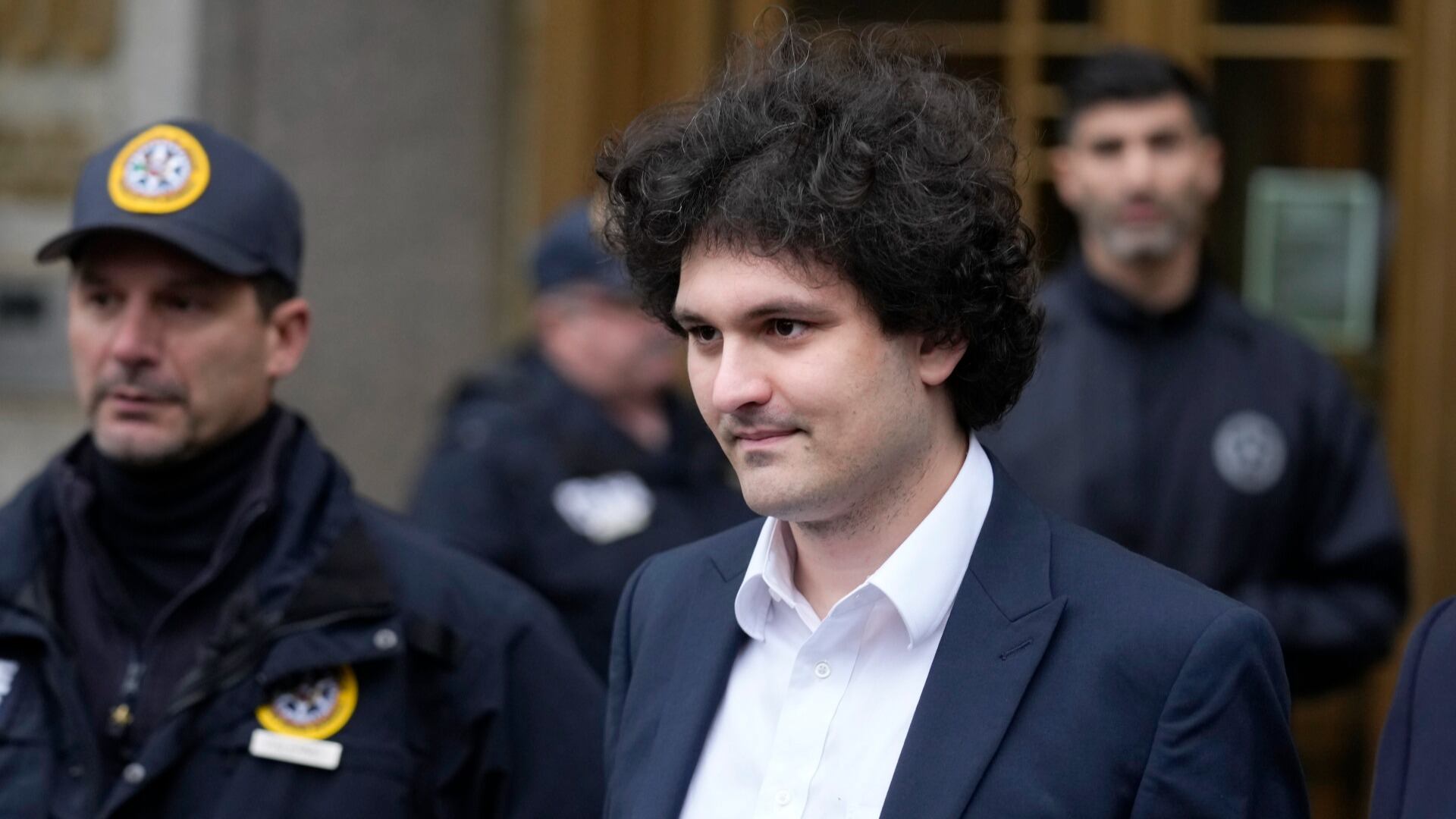
FTX founder Sam Bankman-Fried leaves Manhattan federal court, Tuesday, Jan. 3, 2023, in New York, after he pleaded not guilty to charges that he cheated investors and looted customer deposits on his cryptocurrency trading platform. (AP Photo/Seth Wenig)
By Larry Neumeister
FTX founder Sam Bankman-Fried was sent to jail Friday to await trial after a bail hearing for the fallen cryptocurrency wiz left a judge convinced that he had repeatedly tried to influence witnesses against him.
U.S. District Judge Lewis A. Kaplan ordered Bankman-Fried's bail revoked after prosecutors said he'd tried to harass a key witness in his fraud case last month when he showed a journalist her private writings and in January when he reached out to the general counsel for FTX with an encrypted communication.
His lawyers insisted he shouldn’t be jailed for trying to protect his reputation against a barrage of unfavorable news stories.
Kaplan said he had concluded there was probable cause to believe Bankman-Fried had tried to “tamper with witnesses at least twice” since his December arrest.
A defense lawyer said an appeal of the incarceration order would be filed and asked for an immediate stay of the order.
The 31-year-old has been under house arrest at his parents' home in Palo Alto, California, since his December extradition from the Bahamas on charges that he defrauded investors in his businesses and illegally diverted millions of dollars' worth of cryptocurrency from customers using his FTX exchange.
Bankman-Fried's $250 million bail package severely restricts his internet and phone usage.
Two weeks ago, prosecutors surprised Bankman-Fried's attorneys by demanding his incarceration, saying he violated those rules by giving The New York Times the private writings of Caroline Ellison, his former girlfriend and the ex-CEO of Alameda Research, a cryptocurrency trading hedge fund that was one of his businesses.
Prosecutors maintained he was trying to sully her reputation and influence prospective jurors who might be summoned for his October trial.
Ellison pleaded guilty in December to criminal charges carrying a potential penalty of 110 years in prison. She has agreed to testify against Bankman-Fried as part of a deal that could lead to a more lenient sentence.
Bankman-Fried's lawyers argued he probably failed in a quest to defend his reputation because the article cast Ellison in a sympathetic light. They also said prosecutors exaggerated the role Bankman-Fried had in the article.
They said prosecutors were trying to get their client locked up by offering evidence consisting of "innuendo, speculation, and scant facts."
Since prosecutors made their detention request, Kaplan has imposed a gag order barring public comments by people participating in the trial, including Bankman-Fried.
David McCraw, a lawyer for the Times, had written to the judge, noting the First Amendment implications of any blanket gag order, as well as public interest in Ellison and her cryptocurrency trading firm.
Ellison confessed to a central role in a scheme defrauding investors of billions of dollars that went undetected, McGraw said.
"It is not surprising that the public wants to know more about who she is and what she did and that news organizations would seek to provide to the public timely, pertinent, and fairly reported information about her, as The Times did in its story,” McGraw said.
The New York Times and President Donald Trump are fighting again. The news outlet said Wednesday it won't be deterred by Trump's “false and inflammatory language” from writing about the 79-year-old president's health. The Times has done a handful of stories on that topic recently, including an opinion column that said Trump is “starting to give President Joe Biden vibes.” In a Truth Social post, Trump said it might be treasonous for outlets like the Times to do “FAKE” reports about his health and "we should do something about it.” The Republican president already has a pending lawsuit against the newspaper for its past reports on his finances.
OpenAI has appointed Slack CEO Denise Dresser as its first chief of revenue. Dresser will oversee global revenue strategy and help businesses integrate AI into daily operations. OpenAI CEO Sam Altman recently emphasized improving ChatGPT, which now has over 800 million weekly users. Despite its success, OpenAI faces competition from companies like Google and concerns about profitability. The company earns money from premium ChatGPT subscriptions but hasn't ventured into advertising. Altman had recently announced delays in developing new products like AI agents and a personal assistant.
President Donald Trump says he will allow Nvidia to sell its H200 computer chip used in the development of artificial intelligence to “approved customers” in China. Trump said Monday on his social media site that he had informed China’s leader Xi Jinping and “President Xi responded positively!” There had been concerns about allowing advanced computer chips into China as it could help them to compete against the U.S. in building out AI capabilities. But there has also been a desire to develop the AI ecosystem with American companies such as chipmaker Nvidia.
U.S. sports betting is booming as NFL and college football fuel massive activity. BetMGM CEO Adam Greenblatt breaks down trends, growth, and what’s next.
President Donald Trump says a deal struck by Netflix last week to buy Warner Bros. Discovery “could be a problem” because of the size of the combined market share. The Republican president says he will be involved in the decision about whether federal regulators should approve the deal. Trump commented Sunday when he was asked about the deal as he walked the red carpet at the Kennedy Center Honors. The $72 billion deal would bring together two of the biggest players in television and film and potentially reshape the entertainment industry.
Disney's changes to a program for disabled visitors are facing challenges in federal court and through a shareholder proposal. The Disability Access Service program, which allows disabled visitors to skip long lines, was overhauled last year. Disney now mostly limits the program to those with developmental disabilities like autism who have difficulty waiting in lines. The changes have sparked criticism from some disability advocates. A shareholder proposal submitted by disability advocates calls for an independent review of Disney's disability policies. Disney plans to block this proposal, claiming it's misleading. It's the latest struggle by Disney to accommodate disabled visitors while stopping past abuses by some theme park guests.
With a merger this big, creators, studios, and theaters all face uncertain futures. Here’s what experts are worried about and what good could come from it.
With disengagement rising and hybrid work shifting, 'Everybody Matters' author Bob Chapman explains why treating people well could define the future of work.
We sat down with Ali Furman, U.S. Consumer Markets Industry Leader at consulting firm PwC to ask what trends she garnered from the initial data this year.