By Will Weissert
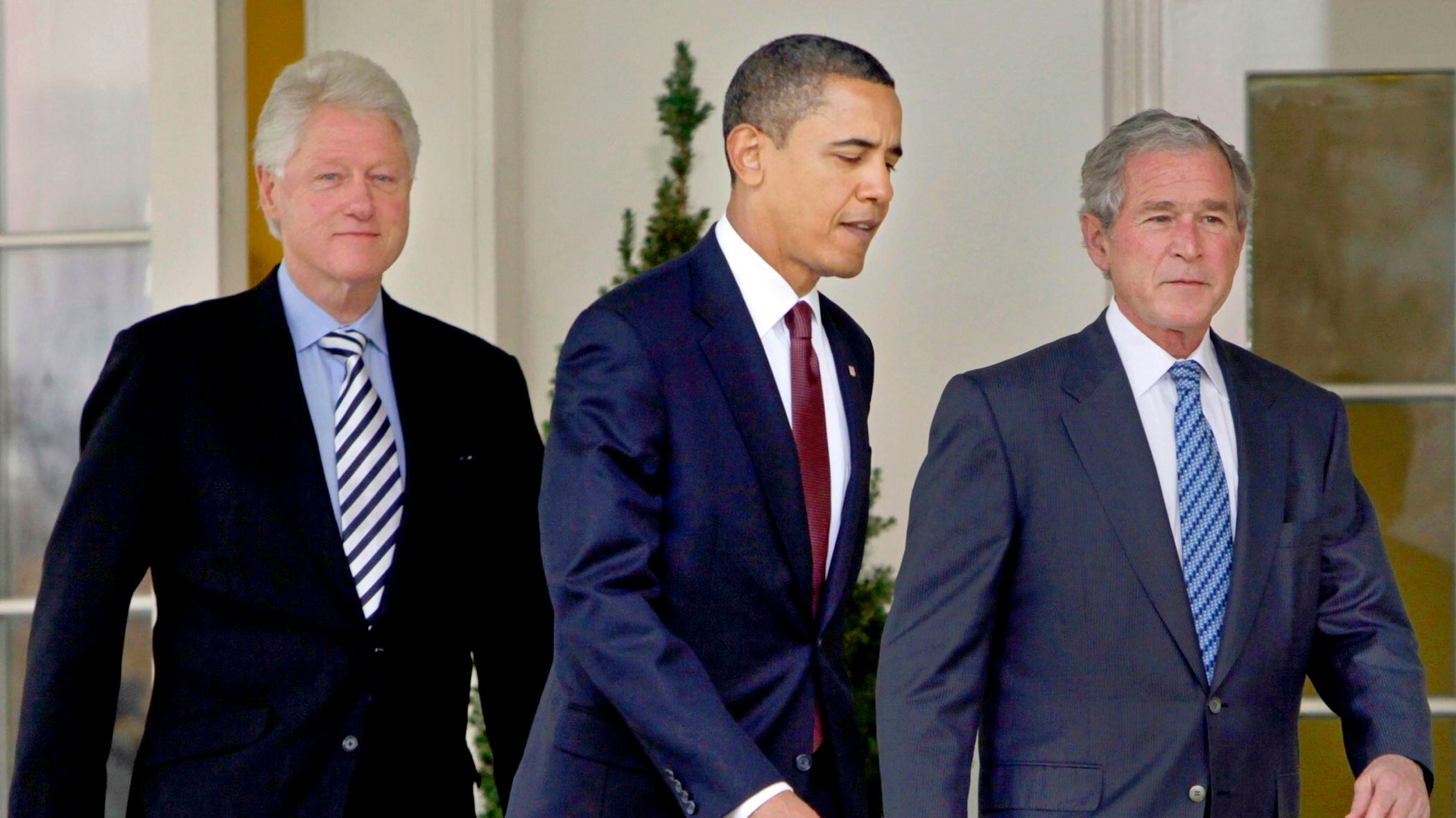
Three former presidents say they'd be willing to take a coronavirus vaccine publicly, once one becomes available, to encourage all Americans to get inoculated against a disease that has already killed more than 273,000 people nationwide.
Former President Barack Obama said during an episode of SiriusXM’s “The Joe Madison Show" airing Thursday, “I promise you that when it’s been made for people who are less at risk, I will be taking it.”
“I may end up taking it on TV or having it filmed, just so that people know that I trust this science,” Obama added.
Obama undergoing immunization may not be possible for the foreseeable future, though. The Food and Drug Administration will consider authorizing emergency use of two vaccines made by Pfizer and Moderna later this month, but current estimates project that no more than 20 million doses of each vaccine will be available by the end of this year. Each product also requires two doses, meaning shots will be rationed in the early stages.
Health care workers and nursing home residents should be at the front of the line, the Advisory Committee on Immunization Practices, an influential government advisory panel, said earlier this week. That encompasses about 24 million people out of a U.S. population of around 330 million.
Still, former President Bill Clinton would “definitely” be willing to get a vaccine, as soon as one is "available to him, based on the priorities determined by public health officials,” spokesman Angel Ureña said.
"And he will do it in a public setting if it will help urge all Americans to do the same,” Ureña said in a statement Thursday.
Ureña declined to answer a question on whether Clinton's team has been in touch with advisers to other former presidents about perhaps setting up a joint public immunization session whenever that might be possible.
Former President George W. Bush's chief of staff, Freddy Ford, told CNN that the former president asked him recently to meet with Dr. Anthony Fauci, the nation's top infectious disease expert, and Dr. Deborah Brix, the White House coronavirus response coordinator, to let them "know that, when the time is right, he wants to do what he can to help encourage his fellow citizens to get vaccinated.”
“First, the vaccines need to be deemed safe and administered to the priority populations," Ford told the network. "Then, President Bush will get in line for his, and will gladly do so on camera."
Ford did not respond to a message seeking comment Thursday.
The overlapping sentiments by three former presidents come as the U.S. recorded more than 3,100 COVID-19 deaths in a single day, obliterating the record set last spring. The number of Americans hospitalized with the virus has eclipsed 100,000 for the first time, and new cases have begun topping 200,000 a day, according to figures released Thursday.
President Donald Trump has said that he’ll get criticized no matter what he does on taking the vaccine — whether he’s first or last.
During the presidential campaign, Trump's reelection team tried to criticize challenger Joe Biden as being anti-vaccine. But the former vice president said months ago that he'd take “a vaccine tomorrow” if one became available.
Biden, now president-elect, hasn’t commented on the prospect of getting a vaccine publicly to inspire confidence. His transition team didn't immediately respond to a request for comment.
Biden warned on Wednesday that the spread of the coronavirus pandemic over the next two months could kill at many as 250,000 more people, though he didn't offer details to back up his assessment, which is far bleaker than projections by the Center for Disease Control and Prevention.
“We’re likely to lose another 250,000 people dead between now and January,” Biden said.
Speaking to the broader public, he added: "You cannot be traveling during these holidays, as much as you want to.”