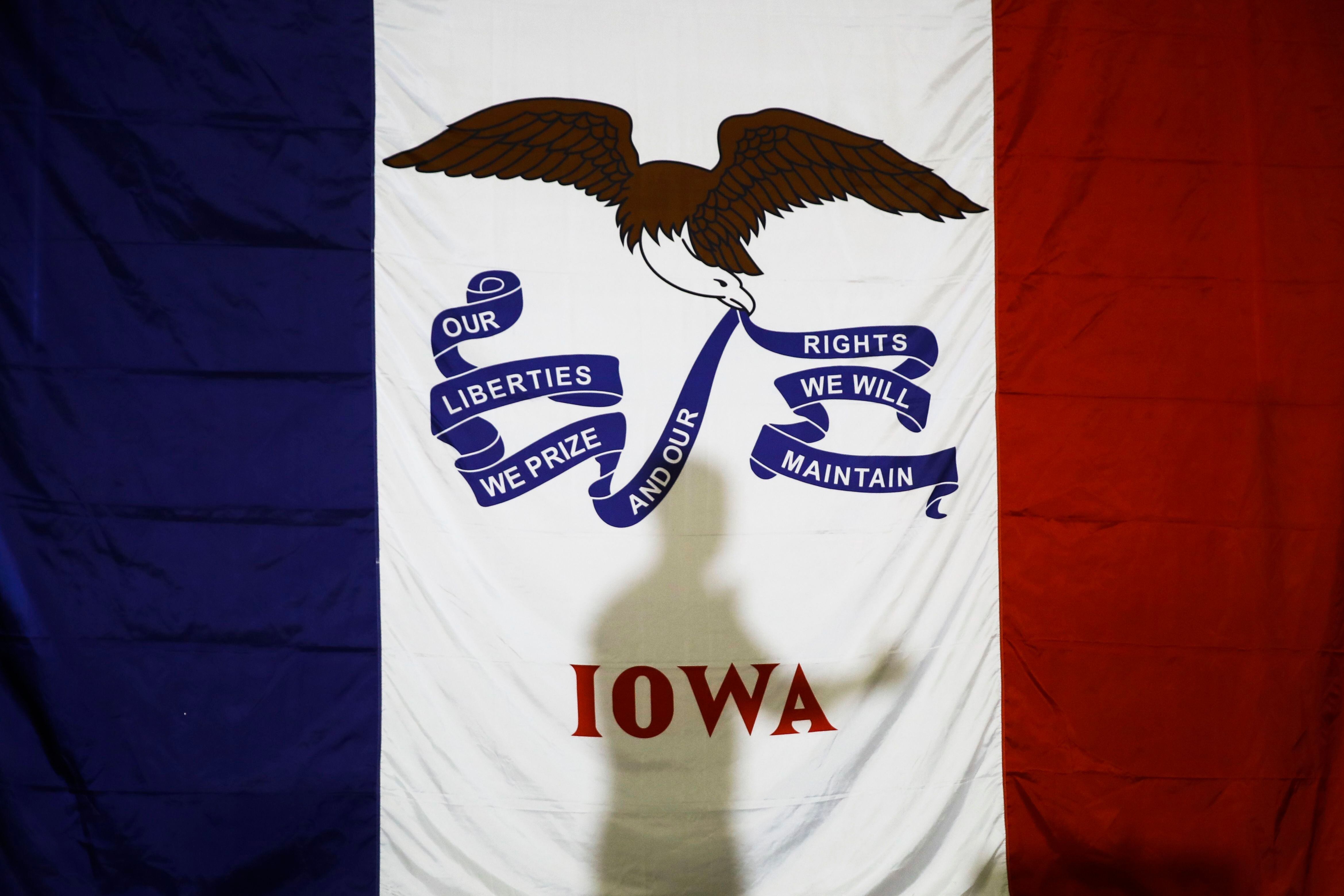
The race for 2020 is gaining speed today as the first votes are cast in Iowa, the first test of political strength, for the Democratic nominee for the presidency. Since the 1970s, Iowa has been the home of the first caucus.
Iowa voters take their pick seriously, as winners often gain momentum from the early voting. This year, with so many Democratic contenders still in the running and Bloomberg, a growing contender who bypassing early voting states entirely, there’s still a lot up in the air, meaning there’s a chance Iowans may not pick the candidate who will ultimately win the nomination at the convention. Caucus-goers have picked seven out of the last 11 Democratic presidential nominees but only four out of the last 11 GOP presidential nominees.
Here are five times the Iowa caucus results did not pick the eventual party nominees.
1988 Republicans
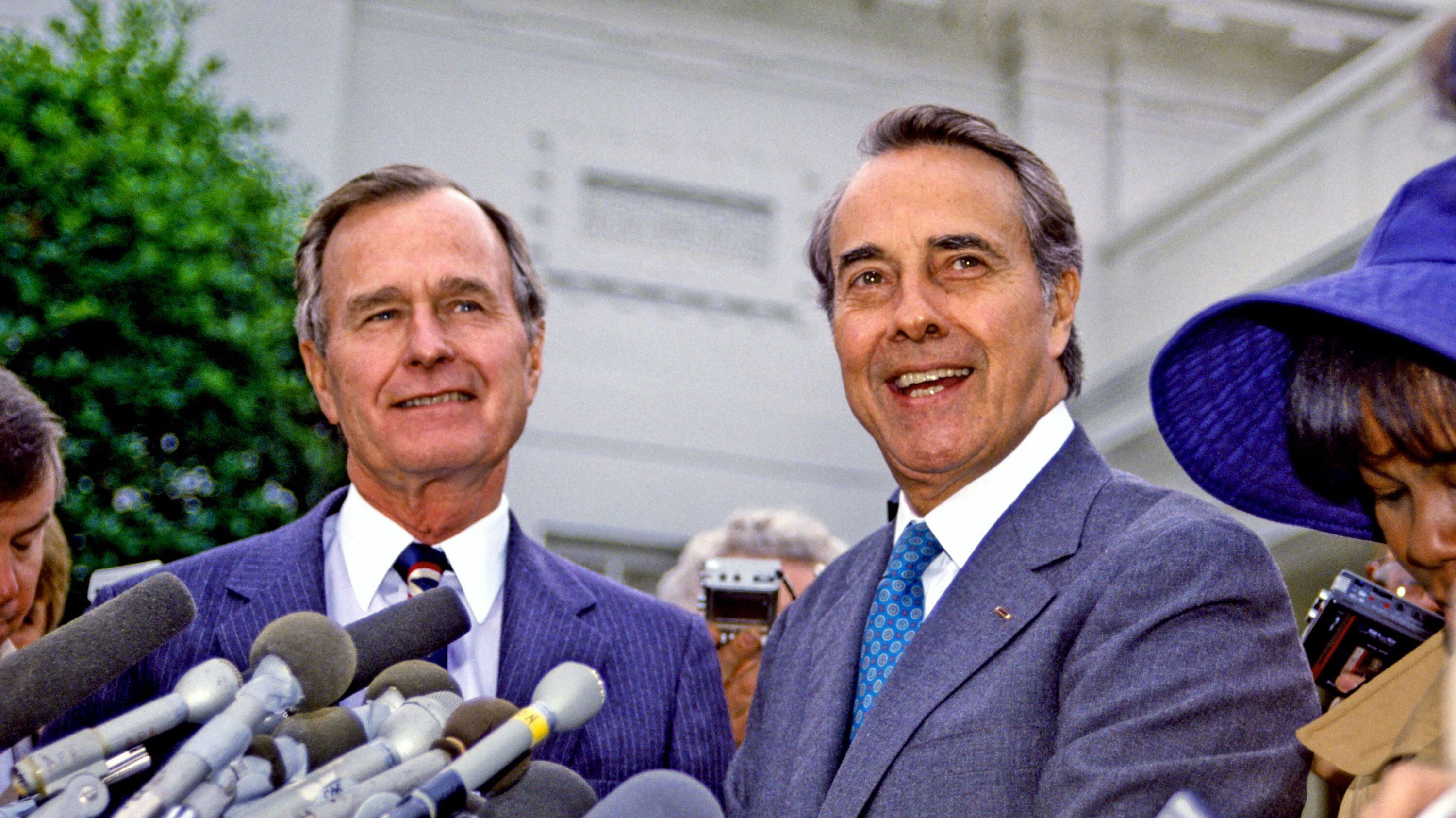
George H.W. Bush, who went on to claim the Republican nomination and the presidency in 1988 came in third in Iowa, after Bob Dole and Pat Robertson. Bush was the vice president at the time.
<i>President-elect George H.W. Bush and Senate Republican Leader Bob Dole meet reporters at the White House, Nov. 28, 1988. / Photo Credit: Shutterstock</i>
1992 Democrats
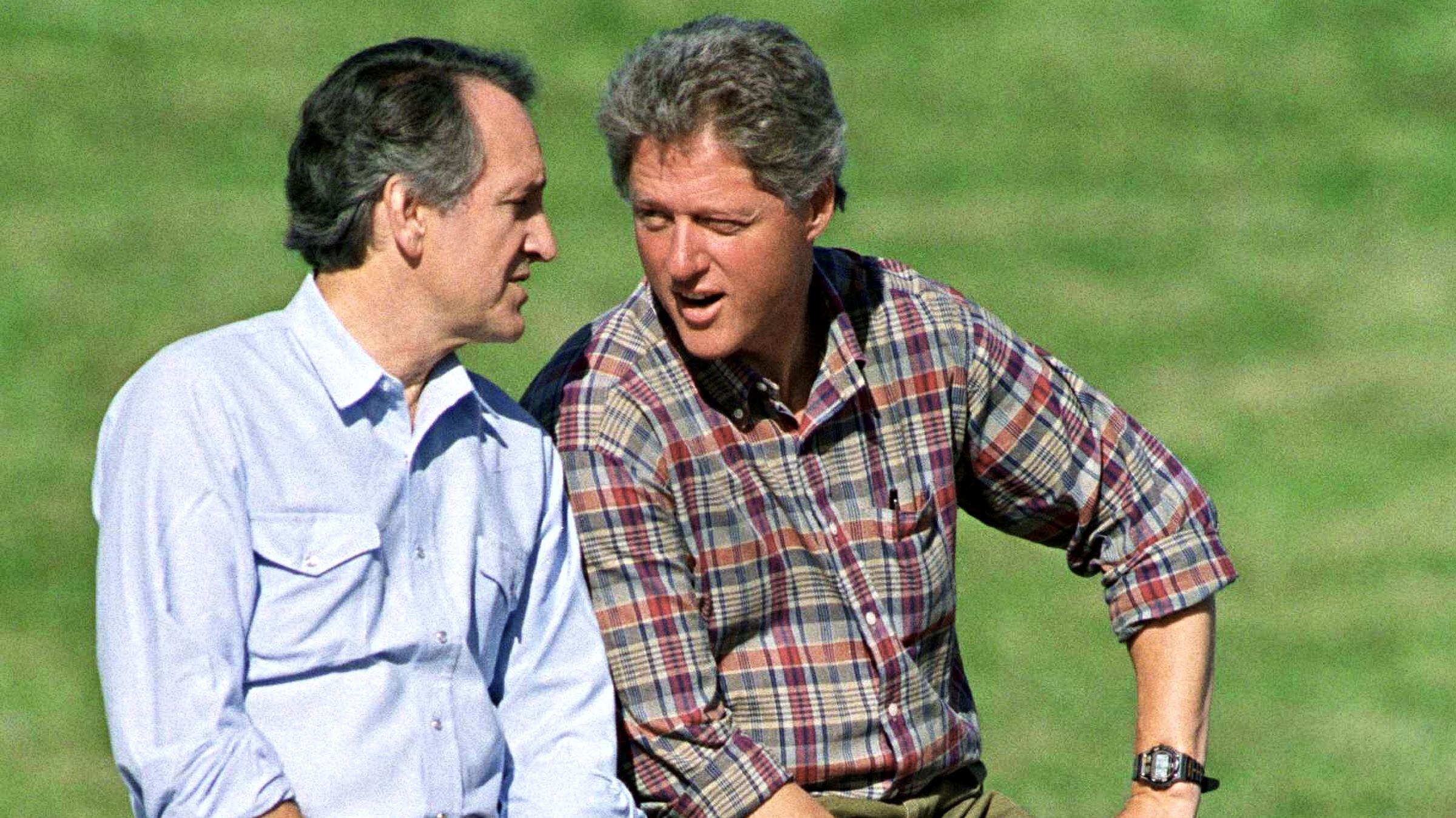
The last time Iowa got it wrong for Democrats was 1992, when Bill Clinton, the eventual nominee and president, only claimed 2.8 percent of the vote and came in fourth place. That year, the Iowa Senator Tom Harkin was running for president and claimed more than 75 percent of the caucus vote.
<i>Iowa Senator Tom Harkin talks with Democratic presidential candidate Bill Clinton at a party fund-raiser in Indianola, Iowa, Sept. 27, 1992. / Photo Credit: Charlie Neibergall/AP/Shutterstock</i>
2008 Republicans
When Barack Obama entered the national political scene, he won the Democratic caucus in 2008 and went on to win the presidency. But Mike Huckabee, former Arkansas governor, won the Republican caucus in Iowa. He would not go on to win the nomination. Senator John McCain, the eventual Republican nominee had come in fourth place in Iowa with 13.1 percent of the caucus vote. The previous time McCain was up for the nomination, in 2000, he nabbed only 4.7 percent of the caucus vote and came in fifth place. Eventual nominee and winner of the presidency George W. Bush came in first that year in Iowa, and businessman Steve Forbes came in second.
2012 Republican
In 2012, Rick Santorum squeaked by with a victory by just a tenth of a percent in the Iowa Caucus, though the Republican party had initially called it for Senator Mitt Romney (R-Utah) who later went on to nab the nomination and run against President Barack Obama.
2016 Republican
Today’s president, Donald Trump, did not win the Republican caucus in 2016. Senator Ted Cruz (R-Texas) won 27.6 percent of the vote compared to Donald Trump who carried 24.3 percent.
This story was updated February 3 to clarify the number of times Iowa Democrats and Republicans have selected the candidate who ultimately became their party's candidate.
David Levine, elections integrity fellow with Alliance for Securing Democracy, joins Cheddar News to discuss Politico's bombshell finding revealing the RNC's plan to contest the elections.
A survey by the BMO Real Financial Progress Index found that 25 percent of Americans are pulling back on retirement contributions to offset the cost of inflation. This comes as market volatility reduced retirement savings with the S&P 500 shedding more than 12 percent this year alone.
As abortion rights take center stage in courts around the country, so do discussions about reproductive health. Signs and social media posts say things like "protect women's rights" and "her body, her choice," leaving others who need and receive abortions completely out of the picture. The potential end to Roe v. Wade would impact far more people and facilities than you may think. Cheddar News' Baker Machado breaks it all down.
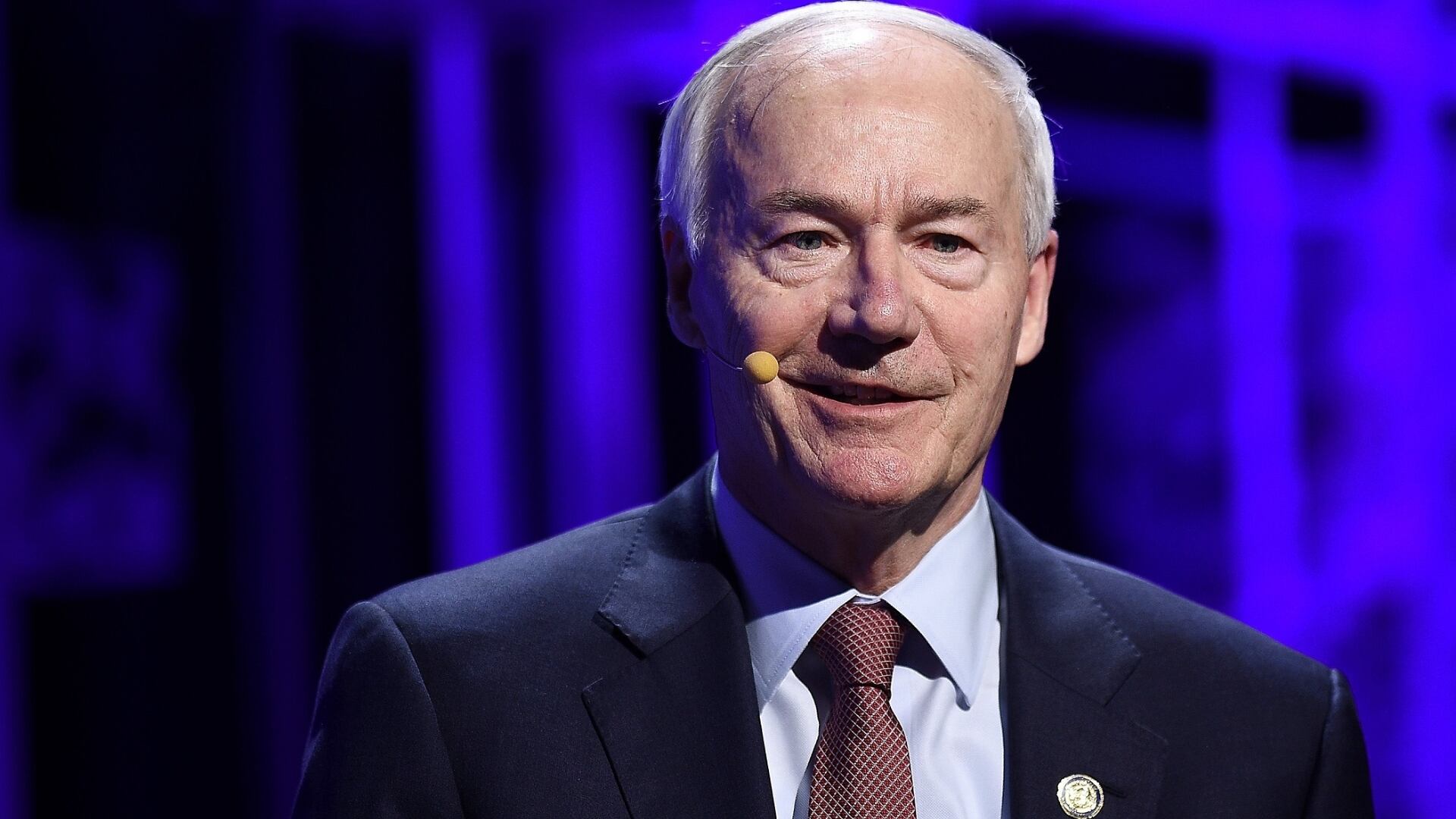
Arkansas is planning to reshape itself by putting a strong emphasis on technology through computer science in the classroom. Governor Asa Hutchinson joined Cheddar News Buffa to discuss the state's efforts to promote itself as a future tech hub. “It gives young people such a huge opportunity for success," he noted. The term-limited governor also touched on the issue of gun ownership, offering up the idea of possibly raising the age limit to obtain rifles like the AR-15 to 21 instead of 18 as it currently stands.
The dating app Bumble has sponsored bills and pushed lawmakers to criminalize the online practice of sending unsolicited nudes or “cyberflashing." Payton Iheme, Bumble's head of public policy for the Americas, joined Cheddar News to discuss why the app was going after the harassing behavior beyond its own platform. "Now, while we went to work internally in the company, and we created something called private detector to automatically blur those images so the user can decide if they want to see them, there's nothing for the rest of the internet," she said. "And so that's why we went to work with these laws."
Constituent service platform Indigov recently raised $25 million in a Series B funding round. Indigov bills itself as a constituent relationship management tool that helps elected officials improve the way they organize, respond to, and engage those they serve. The startup's services are being used by federal, state, and local governments across the country, including the U.S. House of Representatives. Alex Kouts, founder & CEO of Indigov, joins Cheddar News' Closing Bell to discuss.