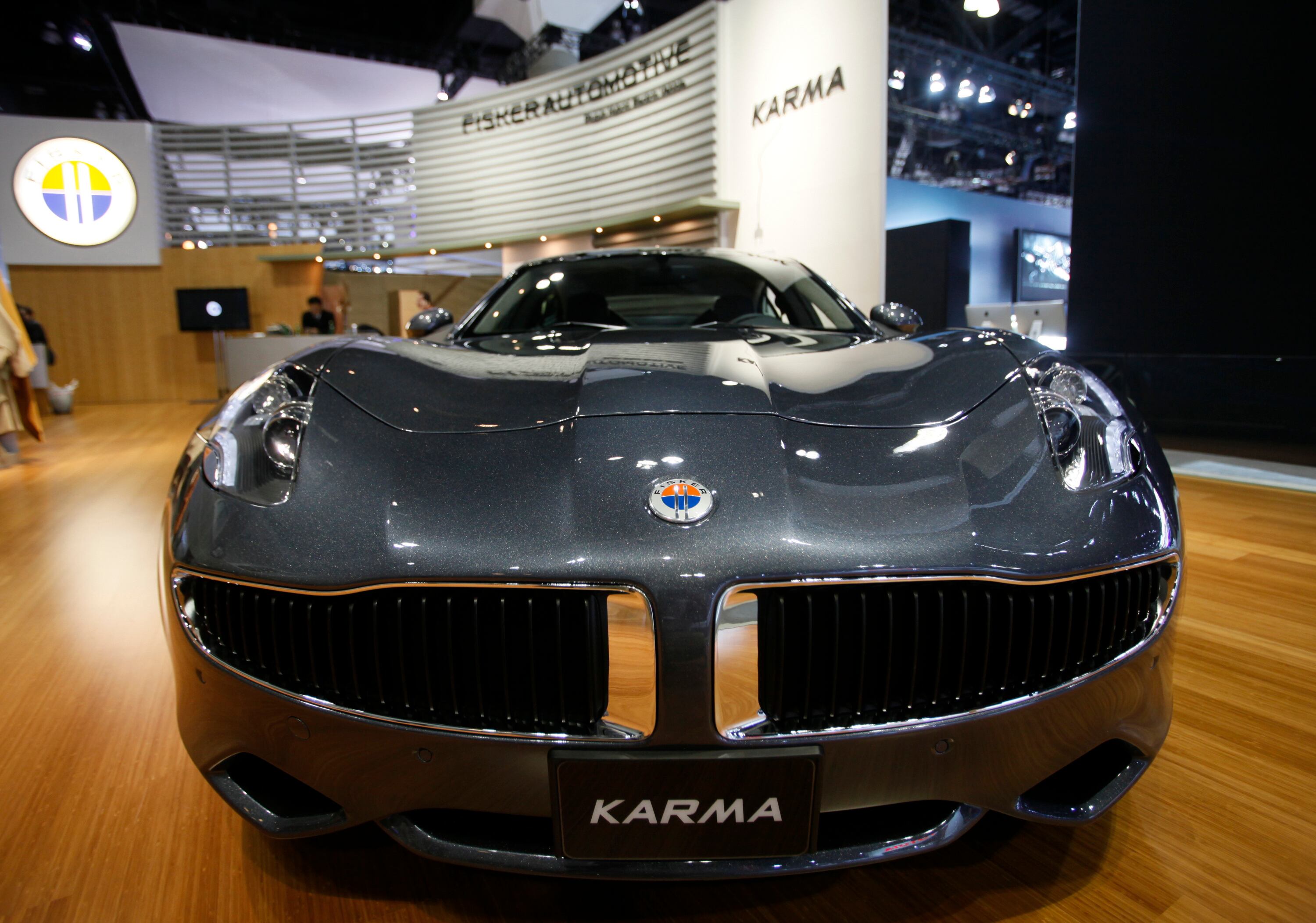
Electric vehicle maker Fisker filed for Chapter 11 bankruptcy protection, the second electric startup to do so in the last year as even industry leaders struggle to lure more buyers beyond the early adapters of the technology.
Fisker Group Inc. said in a filing with the U.S. Bankruptcy Court in Delaware that its estimated assets are between $500 million and $1 billion. It estimated liabilities are between $100 million and $500 million, with between 200 and 999 creditors.
“Like other companies in the electric vehicle industry, we have faced various market and macroeconomic headwinds that have impacted our ability to operate efficiently,” the company said in a prepared statement late Monday. “After evaluating all options for our business, we determined that proceeding with a sale of our assets under Chapter 11 is the most viable path forward for the company.”
The 7-year-old electric car company was founded by designer Henrik Fisker, who has been its chairman and CEO. He designed the company's 2022 Ocean all electric SUV as well as the luxury plug-in hybrid Karma that was launched in 2011. Fisker is also known for leading the development of the BMW Z8 sports car.
It is the second automotive venture led by Henrik Fisker to fail.
Fisker, based in Manhattan Beach, California, and other startups like Lordstown Motors Corp., sought to take on industry leaders like Tesla, and big automakers in Detroit, which have entered the market aggressively.
However, EV sales have slowed as manufacturers have attempted to push electric vehicles into the mainstream. Those sales have been curbed both by a lack of infrastructure, as well as rising inflation that have made taking on car loans more expensive.
Electric vehicles grew only 3.3% to nearly 270,000 during the first three months of this year, far below the 47% growth that fueled record sales and a 7.6% market share last year, according to J.D. Power. The slowdown, led by Tesla, confirms automakers’ fears that they moved too quickly to pursue EV buyers. The EV share of total U.S. sales fell to 7.15% in the first quarter.
That has led to huge price cuts and job cuts at leading companies like Tesla.
Another electric startup, Rivian, said this year that it was pausing construction of its $5 billion manufacturing plant in Georgia to speed production and save money.
Lordstown sought bankruptcy protection last summer, as it dealt with funding difficulties.
The Fisker bankruptcy filing comes as the Biden administration pushes to dramatically raise EV sales as part of President Joe Biden’s agenda to slow climate change. Republicans led by presumptive nominee Donald Trump are turning EVs into a campaign issue, deriding Biden’s efforts to promote electric vehicles as a “radical plan” that is unfair for consumers and amounts to government overreach.
Auto companies are investing billions in factories and battery technology to speed up the switch to EVs to cut pollution, fight climate change — and meet an Environmental Protection Agency requirement that 56% of all new vehicle sales be electric by 2032.
Henrik Fisker's first attempt to start an electric car company also ended in 2013. That 2013 collapse culminated a long downward spiral that began after Fisker received a $529 million loan commitment from the U.S. Department of Energy.
It was later learned that the U.S. Energy Department did not realize for four months that the flailing company, called Fisker Automotive Inc., had missed a crucial production target that was required as part of a half-billion dollar government loan. The mistake allowed Fisker to obtain an additional $32 million in government funding before the loan was suspended in June 2011.
Fisker Inc. and other U.S. subsidiaries, along with subsidiaries outside the U.S., are not currently included in the bankruptcy filing. Fisker says that it’s in advanced talks with financial stakeholders about debtor-in-possession financing and selling its assets.
_____
AP Writer Matthew Daly in Washington, D.C., contributed to this report