By Michael Balsamo and Ann D'Innocenzio

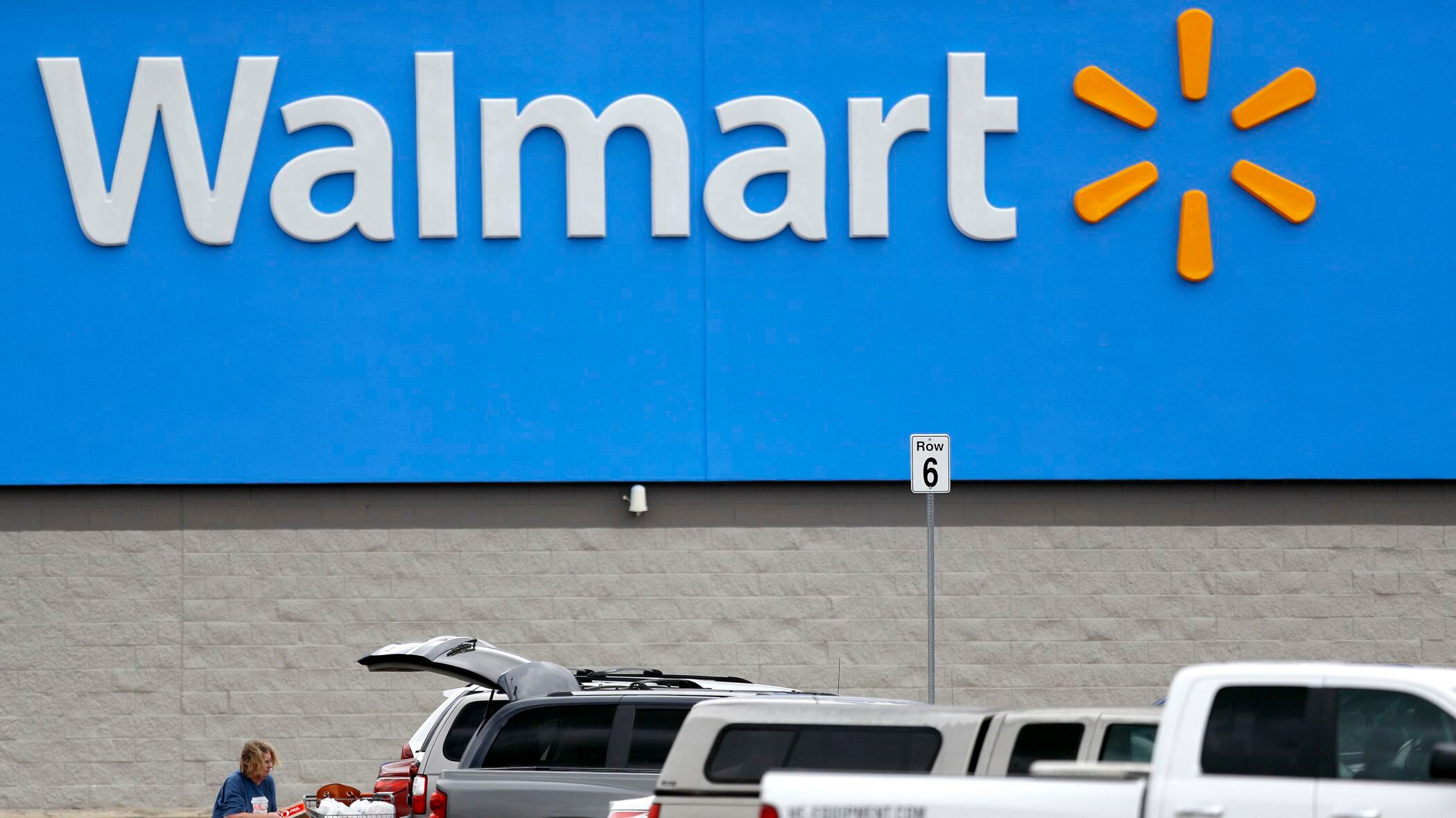
The Justice Department is suing Walmart, alleging the company unlawfully dispensed controlled substances through its pharmacies, helping to fuel the opioid crisis in America.

The civil complaint being filed Tuesday points to the role Walmart’s pharmacies may have played in the crisis by filling opioid prescriptions and by unlawfully distributing controlled substances to the pharmacies during the height of the opioid crisis. Walmart operates more than 5,000 pharmacies in its stores around the country.

The Justice Department alleges Walmart violated federal law by selling thousands of prescriptions for controlled substances that its pharmacists “knew were invalid,” said Jeffrey Clark, the acting assistant attorney general in charge of the Justice Department’s civil division.

Federal law required Walmart to spot suspicious orders for controlled substances and report those to the Drug Enforcement Administration, but prosecutors charge the company didn’t do that. Walmart couldn’t immediately be reached for comment.

“Walmart knew that its distribution centers were using an inadequate system for detecting and reporting suspicious orders,” said Jason Dunn, the U.S. attorney in Colorado. “As a result of this inadequate system, for years Walmart reported virtually no suspicious orders at all. In other words, Walmart’s pharmacies ordered opioids in a way that went essentially unmonitored and unregulated.”

The suit alleges that Walmart made it difficult for its pharmacists to follow the rules, putting “enormous pressure" on them to fill a high volume of prescriptions as fast as possible, while at the same time denying them the authority to categorically refuse to fill prescriptions issued by prescribers the pharmacists knew were continually issuing invalid prescriptions.

AP reported the news of the lawsuit ahead of the Justice Department's public announcement, citing a person who could not discuss the matter publicly before the announced move. The person spoke to the AP on condition of anonymity.

The Justice Department’s lawsuit comes nearly two months after Walmart filed its own preemptive suit against the Justice Department, Attorney General William Barr, and the Drug Enforcement Administration.

In its lawsuit, Walmart said the Justice Department’s investigation — launched in 2016 — had identified hundreds of doctors who wrote problematic prescriptions that Walmart’s pharmacists should not have filled. But the lawsuit charged that nearly 70% of the doctors still have active registrations with the DEA.

Walmart’s lawsuit alleged the government was blaming it for the lack of regulatory and enforcement policies to stem the crisis. The company is asking a federal judge to declare the suit has no basis to seek civil damages. That suit remains ongoing.

The initial investigation was the subject of a ProPublica story published in March. ProPublica reported that Joe Brown, then U.S. attorney for the Eastern District of Texas office, spent years pursuing a criminal case against Walmart for its opioid prescription practices, only to have it stymied after the retail giant’s lawyers appealed to senior officials in the Justice Department.

Two months later, Brown resigned. He didn’t give a reason for his departure except to say he would be “pursuing opportunities in the private and public sectors." Brown went into private practice in the Dallas area.

Updated on December 22, 2020, at 3:44 p.m. ET with additional details.
Share:
More In Business
GM CFO Says Chip Availability Is Getting Better, Good News for Electric Vehicle Goals
General Motors reported its Q4 earnings Tuesday. While chip shortages impacted sales and revenue last quarter, Paul Jacobson, GM Chief Financial Officer, told Cheddar chip availability has gotten better since Q3. This is crucial as GM has pivoted its focus toward electric vehicles. It recently announced it will be building a new battery plant in Michigan, making $35 billion in EV investments, and producing a million electric vehicles by 2025.
Google and AARP to Provide Digital Skills Training for Older, Low Income Workers
Google’s philanthropy arm, Google.org, recently announced a $10 million grant for the AARP Foundation to aid in teaching digital skills to low income older workers. As the implementation of hybrid work expands, a greater emphasis is being placed on helping workers 50 years old and up — especially among women and people of color — to be digitally literate in order to keep the workplace generationally diverse. Lisa Marsh Ryerson, president of the AARP Foundation, joined Cheddar News to talk about the curriculum of the partnership. "Those of us who are 50 and older are not digital natives, so we do have a learning curve that we have to address," she noted.
AT&T Investors Digest WarnerMedia Spinoff Merger With Discovery for $43 Billion
AT&T announced earlier today it is spinning off its media properties in WarnerMedia in a merger with Discovery in a $43 billion deal.Scott Rostan, founder and CEO at Training The Street, joined Cheddar to talk about what the unwinding of the telecom giant's Time Warner media properties means for investors. "I think the investor sentiment is they're digesting the new information, and they're looking into the dividend, especially the reduction of the dividend," said Rostan, noting the transaction allows AT&T to focus on its core telecommunications business.
End of an Era: Tom Brady Announces Retirement From NFL
Greg Bishop, Senior Writer for Sports Illustrated, joins Cheddar News' Closing Bell, where he says Tom Brady's legacy is all about 'progress' and expects the future Hall of Famer to bolster his entrepreneurial ventures following his retirement.
Stocks Close Near Session Highs to Begin February
Anthony Saccaro, Founder and President of Providence Financial, joins Cheddar News' Closing Bell, where he elaborates on why he is excited that the market is beginning to rebound and believes February has the potential to be a good month after a turbulent January.
Energy Storage Solutions Company Leclanché Powers EV Fleets to Reduce Emissisions
A 2021 report from UK Research and Innovation found that the shipping industry makes up at least 2.5 percent of the world's total CO2 emissions. It's a problem that energy solutions company, Leclanché, is trying to solve. Founded in 1909, the company has been developing and producing batteries for more than 100 years. Today, Leclanché's lithium-ion battery is used to electrify not just ships, but also railroad locomotives, trucks, and specialty vehicles. Cheddar News spoke with Pierre Blanc, chief technology and industrial officer of Leclanché, to discuss.
Amazon Funds Amogy to Commercialize Ammonia-Powered Cargo-Shipping Vessels, Decarbonize Transportation
Amazon is betting that ammonia could be the fuel of the future, participating in a Series A round for the Brooklyn-based company Amogy in December. Amogy aims to de-carbonize transportation with a clean energy system that uses ammonia as a renewable fuel. Amogy is partnering with Amazon on its first commercial product - an ammonia-powered cargo-shipping vessel. Amogy CEO Seonghoon Woo joins Cheddar Climate to discuss.
Load More