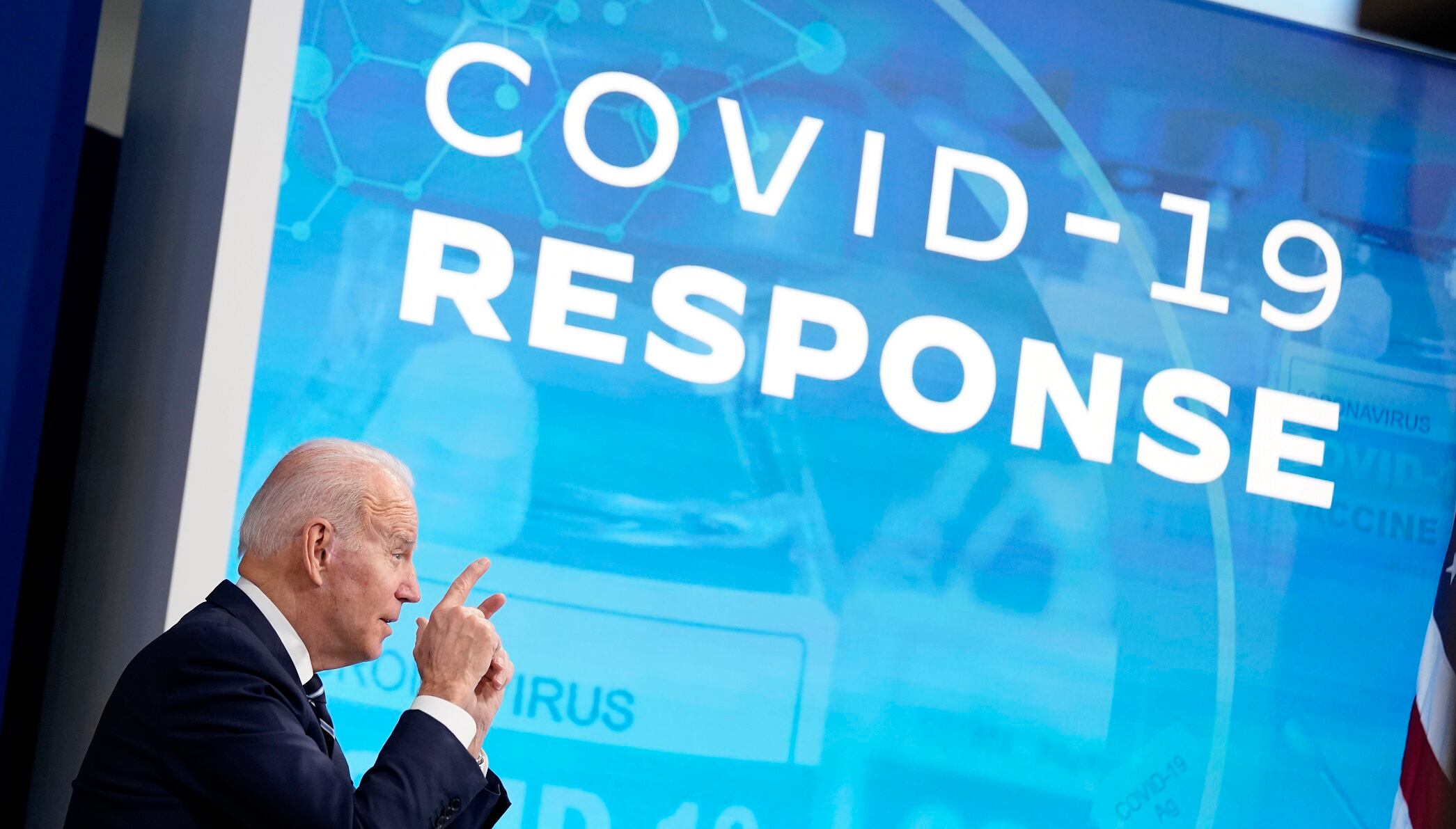
President Joe Biden speaks about the government's COVID-19 response, in the South Court Auditorium in the Eisenhower Executive Office Building on the White House Campus in Washington, Thursday, Jan. 13, 2022. (AP Photo/Andrew Harnik)
By Zeke Miller
The federal website where Americans can request free COVID-19 tests will begin accepting orders on Wednesday as the White House looks to address nationwide shortages, but supplies will be limited to just four free tests per home.
Starting on Jan. 19, the website COVIDTests.gov will provide tests at no cost, including no shipping fee, the White House announced Friday.
As he faced criticism for low inventory and long lines for testing, President Joe Biden announced last month that the U.S. would purchase 500 million at-home tests to launch the program and on Thursday the president announced that he was doubling the order to 1 billion tests.
But Americans shouldn't expect a rapid turn-around on the orders and they will have to plan ahead and request the tests well before they meet federal guidelines for when to use a test.
The White House said “tests will typically ship within 7-12 days of ordering" through the U.S. Postal Service, which reports shipping times of 1-3 days for its first-class package service in the continental United States.
The Centers for Disease Control and Prevention recommends at-home testing when experiencing COVID-19 systems including fever, cough, sore throat, respiratory symptoms and muscle aches, five days after a potential COVID-19 exposure, or as part of test-to-stay protocols in schools and workplaces.
“Certainly if you’re going to gather with family, if you’re going to a gathering where people are immunocompromised or where they’re elderly or where you have people who might be unvaccinated or poorly protected from a vaccine that might be an opportunity you want to test,” said Dr. Rochelle Walensky, the CDC director, on Wednesday.
Officials emphasized that the federal website is just one way for people to procure COVID-19 tests. Starting on Saturday, private insurance companies will be required to cover the cost of at-home rapid tests, allowing Americans to be reimbursed for tests they purchase at pharmacies and online retailers. That covers up to eight tests per month.
The White House said the four-test limit on website orders will be applied to each residential address and will apply to the first tranche of 500 million tests. It estimates that the cost of purchasing and distributing the first block of tests at $4 billion.
Officials said they are cognizant that any launch of a website carries some risks — and memories of the disastrous roll-out during the Obama administration of Healthcare.gov are still fresh — but said they believe they are well-positioned to handle expected demand for tests.
Prices at the pump have escalated severely during the Russian invasion of Ukraine. Paul Christopher, head of global market strategy, Wells Fargo Investment Institute, joined Cheddar News to explain how he sees the gas prices continuing to spiral despite the International Energy Agency announcing the release of 60 million barrels of oil from the strategic reserves of 31 countries. "We think you could see oil and gas prices continue to rise. Oil prices maybe could hit $140 a barrel. That's possible. And that would add another 50-60 cents on top of the gasoline prices you already have," he said.
President Joe Biden is set to give his first State of the Union address amid both international and domestic crises: the Russia-Ukraine conflict and continued rising inflation and economic worries at home. He's expected to focus on a four-point plan to reduce everyday costs, and promote economic competition, among other key tenets. But will it be enough to persuade Americans that his administration will be able to get rising prices and foreign policy moves under control? Eugene Scott, national politics reporter at The Washington Post, joins Closing Bell to discuss Biden's expected focus, how he will aim to ease Americans' concerns, and more.
Dr. Daniel Bober, psychiatrist and certified addiction medicine physician, joins Cheddar News to offer tips on how parents and guardians can talk to their children about what's happening in Ukraine.
While crypto exchanges have been used to aid Ukraine amid the Russian invasion, critics point to possible sanction evasion on the Russian side using the same technology. Cheddar's Alex Vuocolo takes a closer look.
Airbnb.org has announced that it will provide up to 100,000 Ukrainian refugees with free housing. Airbnb.org is the philanthropic branch of Airbnb that provides free housing for those affected by disasters. Joe Gebbia, co-founder and chairman of Airbnb.org, joined Cheddar News to talk about how the company has helped thousands find shelter in times of crisis. "A lot of people are saying this conflict is likely to be the largest humanitarian crisis since World War II, and I believe Airbnb believes that companies have a responsibility to step up and to help out in times like these," he said.
The International Energy Agency’s 31 member countries have agreed to release 60 million barrels of oil from their strategic reserves “to send a strong message to oil markets” that supplies won’t fall short after the Russian invasion of Ukraine.
Every ten years, there’s a census. That decennial count is long and tedious and arduous…and important. Because it confirms who lives where so the Federal Government properly allocates resources, so services go to the places that need them most and - yes - so states gain or lose seats in congress and have the opportunity to redraw all their state and Congressional lines.
That means, every 10 years, states start what has famously been one of the most partisan and divisive processes in politics. Because one strategic line can mean the difference in party control in not just the state legislatures but also in congress.
Cheddar explains how gerrymandering works and why it exists.
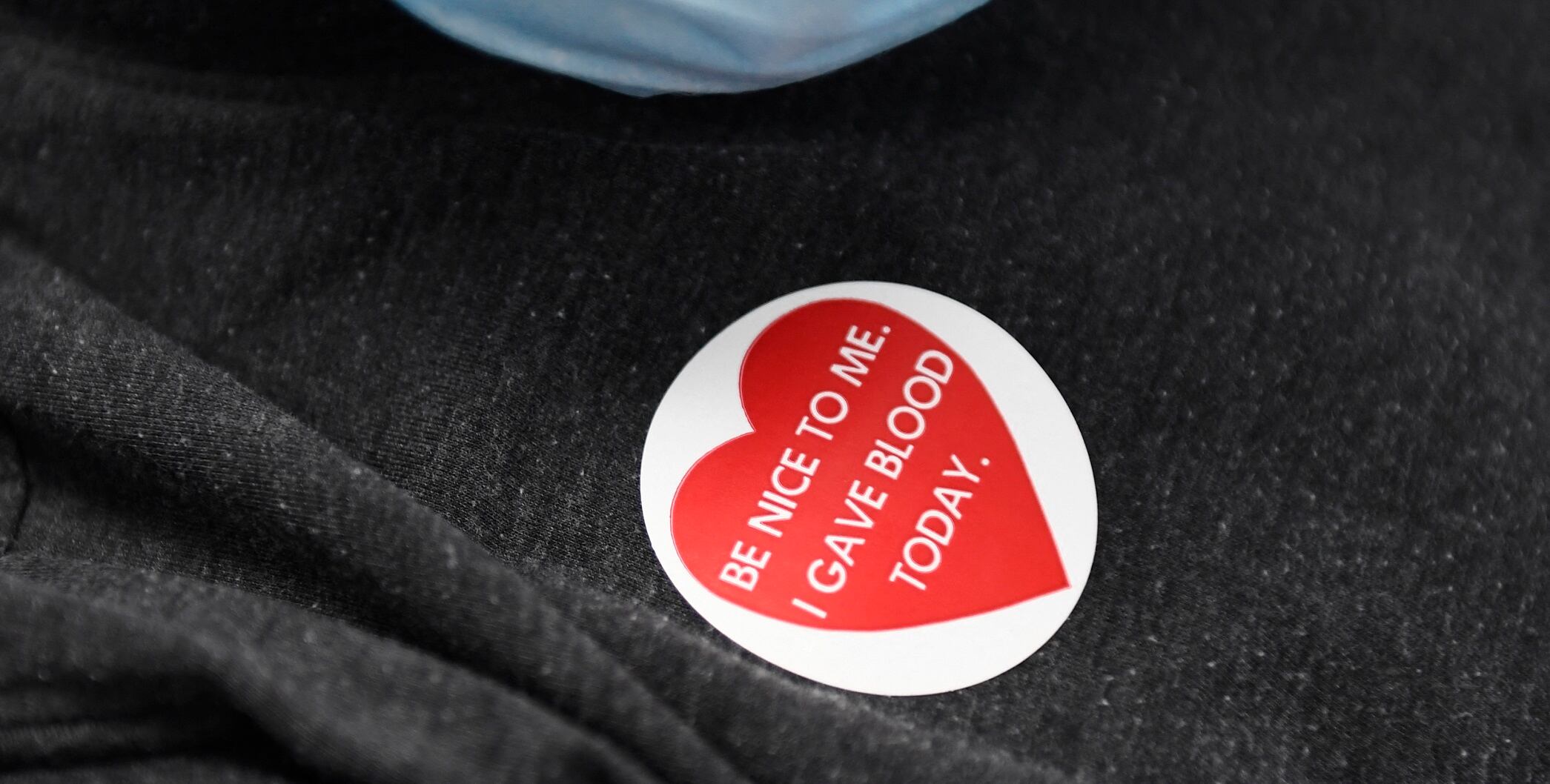
The COVID-19 pandemic disrupted blood donations leading to severe shortages throughout the country. Chloe Aiello reports on the desperate need for new donors.
Russian forces escalated their attacks on populated urban areas Tuesday, bombarding the central square in Ukraine’s second-largest city and Kyiv’s main TV tower.