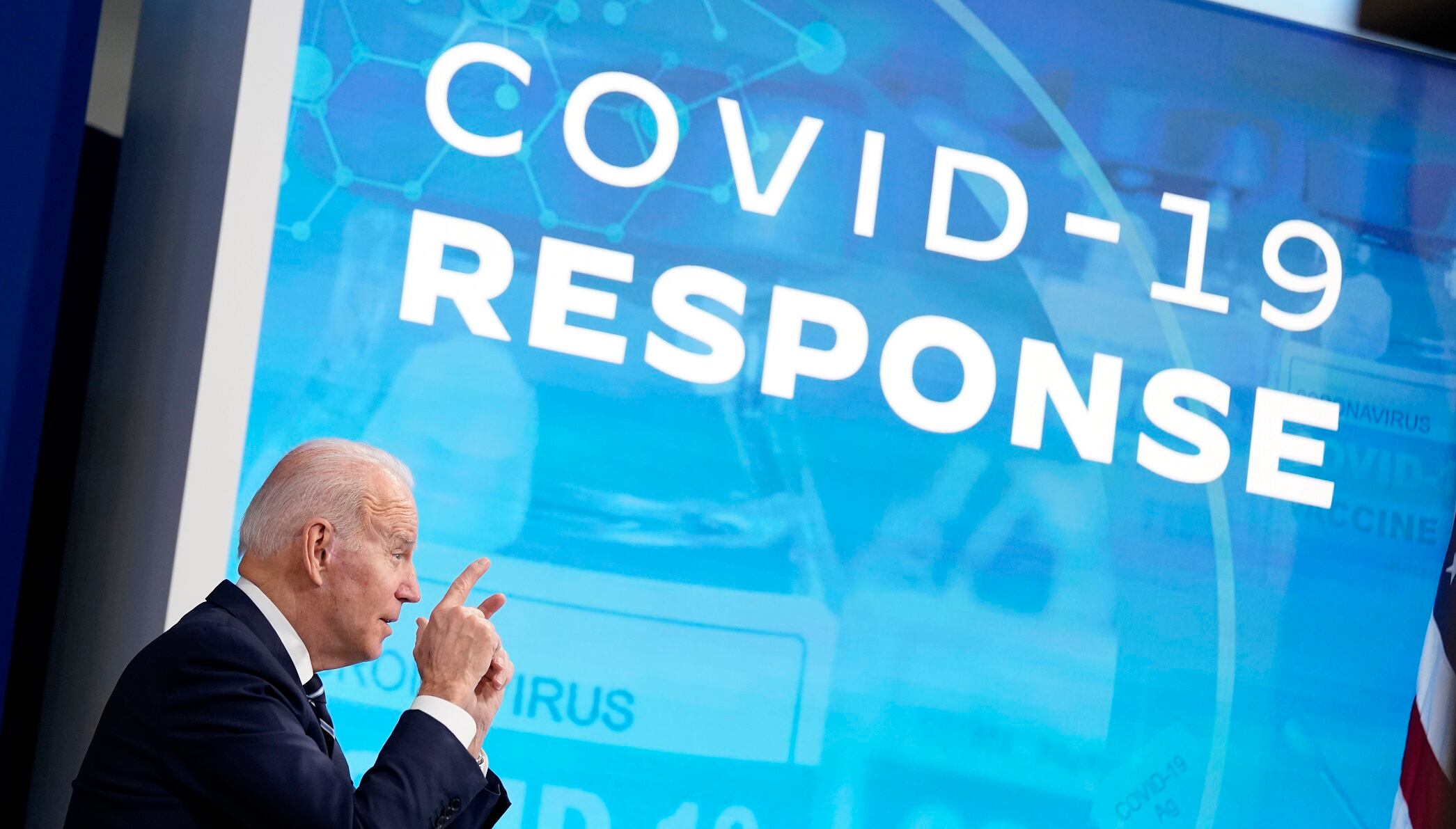
President Joe Biden speaks about the government's COVID-19 response, in the South Court Auditorium in the Eisenhower Executive Office Building on the White House Campus in Washington, Thursday, Jan. 13, 2022. (AP Photo/Andrew Harnik)
By Zeke Miller
The federal website where Americans can request free COVID-19 tests will begin accepting orders on Wednesday as the White House looks to address nationwide shortages, but supplies will be limited to just four free tests per home.
Starting on Jan. 19, the website COVIDTests.gov will provide tests at no cost, including no shipping fee, the White House announced Friday.
As he faced criticism for low inventory and long lines for testing, President Joe Biden announced last month that the U.S. would purchase 500 million at-home tests to launch the program and on Thursday the president announced that he was doubling the order to 1 billion tests.
But Americans shouldn't expect a rapid turn-around on the orders and they will have to plan ahead and request the tests well before they meet federal guidelines for when to use a test.
The White House said “tests will typically ship within 7-12 days of ordering" through the U.S. Postal Service, which reports shipping times of 1-3 days for its first-class package service in the continental United States.
The Centers for Disease Control and Prevention recommends at-home testing when experiencing COVID-19 systems including fever, cough, sore throat, respiratory symptoms and muscle aches, five days after a potential COVID-19 exposure, or as part of test-to-stay protocols in schools and workplaces.
“Certainly if you’re going to gather with family, if you’re going to a gathering where people are immunocompromised or where they’re elderly or where you have people who might be unvaccinated or poorly protected from a vaccine that might be an opportunity you want to test,” said Dr. Rochelle Walensky, the CDC director, on Wednesday.
Officials emphasized that the federal website is just one way for people to procure COVID-19 tests. Starting on Saturday, private insurance companies will be required to cover the cost of at-home rapid tests, allowing Americans to be reimbursed for tests they purchase at pharmacies and online retailers. That covers up to eight tests per month.
The White House said the four-test limit on website orders will be applied to each residential address and will apply to the first tranche of 500 million tests. It estimates that the cost of purchasing and distributing the first block of tests at $4 billion.
Officials said they are cognizant that any launch of a website carries some risks — and memories of the disastrous roll-out during the Obama administration of Healthcare.gov are still fresh — but said they believe they are well-positioned to handle expected demand for tests.
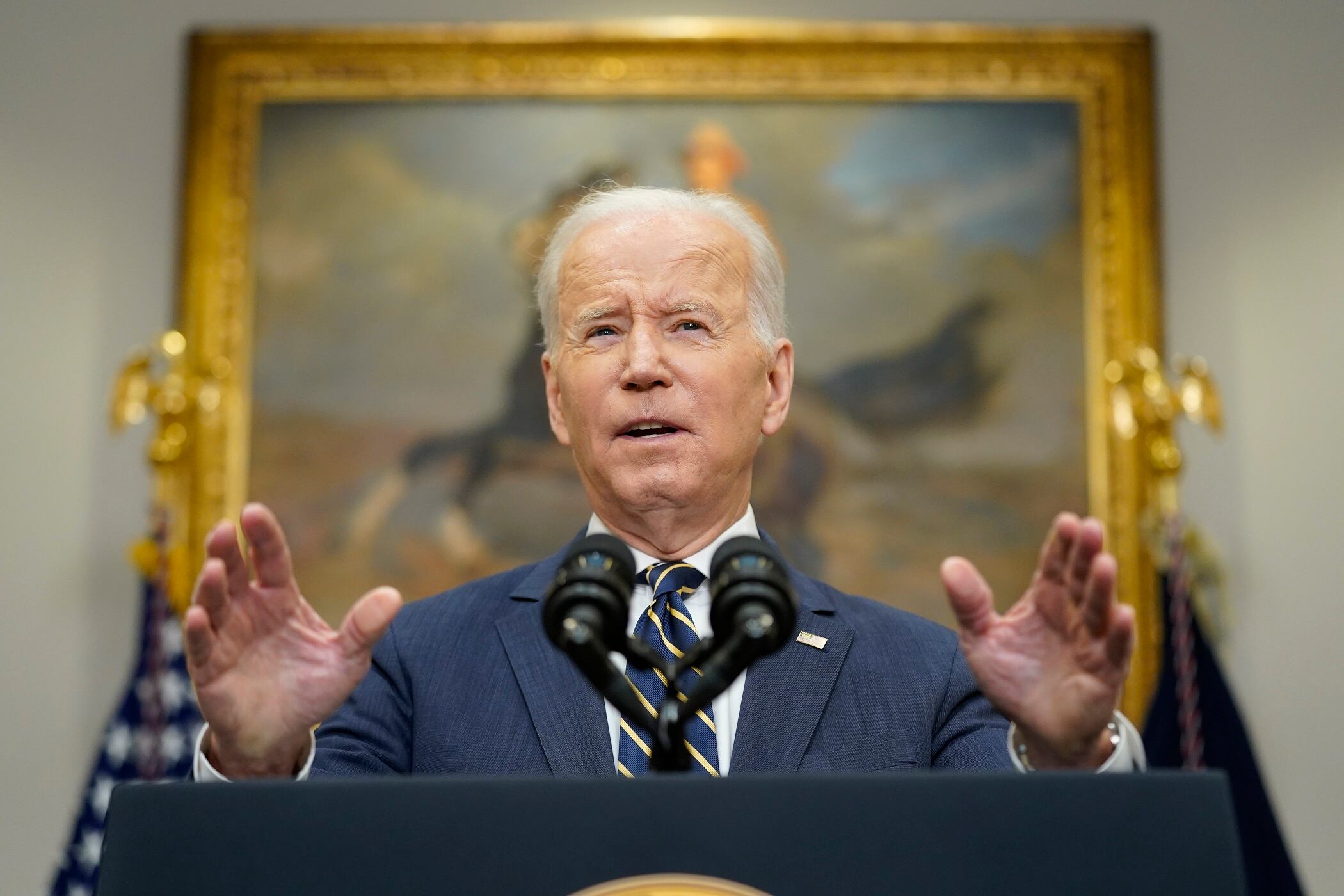
President Joe Biden announced Friday that along with the European Union and the Group of Seven countries, the U.S. will revoke “most favored nation” trade status for Russia over its invasion of Ukraine.
The consumer price index jumped 7.9 percent in February, marking a 40-year high for inflation in the U.S. This report comes less than a week ahead of the Fed's all important meeting. Kayla Bruun, Economic Analyst, Morning Consult, joined Cheddar's Opening Bell to discuss.
Markets opened lower amid hotter-than-expected inflation data, which surged to its highest level in nearly 40 years. Lisa Erickson, Senior Vice President and Co-Head, Public Markets Group, U.S. Bank joined Cheddar's Opening Bell to discuss the significance of this figure ahead of the Federal Reserve's FOMC meeting.
As the Russia-Ukraine war disrupts the global economy, sending markets on a roller coaster ride, gold remains hovering around $2,000 an ounce. Often seen as a safe haven in times of economic crisis, Jason Cozens, founder and CEO of gold-as-currency platform Glint Pay, joined Cheddar’s Opening Bell to discuss the latest gold rush, how the war is impacting prices, and how people can use Glint to trade in the precious metal. “You know the stock markets and cryptocurrencies are risky investments," he stated. "Whereas gold is just reliable money. It's no one else's liability if you own."
As Western sanctions weigh on Russia's economy, the country is at the risk of defaulting on its debt. Fitch ratings agency has downgraded Russia's debt for the second time in a week, warning a "sovereign default is imminent." Jesse Wheeler, Economic Analyst at Morning Consult, explains what that means, and how it could have ripple effects across the global economy.
Uber Lyft and Doordash are all set to spend $1 million dollars on a campaign and efforts to stop lawmakers from classifying their gig workers as employees. The campaign features TV and online ads highlighting Washington area workers who say they prefer the flexibility of being an independent contractor rather than following the model of a company employee. Professor at NYU. Stern School of Business and author of the sharing economy, Arun Sundararajan, joined Cheddar to discuss more.
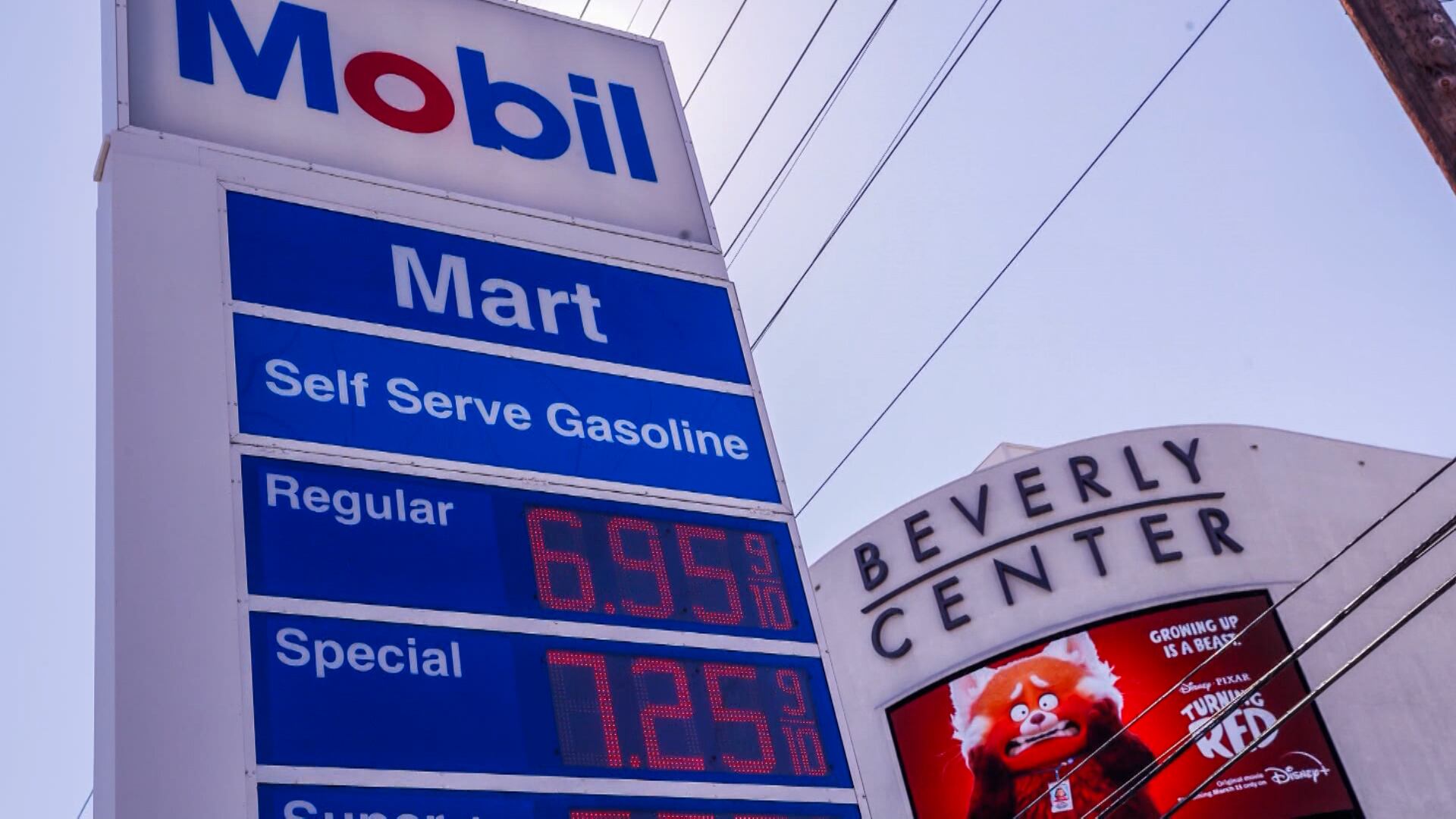
President Biden is looking at unlikely partners to buy oil, after banning all Russian energy imports. Among them is Venezuela, a regime that has been sanctioned by the U.S. since 2019. Ariel Cohen of the Atlantic Council explains to Cheddar News why that might not be a bad choice.