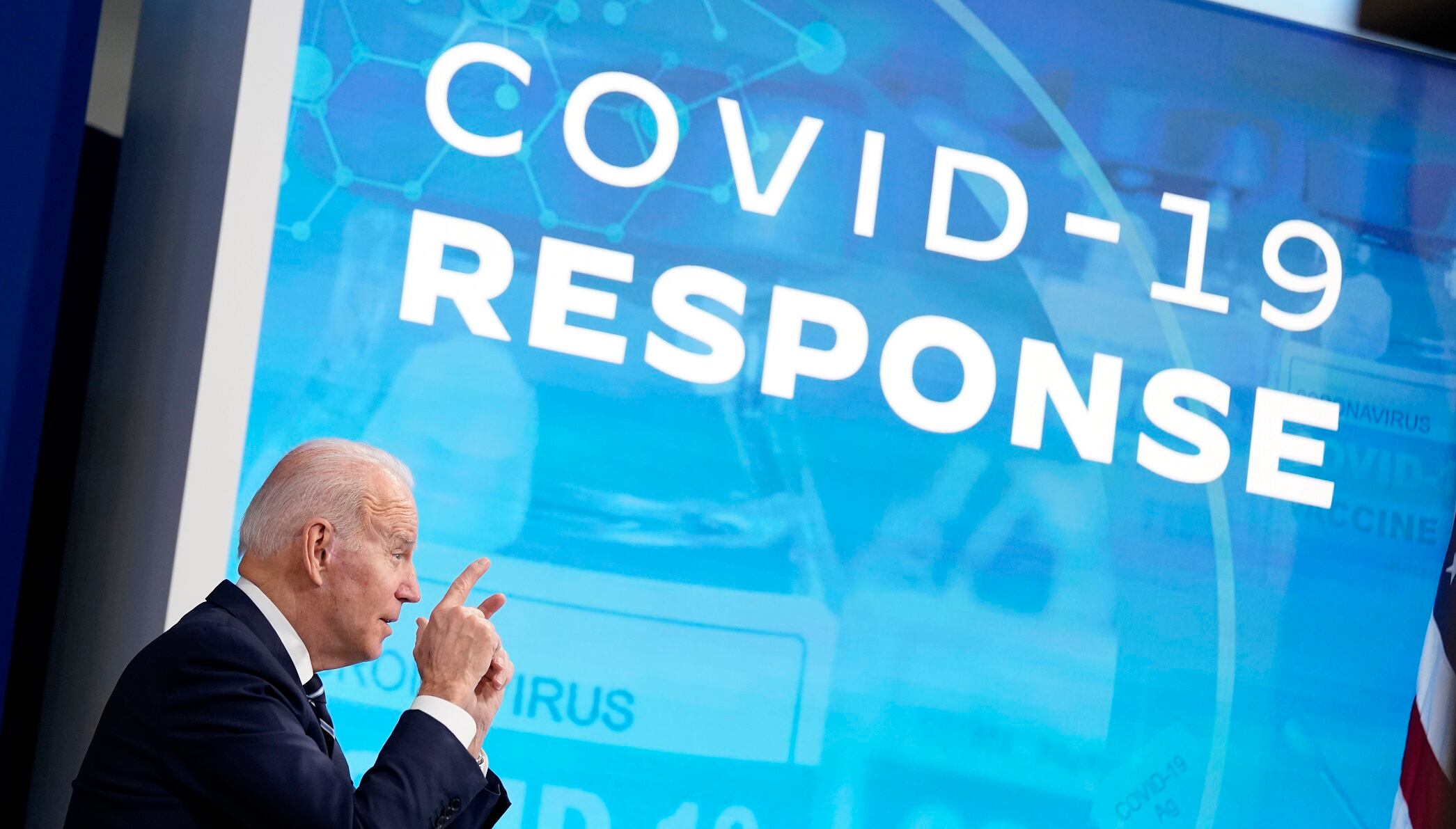
President Joe Biden speaks about the government's COVID-19 response, in the South Court Auditorium in the Eisenhower Executive Office Building on the White House Campus in Washington, Thursday, Jan. 13, 2022. (AP Photo/Andrew Harnik)
By Zeke Miller
The federal website where Americans can request free COVID-19 tests will begin accepting orders on Wednesday as the White House looks to address nationwide shortages, but supplies will be limited to just four free tests per home.
Starting on Jan. 19, the website COVIDTests.gov will provide tests at no cost, including no shipping fee, the White House announced Friday.
As he faced criticism for low inventory and long lines for testing, President Joe Biden announced last month that the U.S. would purchase 500 million at-home tests to launch the program and on Thursday the president announced that he was doubling the order to 1 billion tests.
But Americans shouldn't expect a rapid turn-around on the orders and they will have to plan ahead and request the tests well before they meet federal guidelines for when to use a test.
The White House said “tests will typically ship within 7-12 days of ordering" through the U.S. Postal Service, which reports shipping times of 1-3 days for its first-class package service in the continental United States.
The Centers for Disease Control and Prevention recommends at-home testing when experiencing COVID-19 systems including fever, cough, sore throat, respiratory symptoms and muscle aches, five days after a potential COVID-19 exposure, or as part of test-to-stay protocols in schools and workplaces.
“Certainly if you’re going to gather with family, if you’re going to a gathering where people are immunocompromised or where they’re elderly or where you have people who might be unvaccinated or poorly protected from a vaccine that might be an opportunity you want to test,” said Dr. Rochelle Walensky, the CDC director, on Wednesday.
Officials emphasized that the federal website is just one way for people to procure COVID-19 tests. Starting on Saturday, private insurance companies will be required to cover the cost of at-home rapid tests, allowing Americans to be reimbursed for tests they purchase at pharmacies and online retailers. That covers up to eight tests per month.
The White House said the four-test limit on website orders will be applied to each residential address and will apply to the first tranche of 500 million tests. It estimates that the cost of purchasing and distributing the first block of tests at $4 billion.
Officials said they are cognizant that any launch of a website carries some risks — and memories of the disastrous roll-out during the Obama administration of Healthcare.gov are still fresh — but said they believe they are well-positioned to handle expected demand for tests.
U.S. stocks close Monday's session slight higher Monday as investors continue to monitor whether the economy will successfully avoid a recession. For many, fears over inflation and rising interest rates. Tommy Mancuso, president and co-founder of the Bad Investment Company, joins Cheddar News' Closing Bell to discuss.
Bill Nye the Science Guy is back but on an even smaller screen. America’s favorite science teacher has racked up more than eight million followers on TikTok, and he joined Cheddar News to talk about his success on the platform, having fun but also being serious about scientific topics like tackling climate change, and his newest hosting project "The End is Nye," a streaming show on Peacock that examines disasters — both natural and manmade. "There are six episodes. We have big disasters. Things go terribly wrong, and then we show you how things could have gone right," he explained.
Cheddar Politics takes a look at the Biden Administration's effort to center inflation concerns in the White House's economic policies. Reuters White House reporter Jeff Mason joins Cheddar News to discuss what the White House is doing and what more it can do to help fix economic issues.
In another round of sweeping sanctions against Russia for its war on Ukraine, European Union leaders have agreed to ban the vast majority of Russian oil by the end of the year. But, the embargo covers only Russian oil brought in by sea, allowing an exemption for fuel imported via pipeline. Christine McDaniel, a senior fellow with the Mercatus Center, discusses just how significant this deal is, and what impact it might have on the global energy sector.
Catching you up on what you need to know on Monday, June 6, 2022, a string of mass shootings across the country this weekend, UK Prime Minister Boris Johnson faces a no-confidence vote this morning, and Tropical Storm Alex floods Miami.
U.S. stocks closed Friday's session near session to cap off the week in the red. The disappointing end to the day and week follows a lukewarm May jobs report from the Labor Department and comes as investors continue to eye future rate hikes from the Federal Reserve. Callie Cox, U.S. Investment Analyst for eToro, joins Cheddar News' Closing Bell to discuss.
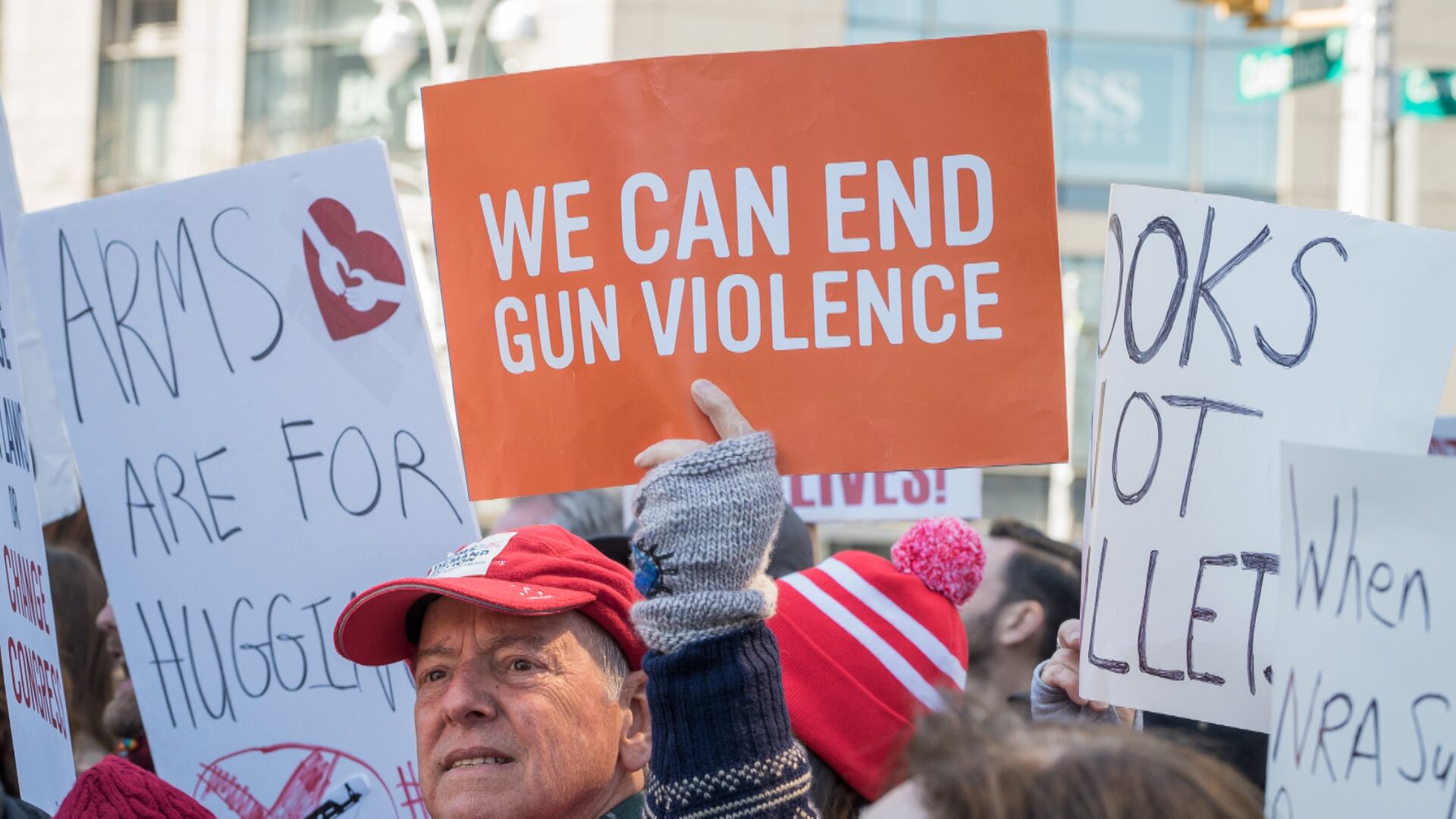
While the United States struggles with mass shootings, other countries have had success with gun regulations - often after their own mass shootings. On this Gun Awareness Day, Cheddar's Shannon LaNier reports on steps some other countries have taken to stop gun violence.
Join Cheddar News as we break down the Need 2 Know headlines this morning including Gun Violence Awareness Day, how to prevent mass shootings, and the president's comments on gun control.