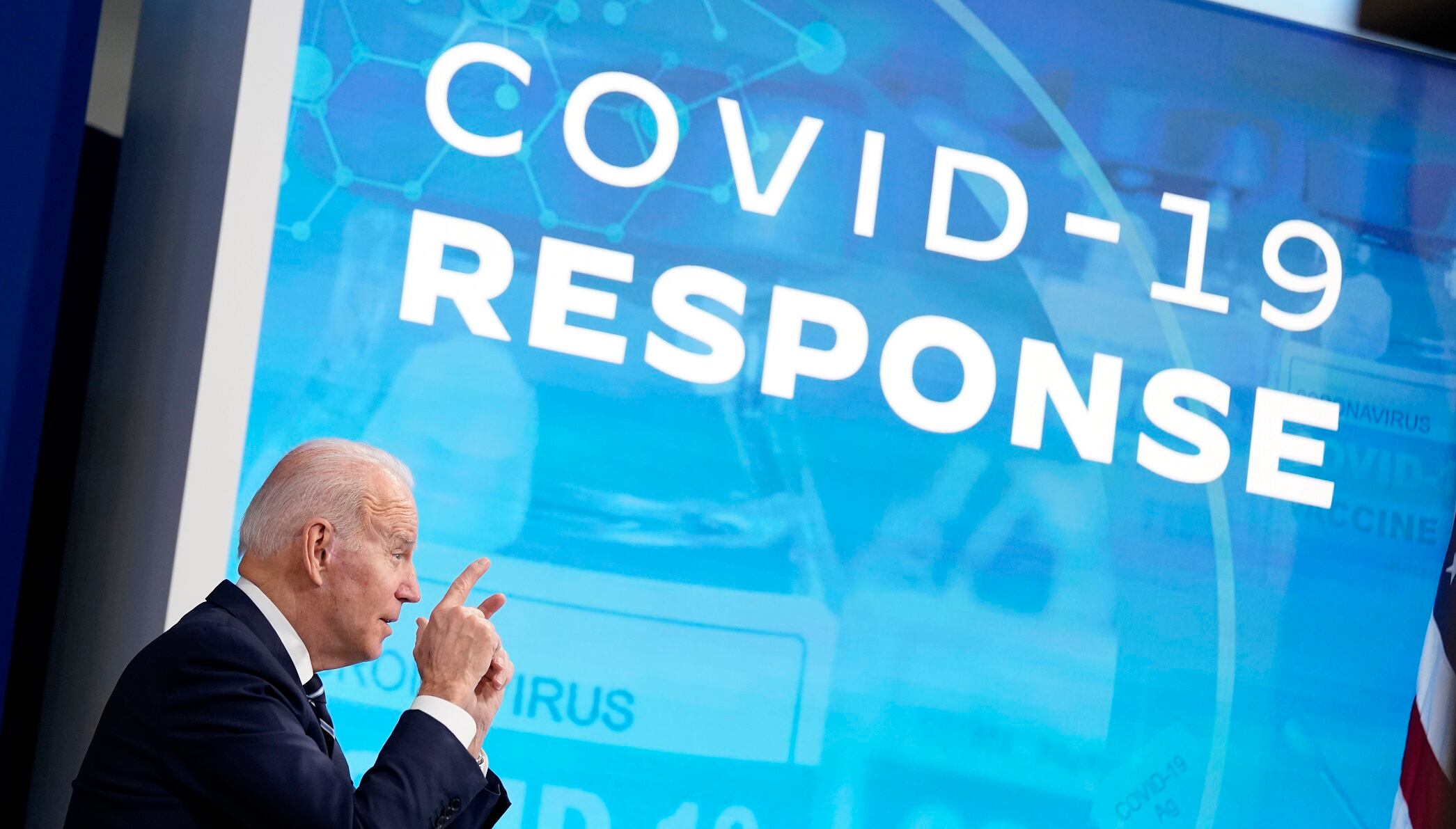
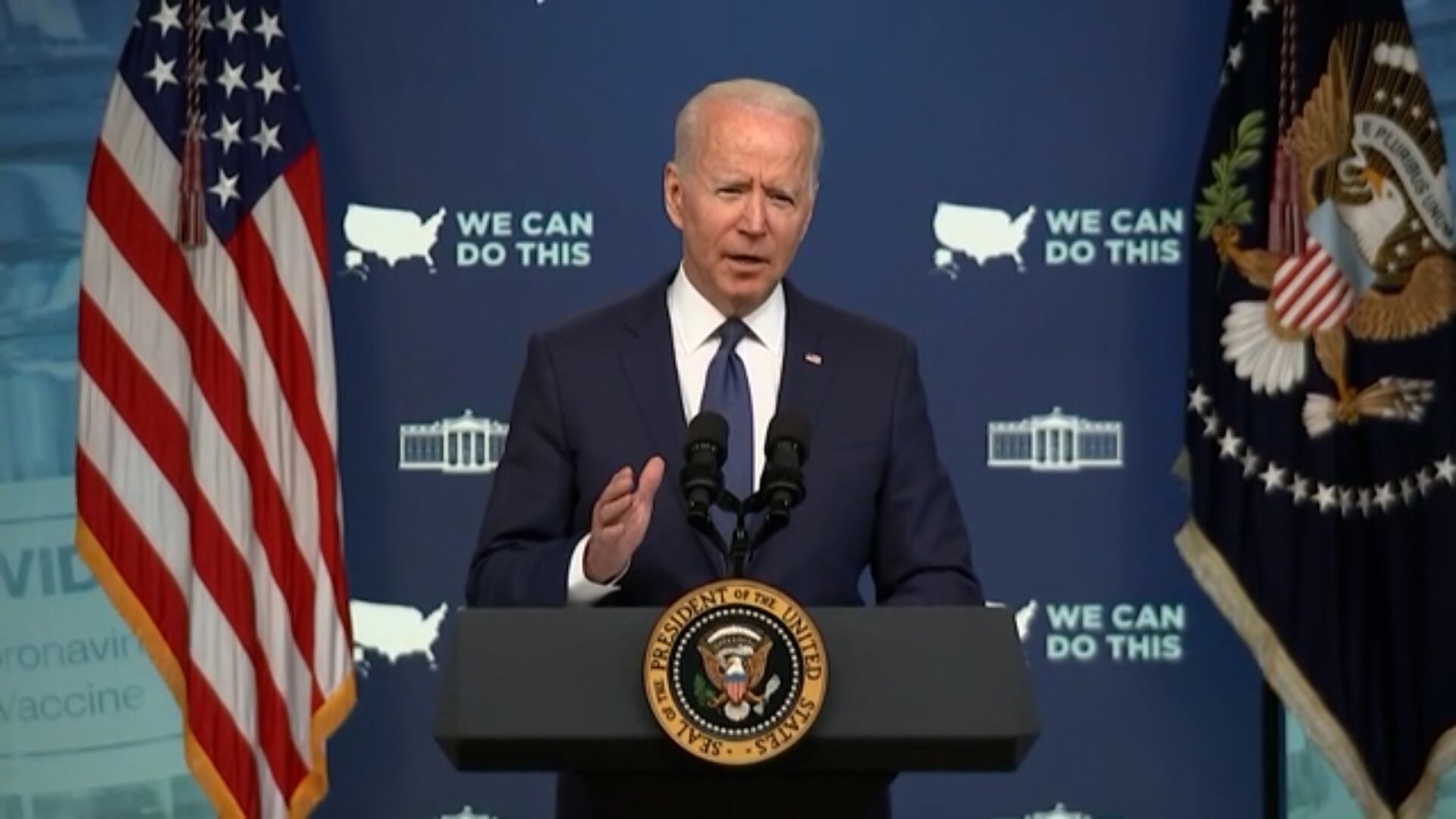
President Joe Biden speaks about the government's COVID-19 response, in the South Court Auditorium in the Eisenhower Executive Office Building on the White House Campus in Washington, Thursday, Jan. 13, 2022. (AP Photo/Andrew Harnik)
By Zeke Miller
The federal website where Americans can request free COVID-19 tests will begin accepting orders on Wednesday as the White House looks to address nationwide shortages, but supplies will be limited to just four free tests per home.
Starting on Jan. 19, the website COVIDTests.gov will provide tests at no cost, including no shipping fee, the White House announced Friday.
As he faced criticism for low inventory and long lines for testing, President Joe Biden announced last month that the U.S. would purchase 500 million at-home tests to launch the program and on Thursday the president announced that he was doubling the order to 1 billion tests.
But Americans shouldn't expect a rapid turn-around on the orders and they will have to plan ahead and request the tests well before they meet federal guidelines for when to use a test.
The White House said “tests will typically ship within 7-12 days of ordering" through the U.S. Postal Service, which reports shipping times of 1-3 days for its first-class package service in the continental United States.
The Centers for Disease Control and Prevention recommends at-home testing when experiencing COVID-19 systems including fever, cough, sore throat, respiratory symptoms and muscle aches, five days after a potential COVID-19 exposure, or as part of test-to-stay protocols in schools and workplaces.
“Certainly if you’re going to gather with family, if you’re going to a gathering where people are immunocompromised or where they’re elderly or where you have people who might be unvaccinated or poorly protected from a vaccine that might be an opportunity you want to test,” said Dr. Rochelle Walensky, the CDC director, on Wednesday.
Officials emphasized that the federal website is just one way for people to procure COVID-19 tests. Starting on Saturday, private insurance companies will be required to cover the cost of at-home rapid tests, allowing Americans to be reimbursed for tests they purchase at pharmacies and online retailers. That covers up to eight tests per month.
The White House said the four-test limit on website orders will be applied to each residential address and will apply to the first tranche of 500 million tests. It estimates that the cost of purchasing and distributing the first block of tests at $4 billion.
Officials said they are cognizant that any launch of a website carries some risks — and memories of the disastrous roll-out during the Obama administration of Healthcare.gov are still fresh — but said they believe they are well-positioned to handle expected demand for tests.
Jill and Carlo discuss the scenes of joy at American airports as borders reopen, another tool in the Covid toolbox, the latest in the Astroworld crowd crush tragedy and more.
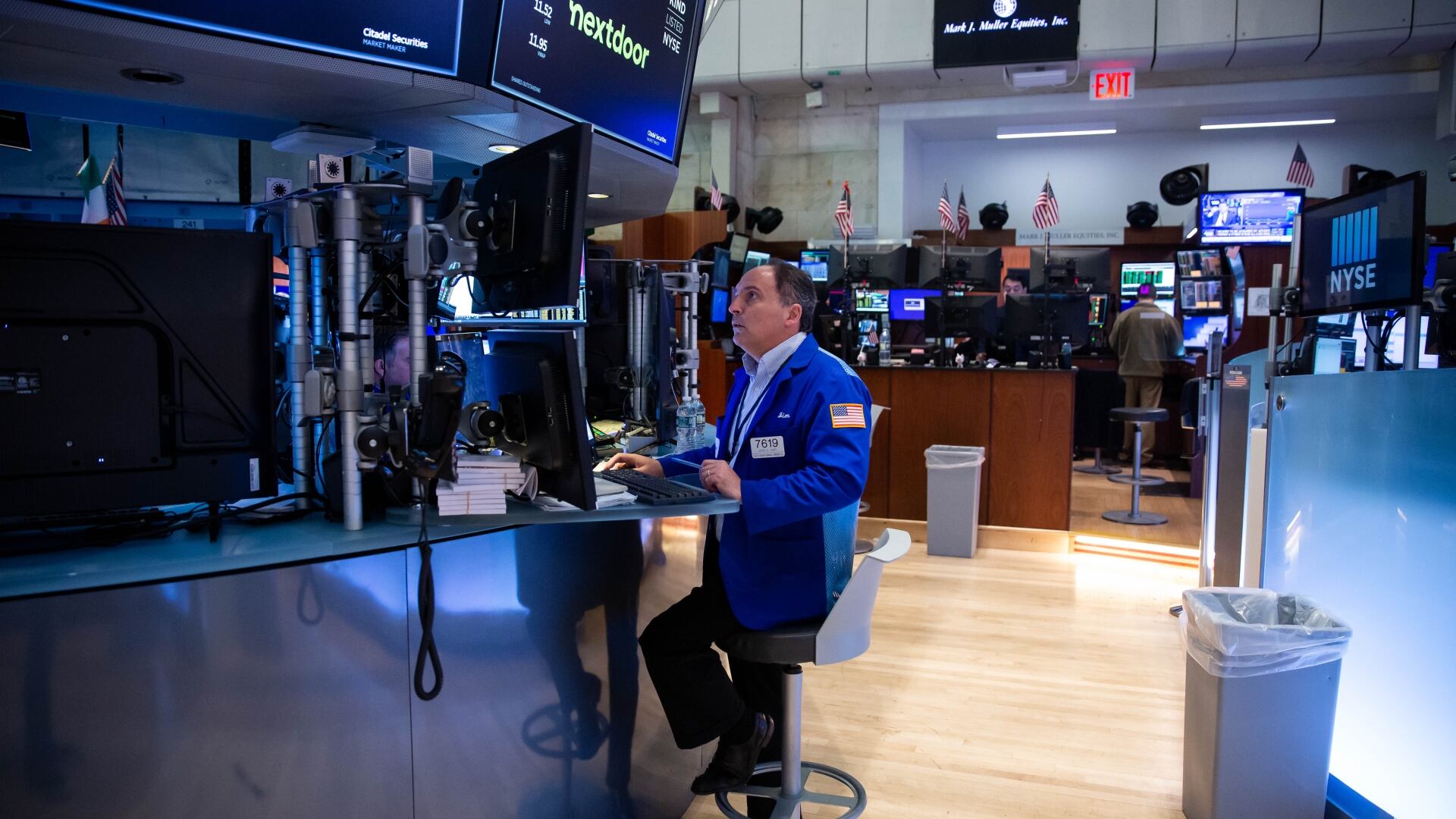
Frank Lee, Managing Director at Miracle Mile Advisors, joins Cheddar News' Closing Bell, where he explains why markets are soaring after the Dow, S&P, Nasdaq, and the Russell 2000 all reached new record closes to begin the trading week.
The Biden Administration's mandate for COVID vaccinations by large employers has been put on hold by federal courts as GOP-led states and some businesses push back on the order's legality. Jonathan Adler, a law professor at Case Western Reserve University, joined Cheddar to discuss the legal challenges to implementing such mandates through OSHA (Occupational Safety and Health Administration). "Certainly expanding vaccinations is a good thing, and as vaccination rates go up that's better for all of us," Adler said. "But there are some legal questions about whether or not it's appropriate to use a law about occupational safety and health as the means to do that."
The Biden administration is giving businesses a deadline to implement a vaccination mandate, saying companies can take until after the holiday season. Andew Noymer, Associate Professor of Population Health and Disease Prevention at the University of California, Irvine, joined Cheddar to discuss.
Jacob Rubashkin, reporter and analyst at Inside Elections, joined Cheddar to discuss Republicans' wins on election night and what they mean for Democrats going forward.
James Astill, Washington Bureau Chief at The Economist, joins Cheddar News to discuss the latest issue, 'ONE YEAR ON: The calamity facing Joe Biden and the Democrats.'
Elon Musk asked Twitter if he should sell about $20 billion worth of his Tesla stock and about 58 percent of those who answered said yes. The Tesla CEO pledged to abide by the results of the poll, whichever way it went. Arun Sundararajan, NYU Stern professor & author of "The Sharing Economy: The End of Employment and the Rise of Crowd-Based Capitalism," joined Cheddar to discuss what the Twitter poll says about America's attitude towards billionaires and the nation's tax system.
Dr. Nasia Safdar, Doctor at UW Madison, joined Wake Up With Cheddar to discuss the implications of Merck sharing its antiviral pill, which has been shown in early trials to cut hospitalizations and deaths by half, with poorer nations around the globe.
The Federal Reserve finally announced its taper plan on Wednesday saying that it planned to scale back on bond purchases as growth slows, and would not rush to raise interest rates. Ross Mayfield, Investment Strategy Analyst at Baird spoke on whether or not a decrease in inflation could be in the country’s future amidst comments made by Fed chairman Jerome Powell. Baird also broke down ADP jobs numbers ahead of the Labor Department's October jobs report.