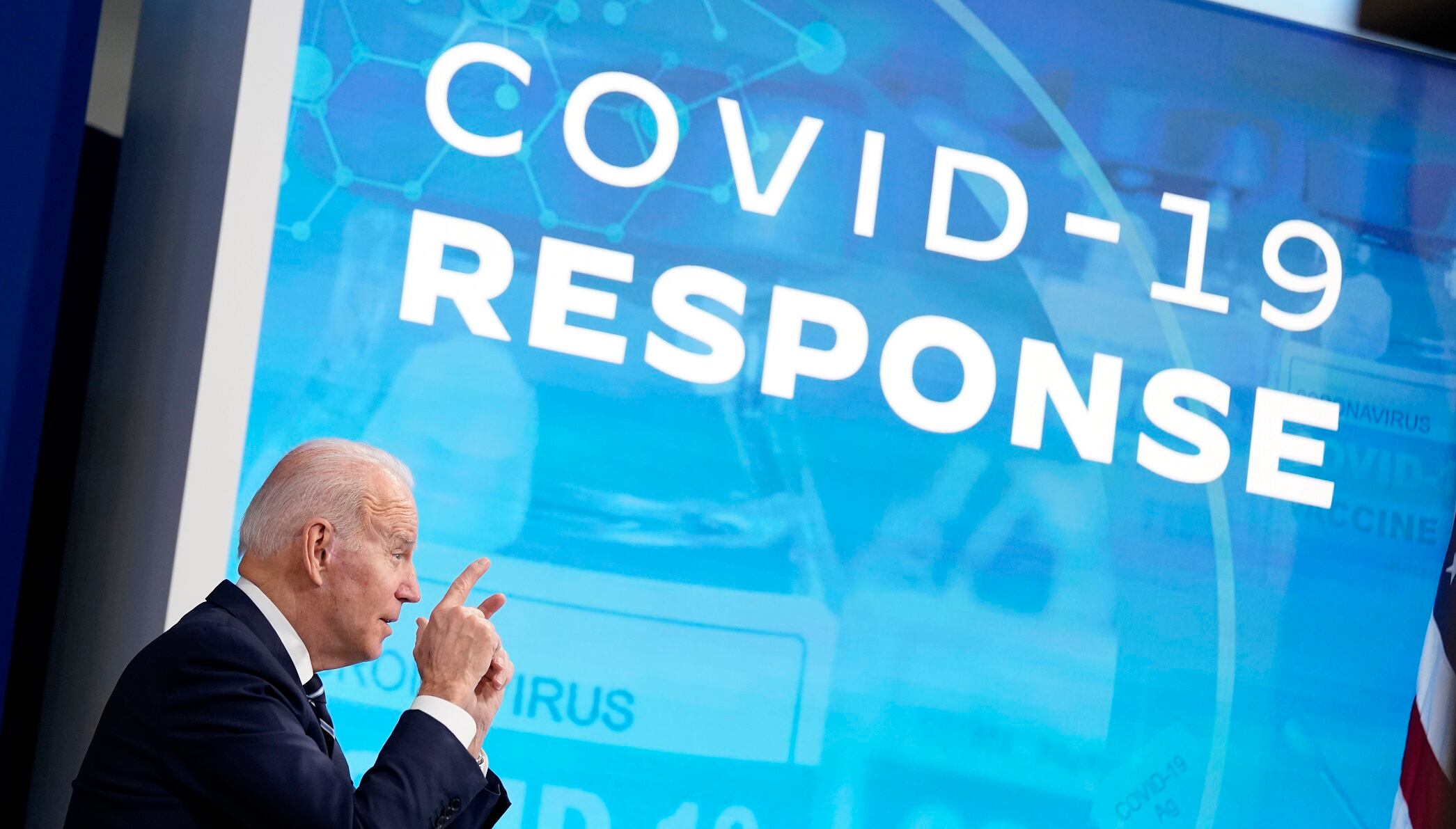
President Joe Biden speaks about the government's COVID-19 response, in the South Court Auditorium in the Eisenhower Executive Office Building on the White House Campus in Washington, Thursday, Jan. 13, 2022. (AP Photo/Andrew Harnik)
By Zeke Miller
The federal website where Americans can request free COVID-19 tests will begin accepting orders on Wednesday as the White House looks to address nationwide shortages, but supplies will be limited to just four free tests per home.
Starting on Jan. 19, the website COVIDTests.gov will provide tests at no cost, including no shipping fee, the White House announced Friday.
As he faced criticism for low inventory and long lines for testing, President Joe Biden announced last month that the U.S. would purchase 500 million at-home tests to launch the program and on Thursday the president announced that he was doubling the order to 1 billion tests.
But Americans shouldn't expect a rapid turn-around on the orders and they will have to plan ahead and request the tests well before they meet federal guidelines for when to use a test.
The White House said “tests will typically ship within 7-12 days of ordering" through the U.S. Postal Service, which reports shipping times of 1-3 days for its first-class package service in the continental United States.
The Centers for Disease Control and Prevention recommends at-home testing when experiencing COVID-19 systems including fever, cough, sore throat, respiratory symptoms and muscle aches, five days after a potential COVID-19 exposure, or as part of test-to-stay protocols in schools and workplaces.
“Certainly if you’re going to gather with family, if you’re going to a gathering where people are immunocompromised or where they’re elderly or where you have people who might be unvaccinated or poorly protected from a vaccine that might be an opportunity you want to test,” said Dr. Rochelle Walensky, the CDC director, on Wednesday.
Officials emphasized that the federal website is just one way for people to procure COVID-19 tests. Starting on Saturday, private insurance companies will be required to cover the cost of at-home rapid tests, allowing Americans to be reimbursed for tests they purchase at pharmacies and online retailers. That covers up to eight tests per month.
The White House said the four-test limit on website orders will be applied to each residential address and will apply to the first tranche of 500 million tests. It estimates that the cost of purchasing and distributing the first block of tests at $4 billion.
Officials said they are cognizant that any launch of a website carries some risks — and memories of the disastrous roll-out during the Obama administration of Healthcare.gov are still fresh — but said they believe they are well-positioned to handle expected demand for tests.
David Levine, elections integrity fellow with Alliance for Securing Democracy, joins Cheddar News to discuss Politico's bombshell finding revealing the RNC's plan to contest the elections.
A survey by the BMO Real Financial Progress Index found that 25 percent of Americans are pulling back on retirement contributions to offset the cost of inflation. This comes as market volatility reduced retirement savings with the S&P 500 shedding more than 12 percent this year alone.
As abortion rights take center stage in courts around the country, so do discussions about reproductive health. Signs and social media posts say things like "protect women's rights" and "her body, her choice," leaving others who need and receive abortions completely out of the picture. The potential end to Roe v. Wade would impact far more people and facilities than you may think. Cheddar News' Baker Machado breaks it all down.
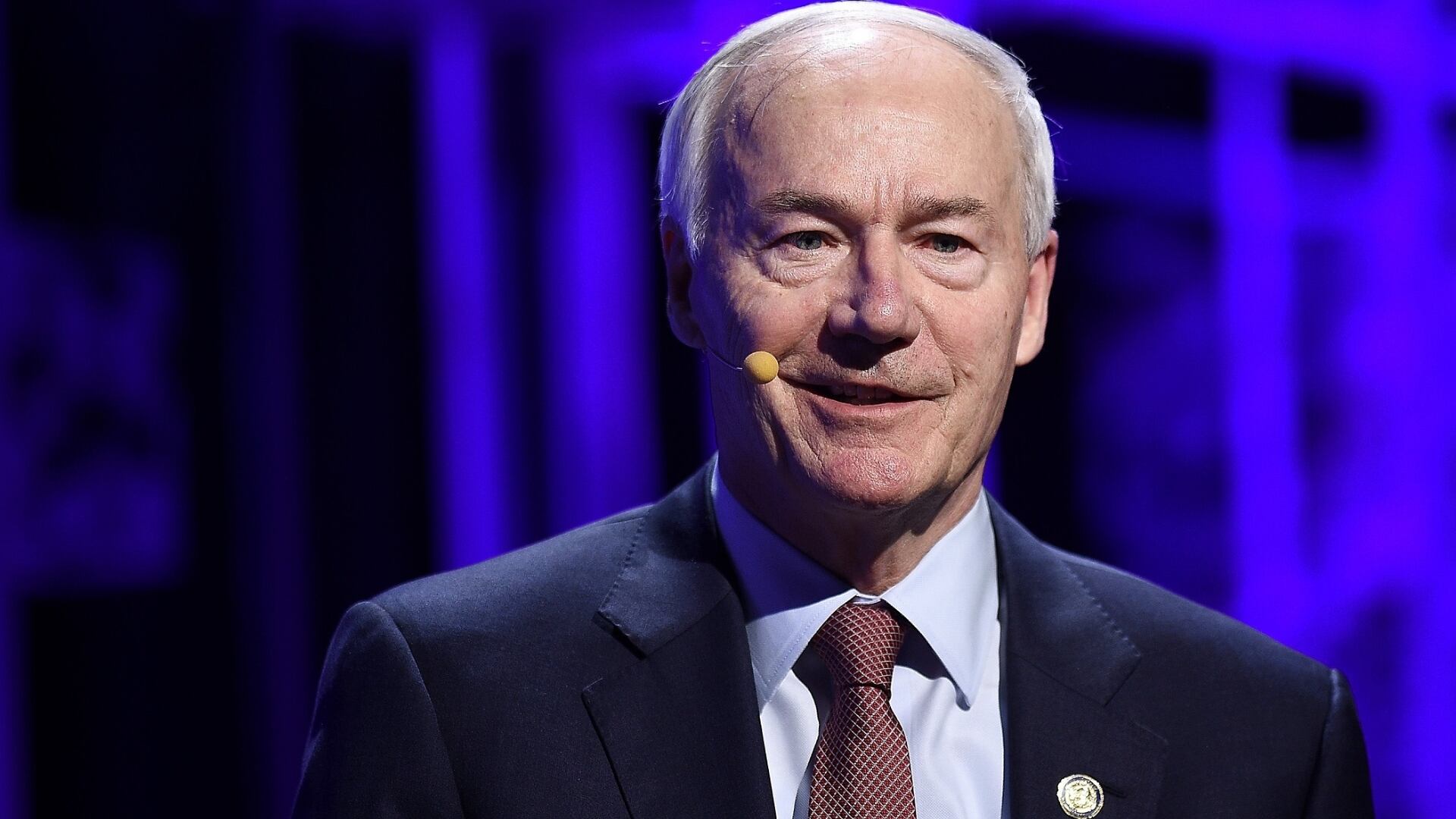
Arkansas is planning to reshape itself by putting a strong emphasis on technology through computer science in the classroom. Governor Asa Hutchinson joined Cheddar News Buffa to discuss the state's efforts to promote itself as a future tech hub. “It gives young people such a huge opportunity for success," he noted. The term-limited governor also touched on the issue of gun ownership, offering up the idea of possibly raising the age limit to obtain rifles like the AR-15 to 21 instead of 18 as it currently stands.
The dating app Bumble has sponsored bills and pushed lawmakers to criminalize the online practice of sending unsolicited nudes or “cyberflashing." Payton Iheme, Bumble's head of public policy for the Americas, joined Cheddar News to discuss why the app was going after the harassing behavior beyond its own platform. "Now, while we went to work internally in the company, and we created something called private detector to automatically blur those images so the user can decide if they want to see them, there's nothing for the rest of the internet," she said. "And so that's why we went to work with these laws."
Constituent service platform Indigov recently raised $25 million in a Series B funding round. Indigov bills itself as a constituent relationship management tool that helps elected officials improve the way they organize, respond to, and engage those they serve. The startup's services are being used by federal, state, and local governments across the country, including the U.S. House of Representatives. Alex Kouts, founder & CEO of Indigov, joins Cheddar News' Closing Bell to discuss.