The Federal Reserve reduced interest rates by a quarter point on Wednesday, marking the second time in under two months that the central bank has lowered rates to spur economic activity and maintain growth. The much anticipated decision puts the benchmark rate at a range between 1.75 and 2 percent.
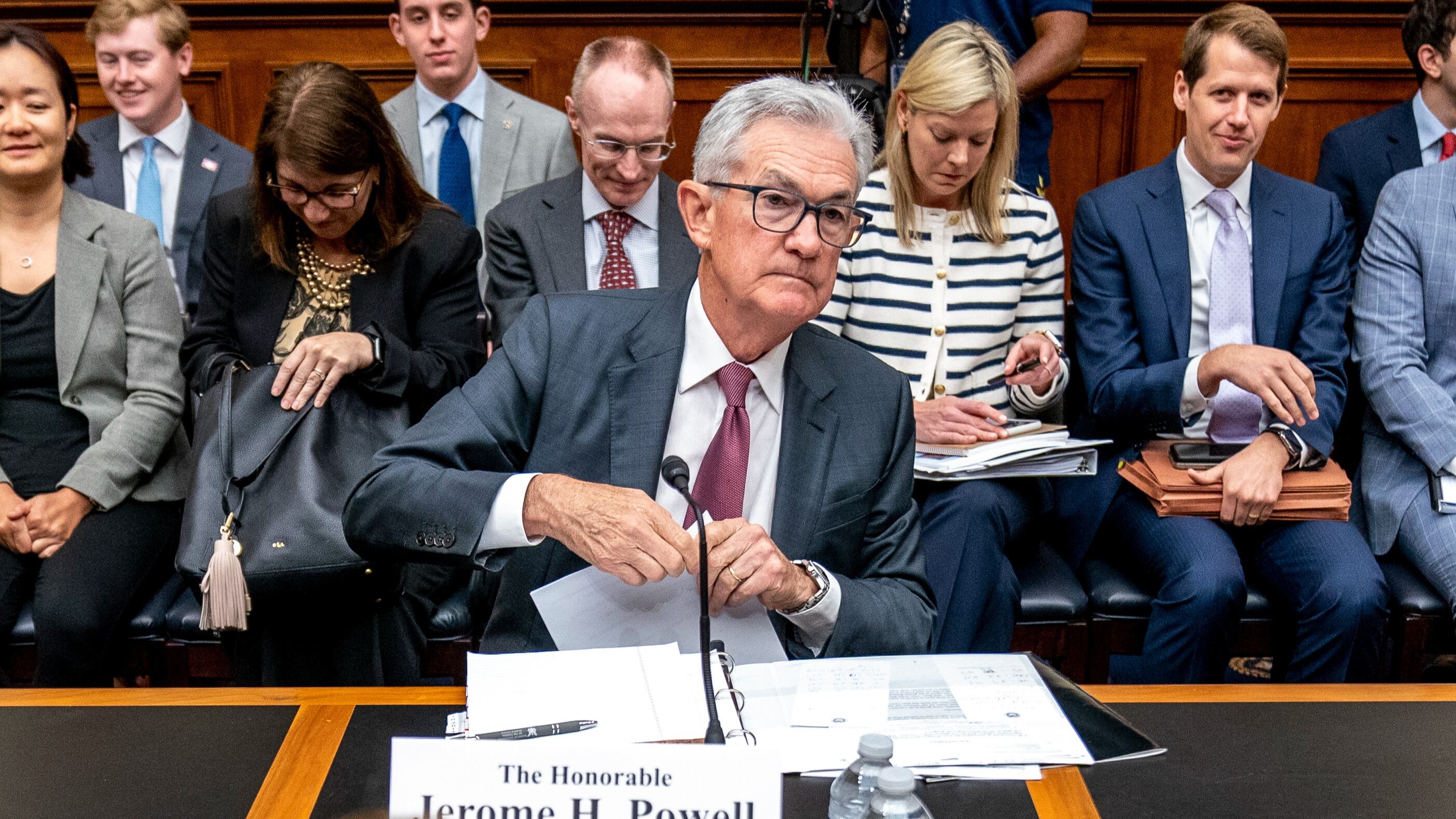
The Fed said in a statement that the decision to lower rates was influenced by the "implications of global developments for the economic outlook" and "muted inflation pressures." At a press conference, Fed Chair Jerome Powell added that "ongoing risks" such as trade uncertainty and international tensions warranted the cut.
The decision was announced following a two-day Federal Open Market Committee (FOMC) meeting, which is held eight times a year to determine necessary adjustments on interest rates and other monetary policies. After the FOMC meeting In late July, the Fed cut interest rates for the first time since the financial collapse in 2008.
Major U.S. stock indexes fell swiftly on Wednesday afternoon following the Fed's decision, which suggests a coming slowdown and a potential end to the economy's record 11 years of consecutive growth. Stocks largely moved back into positive territory before the end of the day.
The economic situation, Powell said, requires "moderate adjustments" — like Wednesday's cut — and that the Fed "will act appropriately" to sustain expansion. Powell added, however, that the Fed will hold on to its “fire power” until an economic downturn actually gains momentum.
"These cuts are designed to help stimulate the economy," Leslie H. Tayne, a consumer finance expert and debt attorney, told Cheddar. "The rationale is that lower interest rates will increase consumer spending since borrowers can attain cheaper financing and afford to purchase something that they couldn't have otherwise.”
President Trump, who has long lambasted the Fed for not lowering interest rates to spur further economic growth, was not assuaged by the bank's decision. "Jay Powell and the Federal Reserve Fail Again. No 'guts,' no sense, no vision! A terrible communicator!" Trump tweeted shortly after the announcement.
Last week, the president said that the Fed, which historically stays above partisan politics, should lower interest rates to zero, or less, and that the U.S. should always be paying the lowest rate. Trump also attacked Powell and the Fed governors personally, calling them naive and "boneheads."
Powell said Wednesday that the Fed is not "looking at using negative" interest rates — "They are not at the top of our list.”
The decision to lower rates also highlights an increasing divide among the FOMC's 10-voting members. Three of the committee members dissented from the decision: President of the Federal Reserve Bank of Kansas City Esther L. George and President of the Federal Reserve Bank of Boston Eric S. Rosengren, both of whom argued for the rate to remain unchanged; and President of the Federal Reserve Bank of St. Louis James Bullard, who argued for an even steeper cut.
Powell and the Fed's Vice Chair, John C. Williams, voted in favor of the majority opinion.