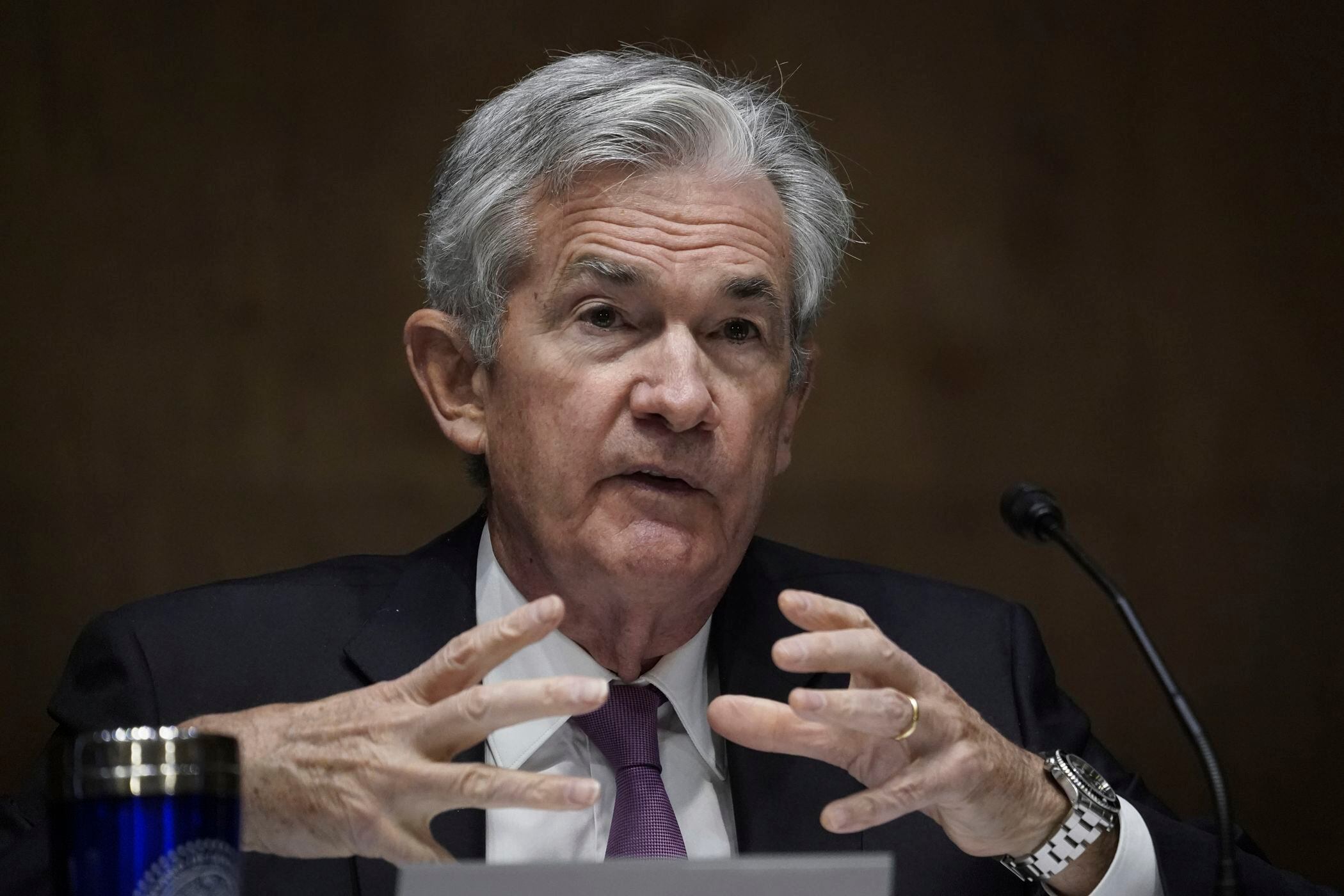
Federal Reserve Board Chairman Jerome Powell testifies during a Senate Banking Committee hearing, Thursday Sept. 24, 2020 on Capitol Hill in Washington about the CARES Act and the economic effects of the coronavirus pandemic. (Drew Angerer/Pool via AP)
By Martin Crutsinger
The Federal Reserve kept its benchmark interest rate at a record low near zero Thursday and signaled its readiness to do more if needed to support an economy under threat from a worsening coronavirus pandemic.
The Fed announced no new actions after its latest policy meeting but left the door open to provide further assistance in the coming months. The central bank again pledged to use its "full range of tools to support the U.S. economy in this challenging time.” The economy in recent weeks has weakened after mounting a tentative recovery from the deep pandemic recession in early spring.
Several Fed officials have expressed concern that Congress has failed so far to provide further aid for struggling individuals and businesses. But the Fed's policy statement, issued after a two-day meeting, made no mention of lawmakers' failure to act.
A multi-trillion-dollar stimulus, enacted in the spring, had helped sustain jobless Americans and ailing businesses but has since expired. The failure of lawmakers to agree on any new rescue package has clouded the future for the unemployed, for small businesses, and for the economy as a whole. There is some hope, though, that a logjam can be broken and more economic relief can be enacted during a post-election “lame-duck” session of Congress between now and early January.
The central bank has been buying Treasury and mortgage bonds to hold down long-term borrowing rates to encourage spending. And it has kept its key short-term rate, which influences many corporate and individual loans, near zero. Some economists think the policymakers' next move will be to expand its bond buying effort, which is intended to boost the economy by lowering longer-term borrowing rates.
The Fed’s latest policy meeting coincided with an anxiety-ridden election week and an escalation of the virus across the country. Most economists warn that the economy cannot make a sustained recovery until the pandemic is brought under control and most Americans are confident enough to return to their normal habits of shopping, traveling, dining and congregating in groups.
Treasury Secretary Janet Yellen has announced that 100,000 businesses have signed up for a new database that collects ownership information intended to help unmask shell company owners. Yellen says the database will send the message that “the United States is not a haven for dirty money.”
A new version of the federal student aid application known as the FAFSA is available for the 2024-2025 school year, but only on a limited basis as the U.S. Department of Education works on a redesign meant to make it easier to apply.
A steep budget deficit caused by plummeting tax revenues and escalating school voucher costs will be in focus Monday as Democratic Gov. Katie Hobbs and the Republican-controlled Arizona Legislature return for a new session at the state Capitol.
The first U.S. lunar lander in more than 50 years is on its way to the moon. The private lander from Astrobotic Technology blasted off Monday from Cape Canaveral, Florida, catching a ride on United Launch Alliance's brand new rocket Vulcan.
Global prices for food commodities like grain and vegetable oil fell last year from record highs in 2022, when Russia’s war in Ukraine, drought and other factors helped worsen hunger worldwide, the U.N. Food and Agriculture Organization said Friday.
Wall Street is drifting higher after reports showed the job market remains solid, but key parts of the economy still don’t look like they’re overheating.
The Biden administration is docking more than $2 million in payments to student loan servicers that failed to send billing statements on time after the end of a pandemic payment freeze.
The nation’s employers added a robust 216,000 jobs last month, the latest sign that the American job market remains resilient even in the face of sharply higher interest rates.
A U.S. labor agency has accused SpaceX of unlawfully firing employees who penned an open letter critical of CEO Elon Musk and creating an impression that worker activities were under surveillance by the rocket ship company.