By Christopher Rugaber
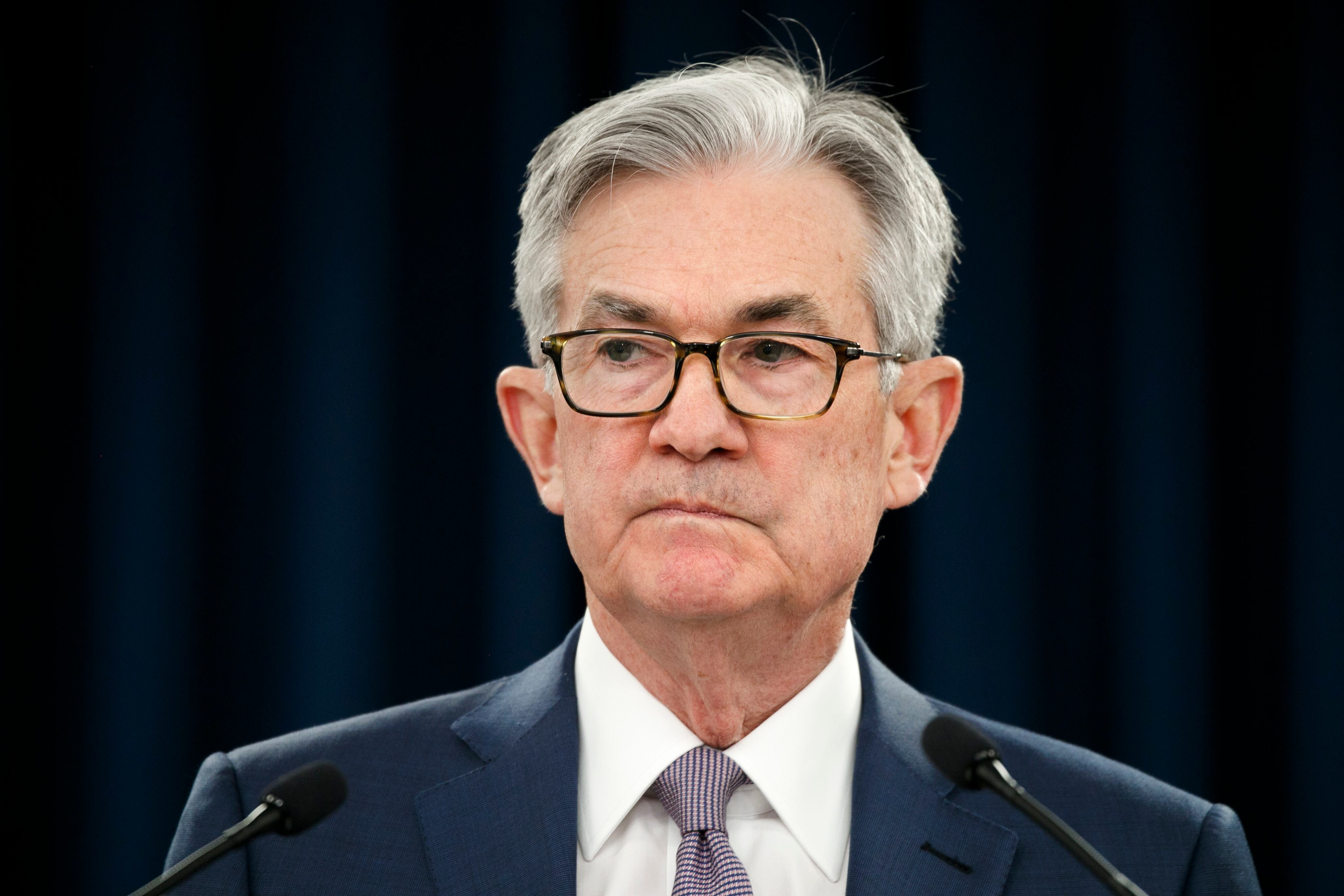
Federal Reserve Chair Jerome Powell warned Wednesday of the threat of a prolonged recession resulting from the worldwide COVID-19 outbreak and urged Congress and the White House to act further to prevent long-lasting economic damage.
The Fed and Congress have taken far-reaching steps to try to counter what is likely to be a severe downturn resulting from the widespread shutdown of the U.S. economy. But Powell cautioned that widespread bankruptcies among small businesses and extended unemployment for many people remain a serious risk.
“We ought to do what we can to avoid these outcomes,” Powell said.
Additional rescue aid from government spending or tax policies, though costly, would be “worth it if it helps avoid long-term economic damage and leaves us with a stronger recovery,” he said.
Powell spoke a day after House Speaker Nancy Pelosi, a California Democrat, proposed a $3 trillion aid package that would direct money to small businesses, state and local governments and other beleaguered institutions. This money would come on top of roughly $3 trillion in earlier financial assistance that the government has provided. The Fed itself has also intervened by slashing interest rates to near zero and creating numerous emergency lending programs.
Yet Trump administration officials have said they want to see how previous aid packages affect the economy. And Republican leaders in Congress have expressed skepticism about allowing significantly more spending right now.
“Deeper and longer recessions can leave behind lasting damage to the productive capacity of the economy,” the chairman warned in his prepared remarks before holding an online discussion with the Peterson Institute for International Economics. “Avoidable household and business insolvencies can weigh on growth for years to come.”
He said the Fed would “continue to use our tools to their fullest” until the viral outbreak subsides, but he gave no hint of what the Fed's next steps might be.
Powell repeated his previous warnings that the Fed can lend money to solvent companies to help carry them through the crisis. But a longer downturn could threaten to bankrupt previously healthy companies without more help from the government.
Powell’s downbeat view contrasted with a speech Monday by Charles Evans, president of the Federal Reserve Bank of Chicago. Evans sketched a more upbeat outlook and suggested that “it’s reasonable to assume a legitimate return to growth in the second half” of this year and into 2021.
In his remarks Wednesday, the Fed chairman underscored some of the harsh impacts of the recession. Among those working in February, nearly 40 percent of households earning less than $40,000 a year lost a job in March, Powell said.