By Trân Nguyễn
A federal judge has temporarily banned Sacramento from clearing homeless encampments for at least 14 days, citing the extreme heat forecast this month in California's capital city.
Judge Troy L. Nunley in the U.S. District Court for Eastern California issued the order last week after homeless advocates argued that the city disregarded its own protocol by pushing a vulnerable population out of shaded areas during blistering heat. Advocates said clearing the camps in such weather puts homeless people in “obvious danger."
Sacramento defines temperatures above 90 degrees Fahrenheit (32.2 Celsius) as being “excessive heat” in its protocols, the complaint reads. The temperature at the state capital is forecast to hit 90 degrees Fahrenheit or greater on 21 days in August, including nine days where the temperature is expected to reach 95 Fahrenheit (35 Celsius).
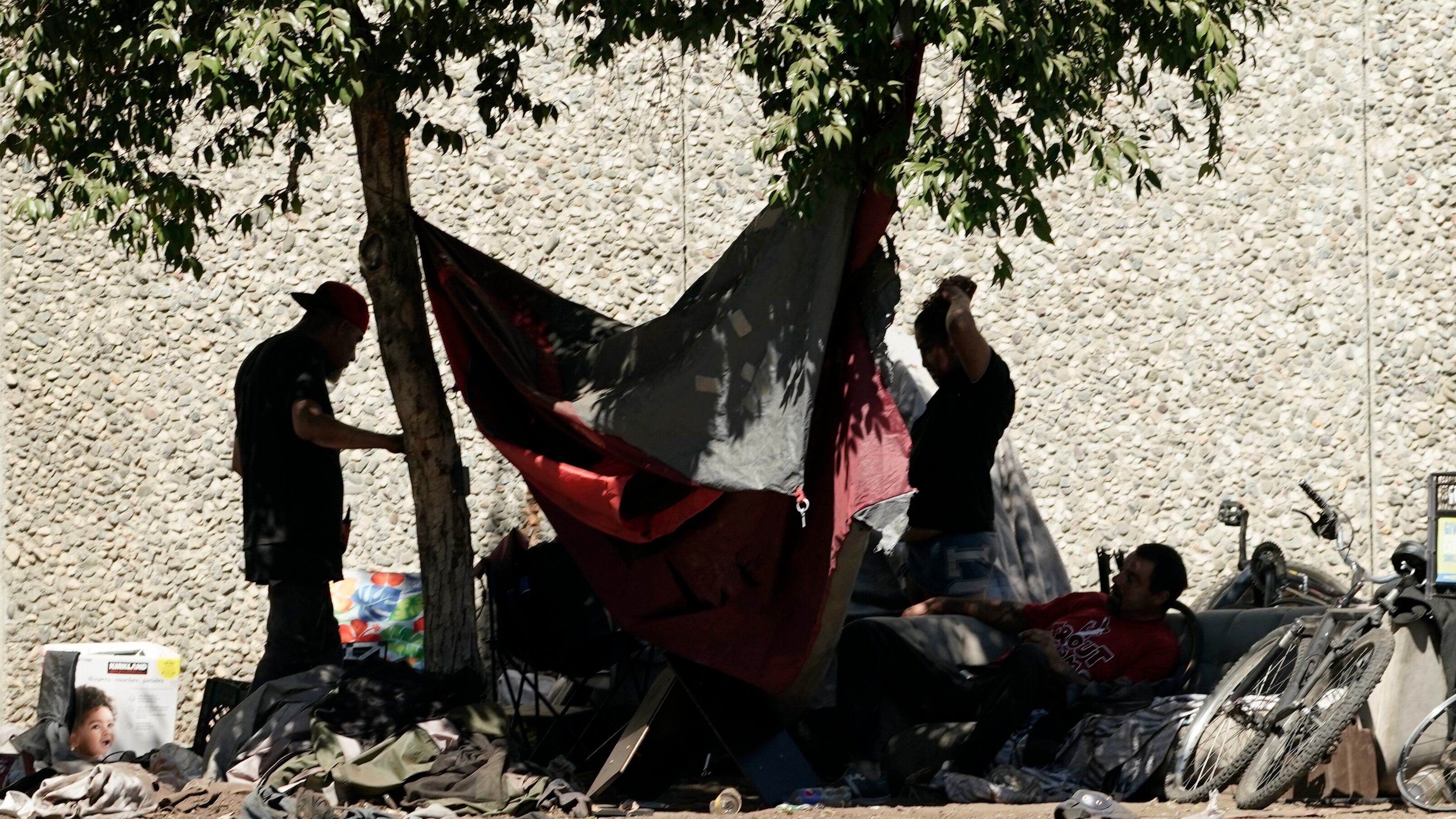
The complaint includes details about a so-called sweep in mid-July, when the temperature was 91 degrees Fahrenheit (32.8 Celsius). Officials moved about 30 people who had been sheltering under large trees, the complaint said. While Sacramento had offered homeless people to relocate to another encampment, the site was already crowded and had no shade, advocates said in the complaint. The complaint cites coverage of the sweep in the Sacramento Bee.
Other cities with large homeless populations and hot summer temperatures, like Los Angeles and Phoenix, haven’t faced similar orders not to clear encampments during heat waves. But it’s not clear if advocacy groups have sought such rulings. Unsheltered homeless people are particularly vulnerable during hot weather because of the constant exposure to the heat and sun.
“The court concludes plaintiffs’ evidence forecasting excessive heat for the upcoming weeks and detailing the risks of heat-related deaths and illnesses is sufficient to show that irreparable harm will result in the absence of injunctive relief,” Nunley wrote in his order.
It's not the first time Nunley banned Sacramento from clearing homeless encampments. Last year, he ordered similar temporary restraining orders to halt encampment sweeps during scorching temperatures that lasted nearly two months.
All of the orders came from a lawsuit filed last June by the Sacramento Homeless Union, a homeless advocacy group, and three homeless individuals.
This year’s order was nearly identical to previous restraining orders, with Nunley drawing on the same legal analysis. He concluded that the city’s interest in clearing encampments in a heatwave is “far outweighed” by the health and welfare of homeless individuals.
Crystal Sanchez, president of the Sacramento Homeless Union, said in a statement: “We are grateful to the court for recognizing the increased risk of harm to thousands of unhoused, unsheltered residents by this cruel practice, in violation of the city’s own written protocols regarding sweeps during periods of excessive heat.”
City spokesperson Tim Swanson said the city “respects the order issued by the federal court," but it is seeking clarification on several aspects, including why the county, also a defendant in the lawsuit, wasn't included in the restraining order. The order only addresses the city's conduct.
A spokesperson for the county declined to comment, saying the county doesn't speak on pending litigation.
The court will consider extending the restraining order at a hearing this week.
Judges have been on the front lines of policy related to homeless people as friction mounts over visible tent encampments amid a severe shortage of affordable housing. Specifically, western states in the U.S. Court of Appeals for the Ninth Circuit are subject to a 2018 ruling that prohibits cities from enforcing anti-camping bans when there is nowhere indoors for a person to go.
In December, for example, a U.S. magistrate judge ordered San Francisco to stop clearing most encampments pending a lawsuit by the Coalition on Homelessness that claimed the city was not offering homeless people appropriate shelter or tagging their belongings for safekeeping as required.
The same month, a federal judge also issued an emergency injunction to stop the city of Phoenix from conducting sweeps of a large homeless encampment downtown unless the person can obtain a shelter bed, in response to a lawsuit filed by the American Civil Liberties Union of Arizona.
But in a separate lawsuit, a state judge in March issued an emergency injunction ordering the city to clear the encampment and siding with businesses and residents who called the encampment a dangerous public nuisance.
Associated Press reporter Janie Har in San Francisco contributed to this report.