By Christopher Rugaber
The Federal Reserve's policymakers face an unusual conundrum as they meet this week: A short-term economic outlook that is worsening even while the longer-term picture is brightening thanks to the emergence of coronavirus vaccines.
When its meeting concludes Wednesday, the Fed could announce steps to try to offset the pandemic's increasing drag on growth. Or it could choose to mostly watch and wait, for now.
The central bank's policy meeting coincides with a record-shattering resurgence of the coronavirus, which has caused an increase in business restrictions and made more Americans reluctant to shop, travel and dine out. Some analysts say the economy could shrink in early 2021 before recovering as vaccines combat the virus.
Economists are divided on whether the Fed will announce any new actions this week. One option the policymakers could take would be to announce a shift in the Fed's bond purchases. The Fed has been buying $80 billion in Treasury bonds and $40 billion in mortgage bonds each month in an effort to keep borrowing rates down.
The idea of a shift would be to buy more longer-term bonds and fewer shorter-term securities, to hold down longer-term interest rates. The Fed has already cut its benchmark short-term rate to a record low near zero.
Yet the Fed's tools take time to support the economy, which adds a layer of complexity given the short-term gloom and longer-term optimism.
“Near-term downside risk may not be enough of a reason" to provide more stimulus "if the outlook for the economy in three to six months remains strong,” Lewis Alexander, U.S. chief economist at Nomura Securities, said in a research note.
Another complicating factor is that even as negotiations continue, Congress has yet to agree on another round of urgently needed financial aid for millions of unemployed Americans, thousands of struggling businesses, and cash-short states and cities.
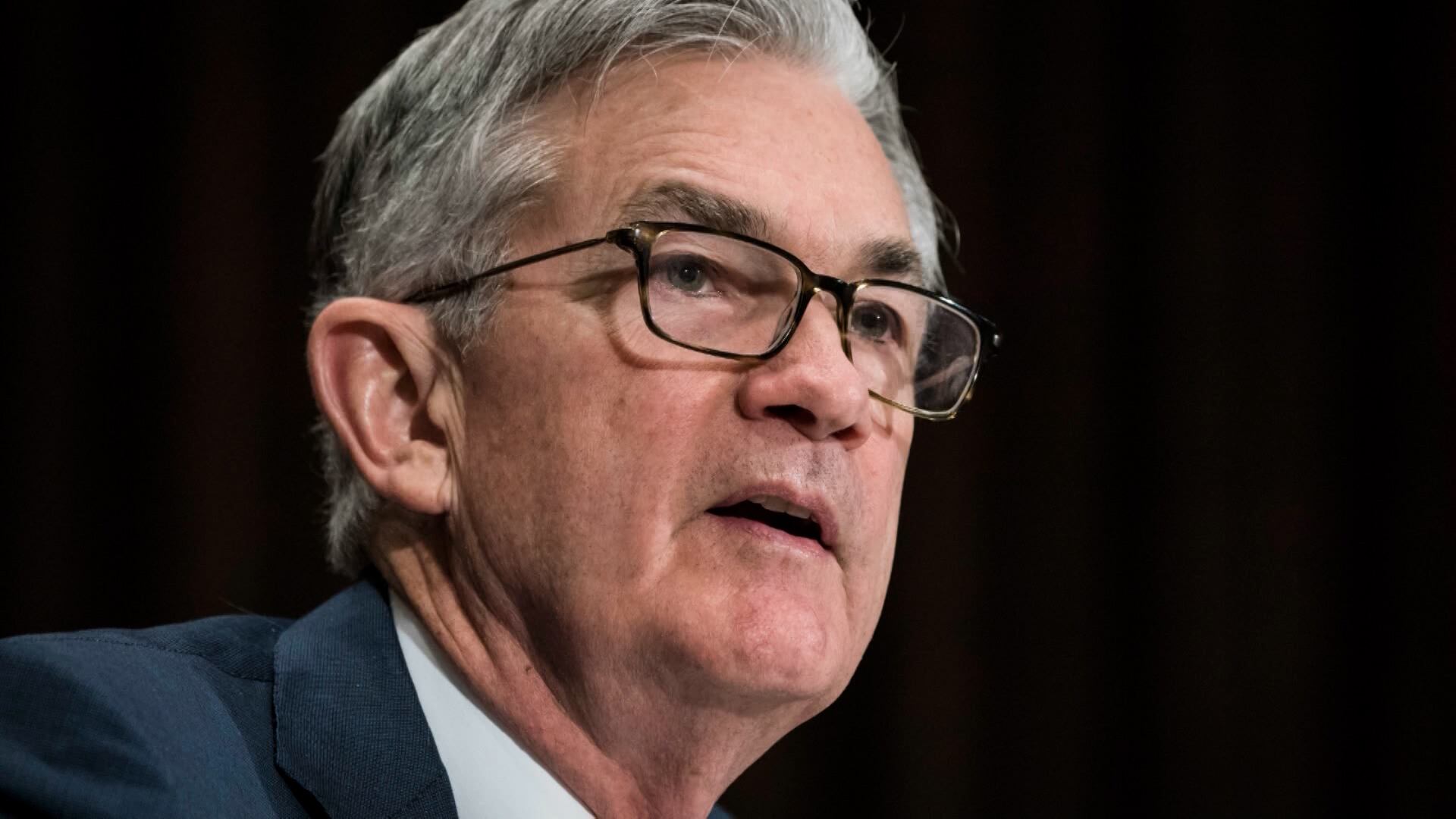
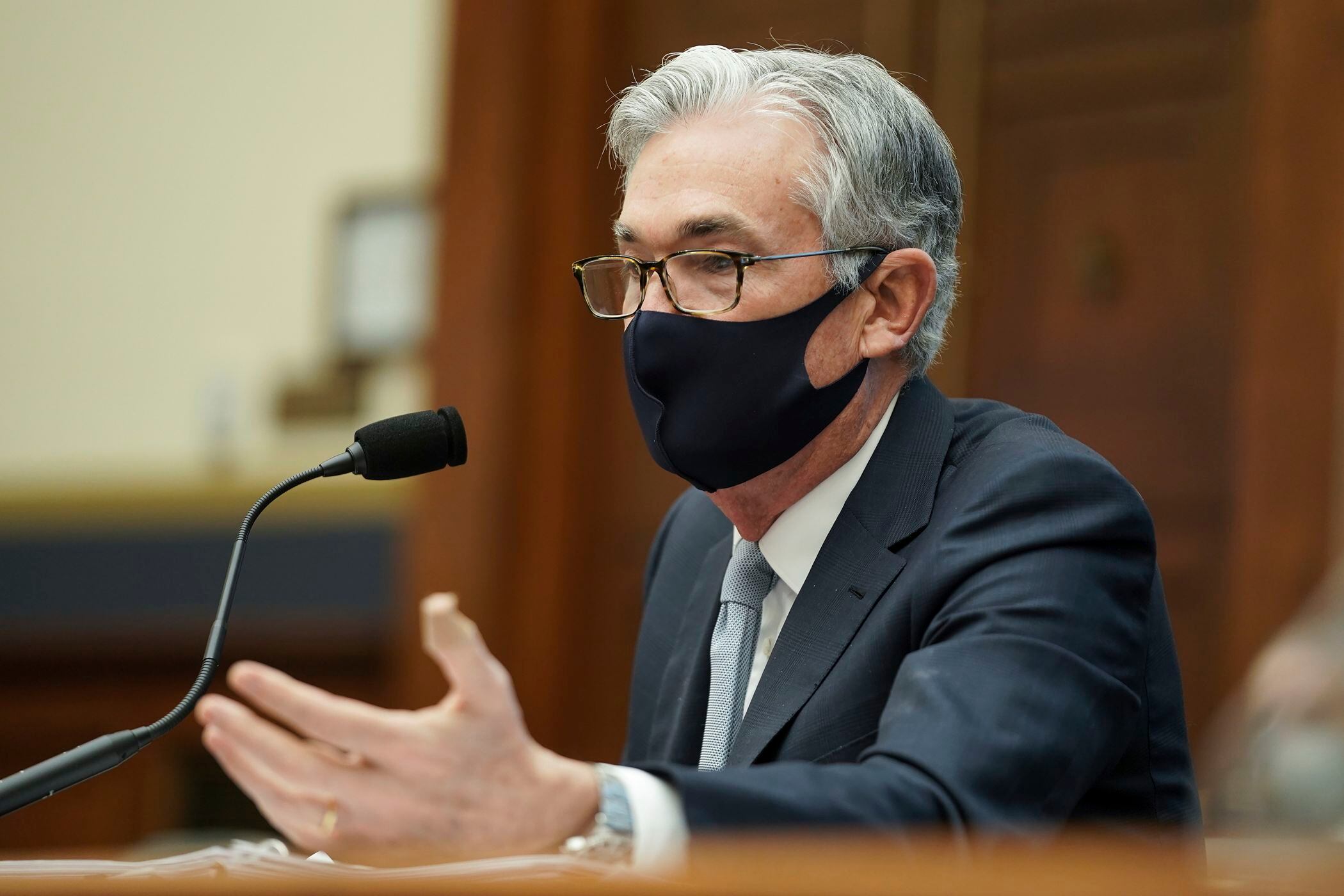
Many Fed policymakers, including Chair Jerome Powell, have repeatedly urged Congress to provide more support. Most proposals on Capitol Hill include extending unemployment benefit programs that are scheduled to expire in about two weeks. At that point, roughly 9 million jobless people will lose all their unemployment aid, state or federal.
“They're all looking to fiscal stimulus,” Tim Duy, an economics professor at the University of Oregon and author of the “Fed Watch” blog, referring to potential rescue aid from Congress.
Recent data is pointing to an economy that is getting worse. More Americans are seeking unemployment benefits, a sign that layoffs are likely rising, and overall hiring slowed in November to its slowest pace since April. Credit and debit card data suggests that holiday spending is weaker than it was last year.
Still, Fed officials may not yet be ready to take new steps, perhaps believing they have already provided nearly all the help they can for the economy through ultra-low rates.
At their meeting in November, Fed policymakers discussed the idea of buying more longer-term bonds, among other options, according to minutes published three weeks later. Doing so could further reduce the yield on 10-year Treasurys, which influence other borrowing costs, such as mortgage and credit card rates.
By contrast, the purchase of, say, two-year Treasurys has less effect on the most common loan rates, though it can help the Treasury market function more smoothly, which was the original goal of the Fed's bond-buying program this year.
While Fed officials worry that the pandemic will severely harm the economy this winter, not all are sold on more stimulus.
“We expect very strong growth next year," Robert Kaplan, president of the Federal Reserve Bank of Dallas, told CNBC this month. "But I think the next three to six months are going to be challenging. And it appears to us that growth is decelerating, and if this resurgence keeps heading the wrong way, which it is, that slowing and deceleration could get worse.”
But Kaplan, a voting member of the Fed's policymaking committee, said, “I would not want” to alter the bond-buying program “at this point.”
He added: “I don’t know that increasing the size or extending maturities of our bond purchases would help address this situation that I’m concerned about over the next three to six months."
“As always,” though, Kaplan said, "I will go into the meeting with an open mind.”
Other Fed bank presidents, including Charles Evans of the Chicago Fed and Mary Daly of the San Francisco Fed, have also suggested in recent weeks that a change to the bond-buying program at this point might not be necessary. Neither Evans nor Daly has a vote on the Fed's policy committee, but they will participate in this week's meeting.
Even if it doesn't announce a policy shift this week, the Fed will likely provide additional guidance about its bond purchases. After its November meeting, it said it would keep buying bonds “over coming months." The minutes from that meeting said that most policymakers wanted to provide more specific guidance “fairly soon.” Analysts have interpreted that to likely mean this week's meeting.
The Fed isn't expected to tie its bond purchases to any specific level of inflation or unemployment but instead suggest a more general goal. Alexander said it could be as simple as stating that bond purchases will continue “until the recovery is well-advanced.”
The minutes of the November meeting also showed that the policymakers expect to start slowing their bond purchases before they begin raising interest rates. And economists foresee no Fed rate hikes until as late as 2024 or 2025. On Wednesday, the Fed will issue forecasts through 2023 that are expected to show no rate hikes at all.