Federal Reserve Chair Jerome Powell stuck to his guns on Wednesday following a two-day policy meeting of the Federal Open Market Committee, repeating a message that has become all too familiar for market-watchers: The Fed will keep interest rates near zero and continue asset-purchases "until the recovery is complete," he said.
For interest rates specifically, that means reaching full-employment and an inflation rate of roughly 2 percent over time before tinkering with the current formula.
"With inflation running persistently below 2 percent, we will aim to achieve moderately above 2 percent for some, so that inflation averages 2 percent over time and longer-term inflation expectations remain well-anchored at 2 percent," Powell said.
Fears of inflation amid massive federal stimulus have led some to question the Fed's steadfast commitment to low interest rates, but the chairman stressed during the press conference that a "transitory rise above 2 percent this year" was not a concern.
The chairman emphasized that this current outlook is not likely to change until maximum employment is achieved.
"It seems unlikely, frankly that we would see inflation moving up in a persistent way that would actually move inflation expectations up while there's still significant slack in the labor market," he said. "I won't say it's impossible, but it seems unlikely."
As for asset purchases, Powell said the Fed plans to maintain its current level of buying until the economy sees "substantial further progress."
He added that the Fed does not have an independent standard related to the status of the virus, but that progress combatting the pandemic will likely "coexist" with broader economic improvements.
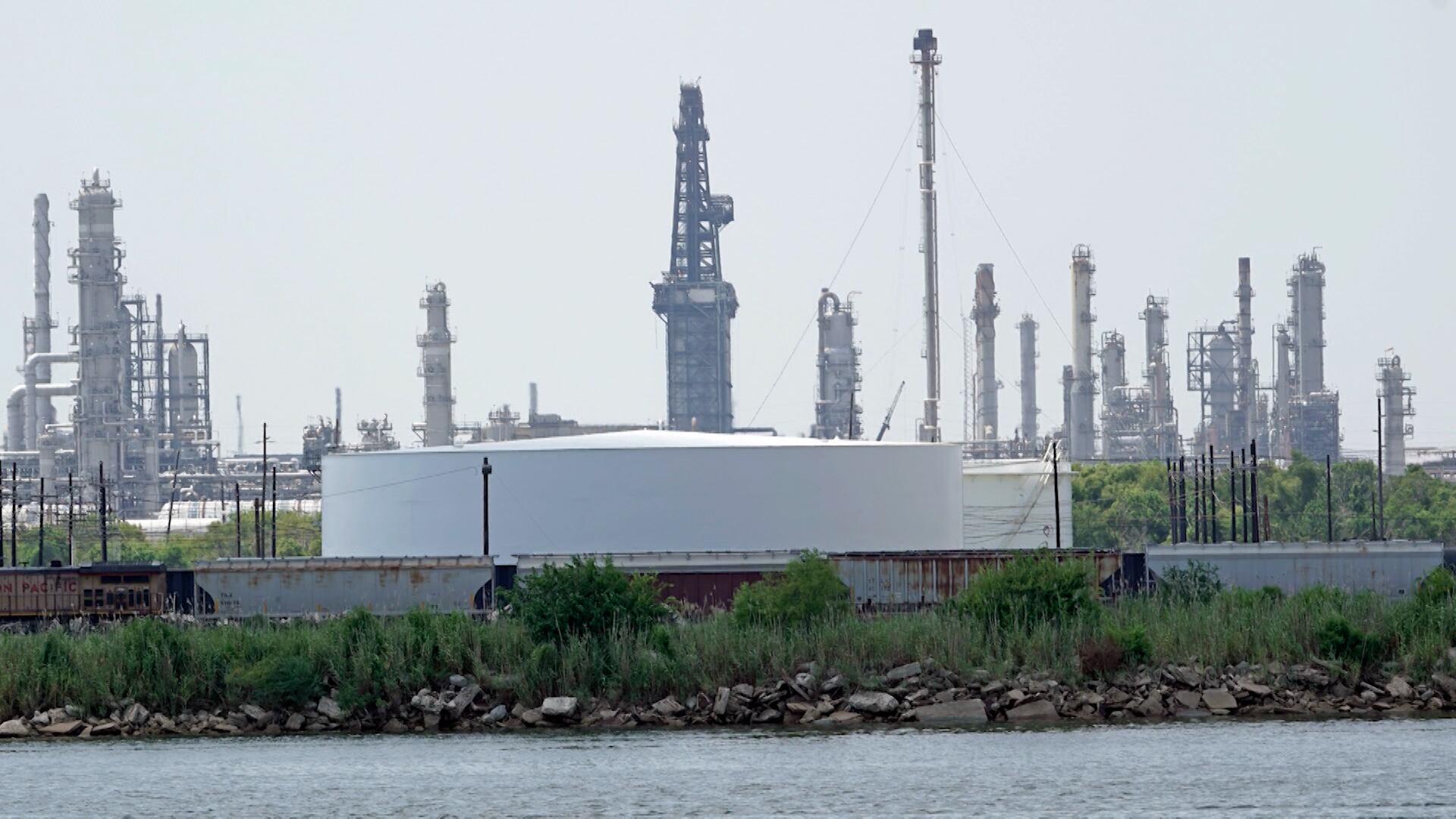
As Russia intensifies its war on Ukraine, President Biden announced a ban on oil imported from the aggressor nation. Critics of Russia have said this would be the best way to force Putin to pull back, but curbs on Russian oil exports are expected to send already skyrocketing oil and gas prices even higher, further impacting consumers, businesses, financial markets, and the global economy. Leslie Beyer, CEO of the Energy Workforce and Technology Council, joined Cheddar News' Closing Bell to discuss. "It's certainly going to increase pricing, but it is the right thing to do," she said. "The industry itself has already pulled out of the significant portion of its operations in Russia."
As airlines recover from COVID-19 and the industry becomes more competitive than ever, low-fare carrier Breeze Airlines is offering 35 new routes and reduced prices for its first-class experiences. CEO David Neeleman joined Cheddar News to talk about the rollout of services amid plenty of headwinds including high fuel costs. "We can limit a lot of costs because we're a technology company that happens to fly airplanes," he noted.
Despite women as a whole being among the groups most impacted by pandemic job losses, homesharing platform Airbnb reported that women hosts brought in $12 billion in revenue last year. Catherine Powell, Airbnb's global head of hosting, joined Cheddar News to discuss how women hosting has become a huge asset for the company. "Last year 21 percent more women joined the platform than men," she said. "So they are joining the platform. They are being successful. They're more super hosts, and they're doing incredibly well."
Miss Universe 2021 Harnaaz Sandhu and Smile Train CEO Susie Schaefer join Cheddar News to talk about how Smile Train continues to support those with a cleft lip this International Women's Day.
On this International Women’s Day, Deb Cupp, president of Microsoft U.S., joined Cheddar News to talk about the implementation of her pillars to extend the company's culture, such as acting with care and putting the team first. "What I like about the pillars is they're very simple, so it's easy for us to think about how they show up every day in our lives," Cupp said.