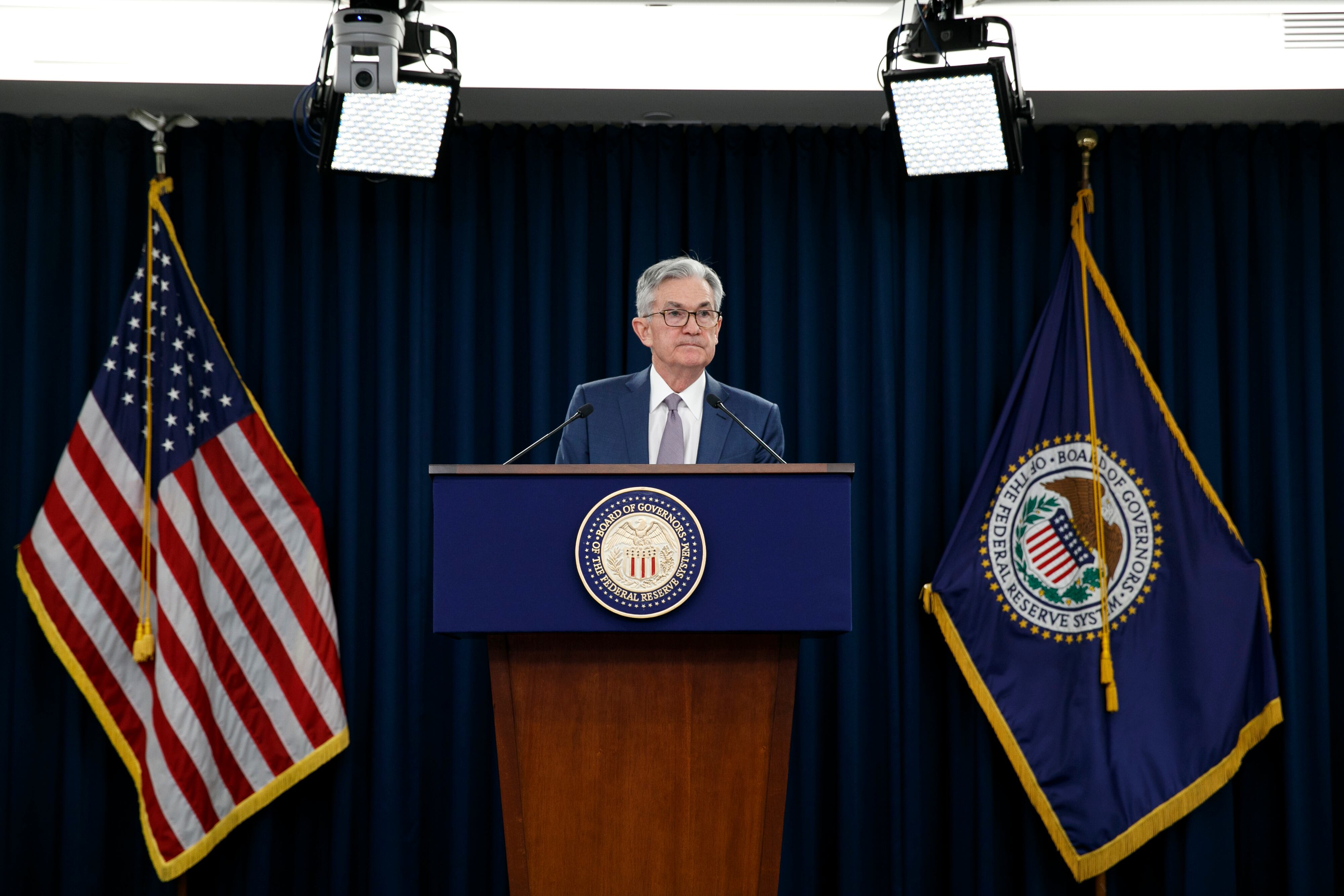
Federal Reserve Chair Jerome Powell speaks during a news conference, Tuesday, March 3, 2020. (AP Photo/Jacquelyn Martin)
By Martin Crutsinger
The Federal Reserve is taking additional steps to provide up to $2.3 trillion in loans to support the economy. The money will target American households and businesses, as well as local governments besieged by the coronavirus outbreak.
The Fed said Thursday that it is activating a Main Street Business Lending Program authorized by the CARES Act, the largest economic relief package ever passed by Congress.
Federal Reserve Chairman Jerome Powell said the Fed's role was to “provide as much relief and stability as we can during this period of constrained economic activity.”
In addition, the Fed activated a loan program for municipal governments, as well as additional support for the Paycheck Protection Program, which the Small Business Administration rolled out last week. The program provides loans to businesses with fewer than 500 employees.
The Main Street lending program “will make a significant difference for the 40,000 medium-sized business that employ 35 million Americans," Treasury Secretary Steven Mnuchin said.
The government's pay protection plan for small businesses is off to a rocky start. They have had difficulty getting banks to provide the loans. The banks have said that the government has not made clear how they should process such loans, even what forms are required.
The Fed announced the new infusion of cash on the same day the U.S. reported applications for unemployment benefits last week reached a staggering 6.6 million. That means more than one in 10 workers have lost their jobs in just the past three weeks to the coronavirus outbreak.
Despite concerns about shipping delays in the Red Sea, RSM Chief Economist Joe Brusuelas says there are still reasons to be optimistic about the state of the U.S. economy.
Dan Ives, Managing Director and Senior Equity Analyst at Wedbush Securities dives deeper into a report by the International Data Corporation (IDC) that Apple has ended Samsung's 12-year reign as the world's largest smartphone seller.
Artificial intelligence is the biggest buzzword at the World Economic Forum’s annual meeting in Davos. Advances in generative AI stunned the world last year, and the elite crowd is angling to take advantage of its promise and minimize its risks.
Smartphones could get much smarter this year as the next wave of artificial intelligence seeps into the devices that accompany people almost everywhere they go.
In an annual assessment of global inequalities, Oxfam International said the first trillionaire could emerge within the next decade — as the anti-poverty organization pointed to the growing wealth gap that skyrocketed globally during the pandemic.
The Biden administration proposed a cost drop for overdrawing bank accounts, which it says could particularly relieve Americans living paycheck to paycheck.