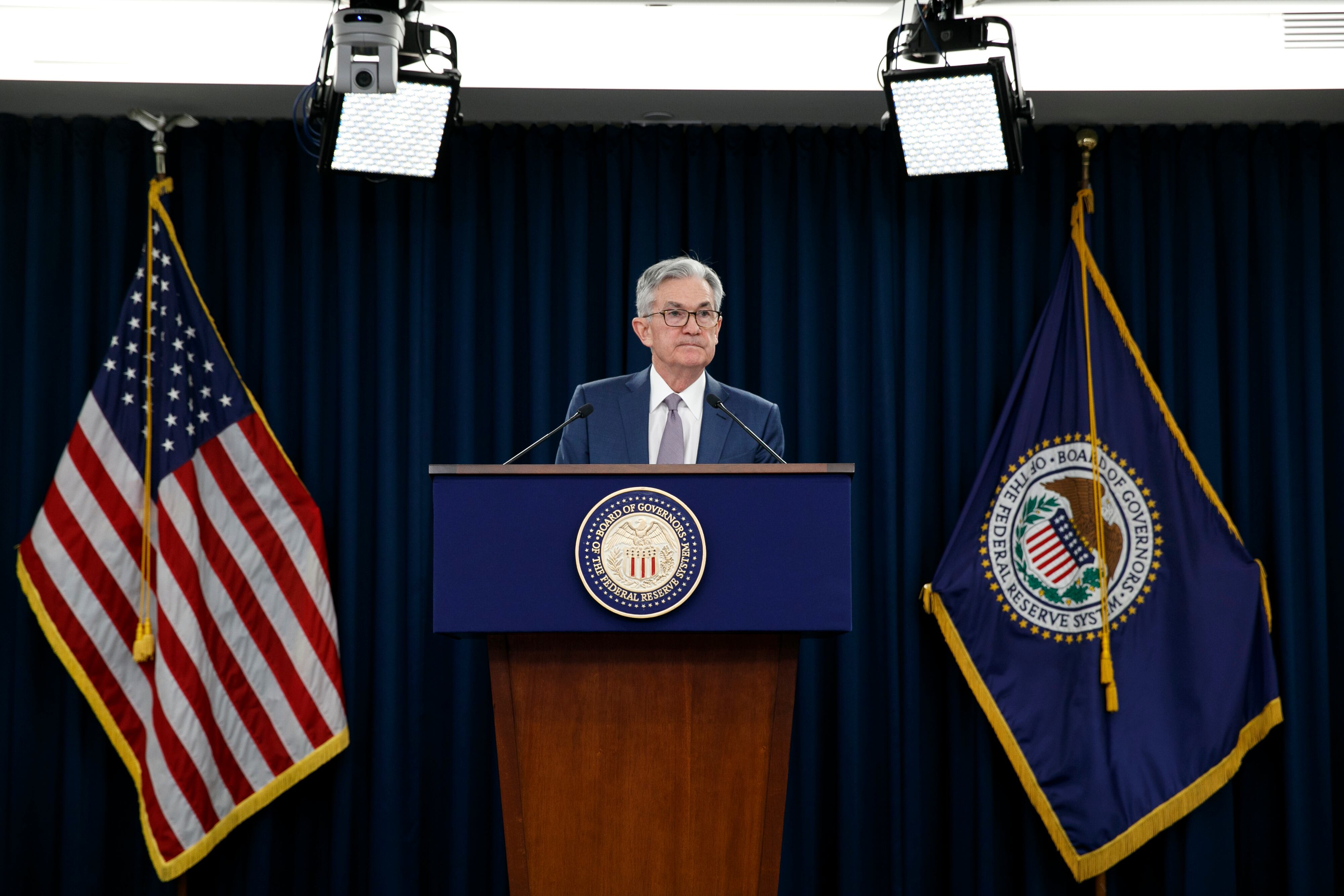
Federal Reserve Chair Jerome Powell speaks during a news conference, Tuesday, March 3, 2020. (AP Photo/Jacquelyn Martin)
By Martin Crutsinger
The Federal Reserve is taking additional steps to provide up to $2.3 trillion in loans to support the economy. The money will target American households and businesses, as well as local governments besieged by the coronavirus outbreak.
The Fed said Thursday that it is activating a Main Street Business Lending Program authorized by the CARES Act, the largest economic relief package ever passed by Congress.
Federal Reserve Chairman Jerome Powell said the Fed's role was to “provide as much relief and stability as we can during this period of constrained economic activity.”
In addition, the Fed activated a loan program for municipal governments, as well as additional support for the Paycheck Protection Program, which the Small Business Administration rolled out last week. The program provides loans to businesses with fewer than 500 employees.
The Main Street lending program “will make a significant difference for the 40,000 medium-sized business that employ 35 million Americans," Treasury Secretary Steven Mnuchin said.
The government's pay protection plan for small businesses is off to a rocky start. They have had difficulty getting banks to provide the loans. The banks have said that the government has not made clear how they should process such loans, even what forms are required.
The Fed announced the new infusion of cash on the same day the U.S. reported applications for unemployment benefits last week reached a staggering 6.6 million. That means more than one in 10 workers have lost their jobs in just the past three weeks to the coronavirus outbreak.
Big brands that have relied on TikTok videos to reach younger consumers do not appear to be panicking as they wait to see what happens. But they have started planning.
It's been 15 years since the last fatal crash of a U.S. airliner, but you wouldn't know that from a torrent of flight problems that made news in the last three months.
Abortion opponents want the high court to ratify a ruling from a conservative federal appeals court that would limit access to a medication called mifepristone, which was used in nearly two-thirds of abortions last year.
Annie Chechitelli, chief product officer at Turnitin, breaks down how students and teachers alike can learn from artificial intelligence – while still maintaining academic integrity.
Neiman Marcus Group CEO Geoffroy van Raemdonck talks luxury shopping and TikTok, why the company prefers to be private for now, and the benefits of flexible work arrangements.
Rebecca Walser, founder and CEO of Walser Wealth Management, discusses how geopolitical conditions, the bifurcated economy, and other volatility could weigh on markets.
The video announcement Friday came after weeks of speculation spread on social media about her whereabouts and health since she was hospitalized in January for unspecified abdominal surgery.