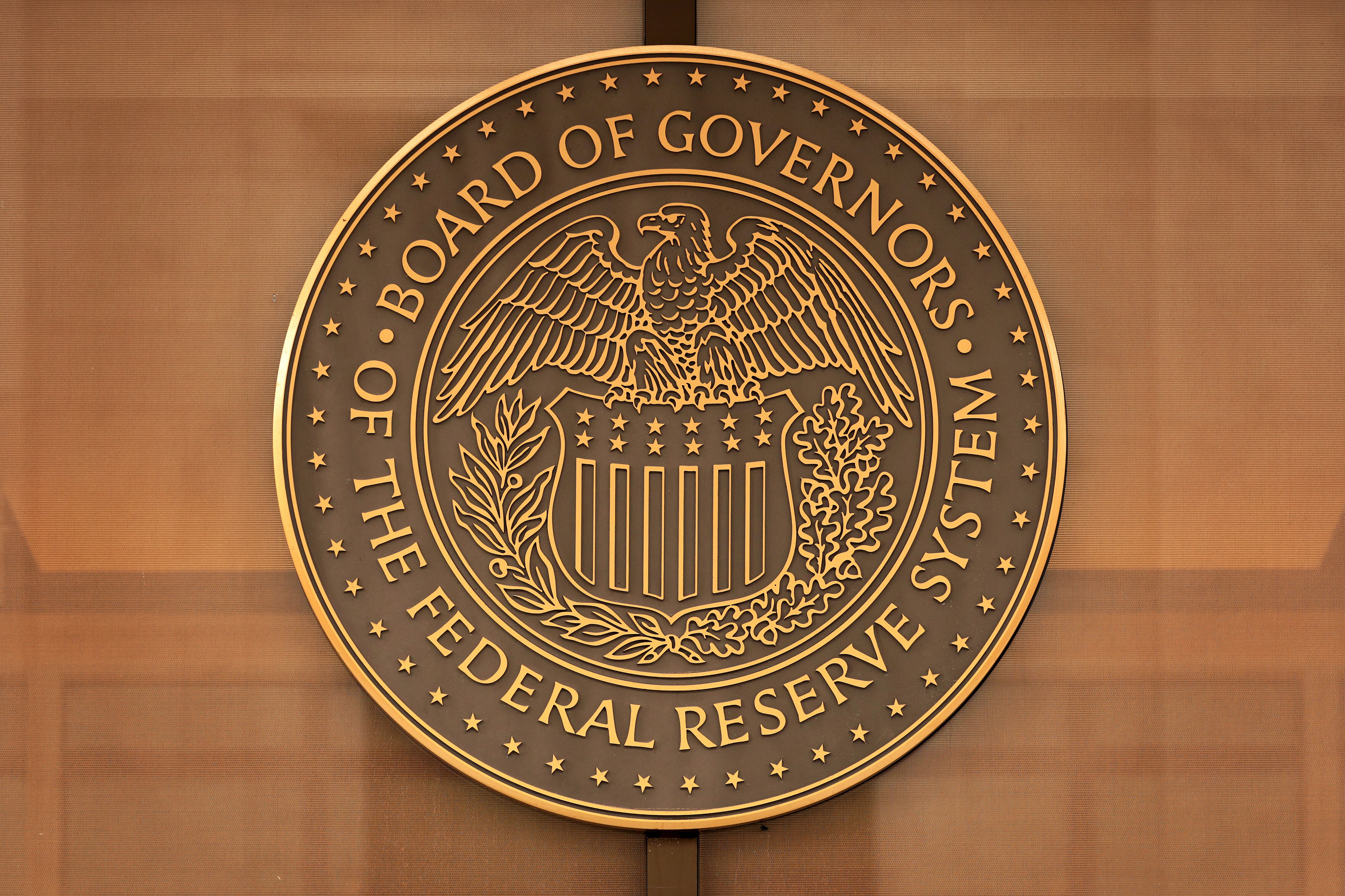
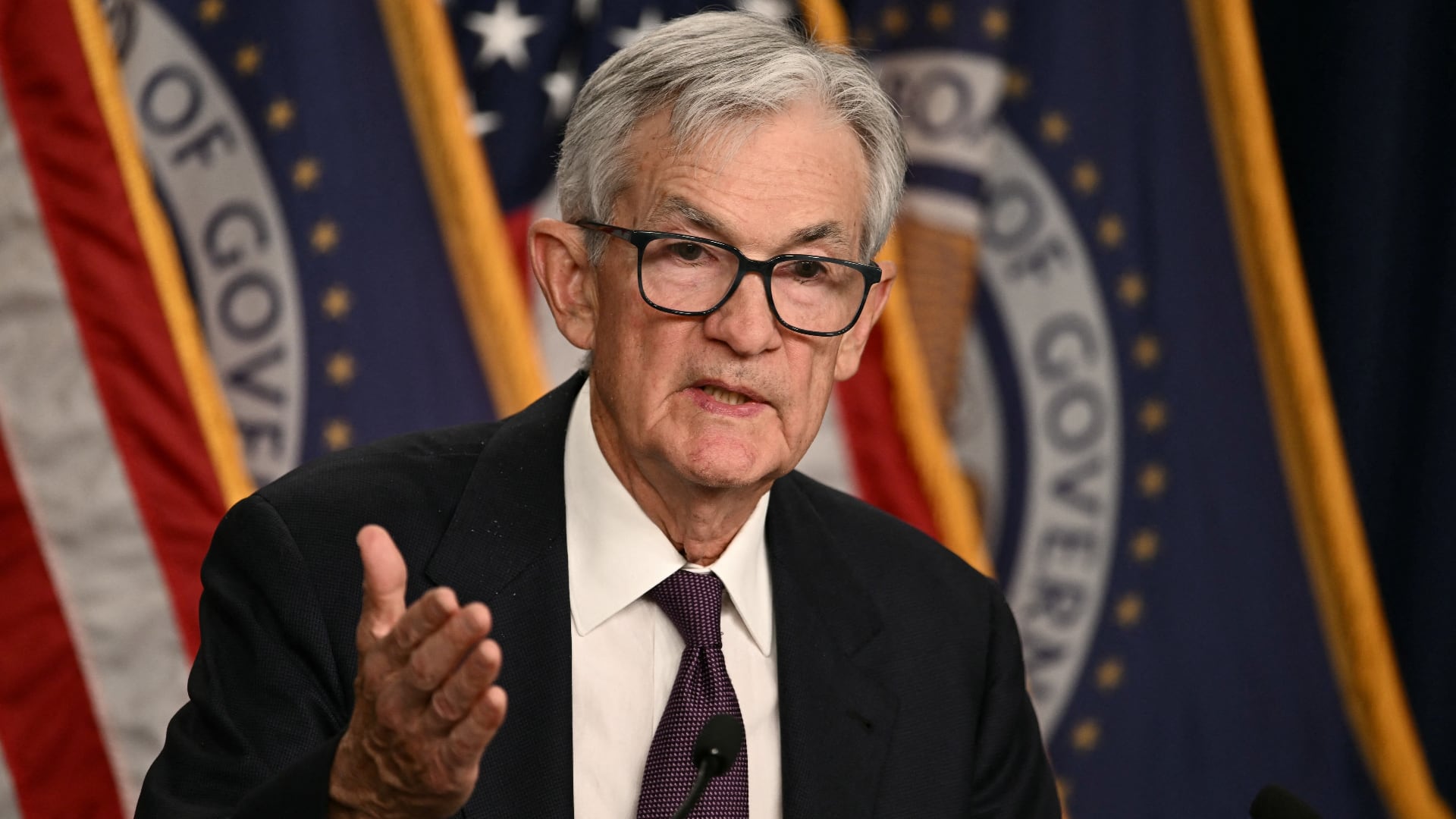
WASHINGTON, DC - MARCH 13: The seal of the Federal Reserve Board is seen outside its William McChesney Martin Building as they joined other government financial institutions to bail out Silicon Valley Bank's account holders after it collapsed on March 13, 2023 in Washington, DC. U.S. President Joe Biden tried to assure the public that the U.S. banking industry was safe following SVB's collapse and after New York regulators' forced closure of Signature Bank. (Photo by Alex Wong/Getty Images)
The U.S. Federal Reserve is working with other central banks around the world to ensure dollars are available to stop any liquidity issues related to the ongoing crisis in the banking sector.
The central bank on Sunday said it has extended its agreements with the Bank of England, Bank of Japan, European Central Bank, Bank of Canada, and the Swiss National Bank to provide U.S. dollar swap lines.
These agreements essentially allow the Fed to pump U.S. dollars into foreign banks by purchasing other currencies in bulk. The Fed first launched them during the Great Financial Crisis to ease strains in the global funding market.
“To improve the swap lines’ effectiveness in providing U.S. dollar funding, the central banks currently offering U.S. dollar operations have agreed to increase the frequency of seven-day maturity operations from weekly to daily,” the Fed said in a statement.
These operations began on Monday morning and will continue through April.
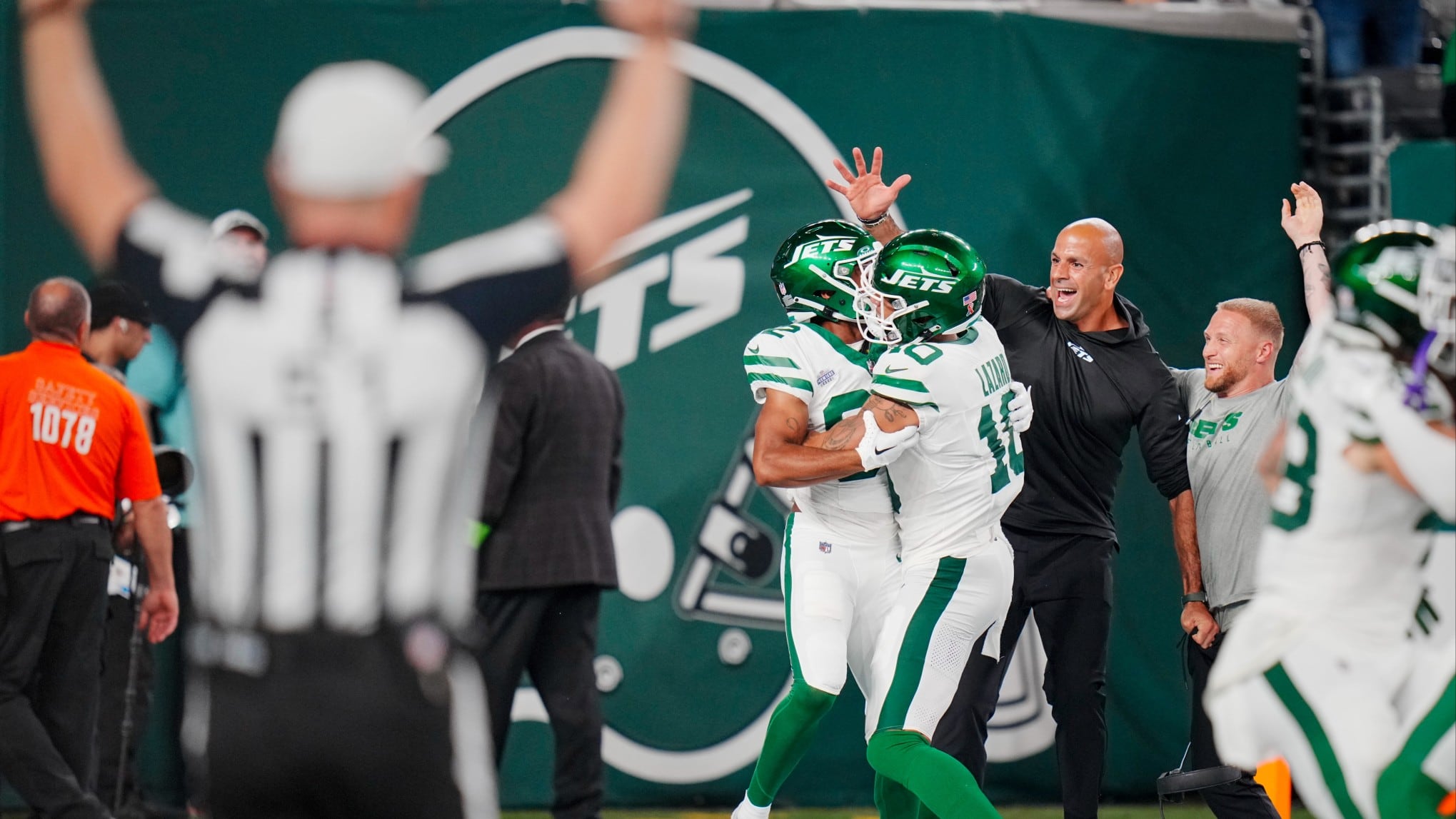
Hundreds of Milwaukee bar patrons who hoped to score free drinks through its offer to pay their tabs whenever the New York Jets, and former Green Bay Packers quarterback Aaron Rodgers, lose had to pay up after the Jets got an overtime win despite an injury that took Rodgers out of the game.
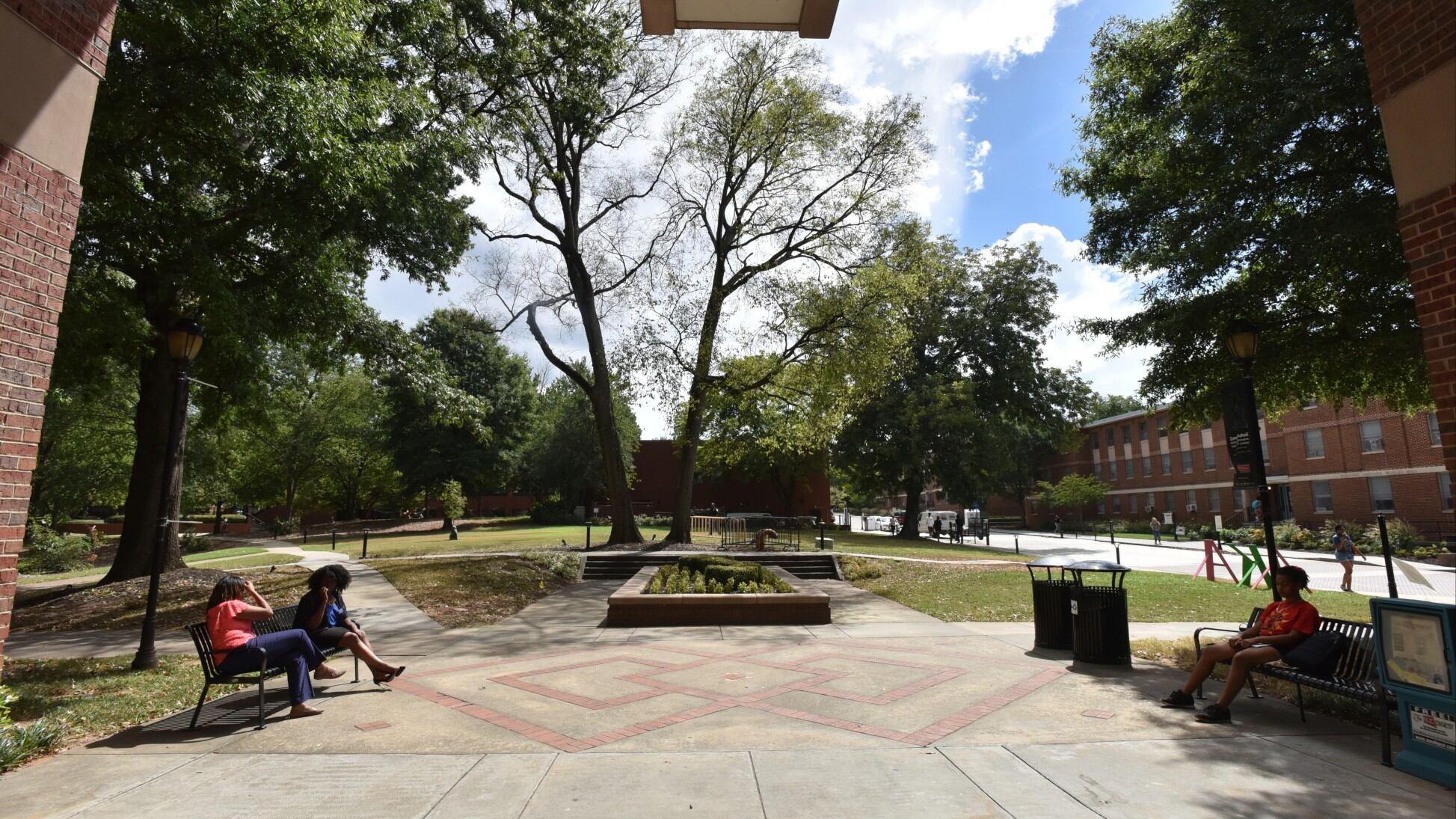
The HBCU Transformation Project, a coalition of 40 historically Black colleges and universities, on Wednesday announced a $124 million gift from philanthropic funders Blue Meridian Partners to increase enrollment, graduation rates and employment rates for the schools' graduates.