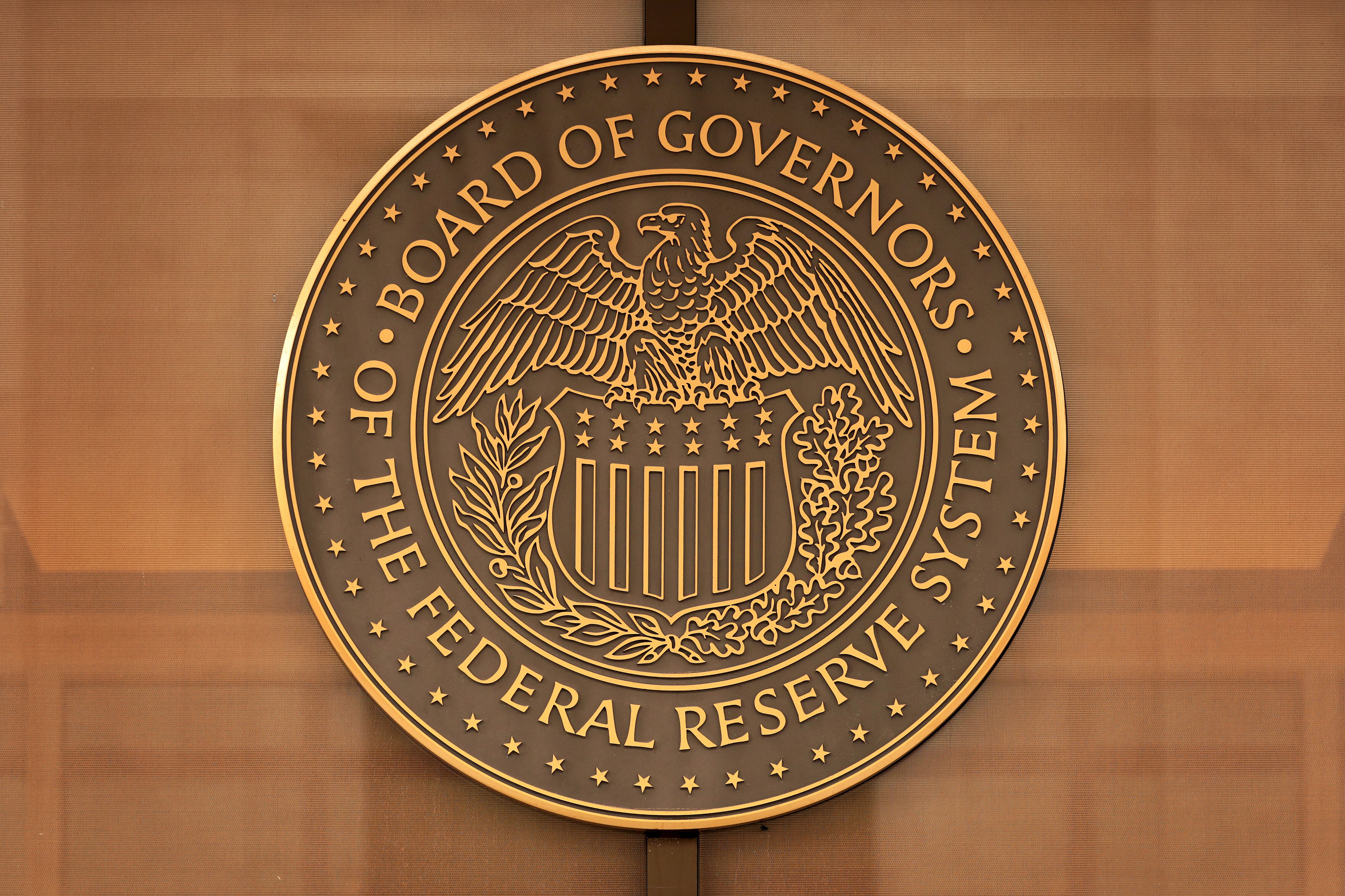
WASHINGTON, DC - MARCH 13: The seal of the Federal Reserve Board is seen outside its William McChesney Martin Building as they joined other government financial institutions to bail out Silicon Valley Bank's account holders after it collapsed on March 13, 2023 in Washington, DC. U.S. President Joe Biden tried to assure the public that the U.S. banking industry was safe following SVB's collapse and after New York regulators' forced closure of Signature Bank. (Photo by Alex Wong/Getty Images)
The U.S. Federal Reserve is working with other central banks around the world to ensure dollars are available to stop any liquidity issues related to the ongoing crisis in the banking sector.
The central bank on Sunday said it has extended its agreements with the Bank of England, Bank of Japan, European Central Bank, Bank of Canada, and the Swiss National Bank to provide U.S. dollar swap lines.
These agreements essentially allow the Fed to pump U.S. dollars into foreign banks by purchasing other currencies in bulk. The Fed first launched them during the Great Financial Crisis to ease strains in the global funding market.
“To improve the swap lines’ effectiveness in providing U.S. dollar funding, the central banks currently offering U.S. dollar operations have agreed to increase the frequency of seven-day maturity operations from weekly to daily,” the Fed said in a statement.
These operations began on Monday morning and will continue through April.
Pete Nicoletti, Global CISO at Check Point, explains why it’s so difficult to legislate against A.I. disinformation and why it’s a concern going into the 2024 election.
Michelle Freyre, Clinique Global Brand President, discusses the company's latest ventures and why skin advice should always come from a trusted source.
Jason Tartick, small business expert and TurboTax Live Partner (who you may recognize from 'The Bachelorette'), shares his tips for making sure your taxes are flawless this year.
Christine Short, Head of Research, Global Corporate Events at Wall Street Horizon, a TMX Company, breaks down the biggest takeaways from companies’ quarterly results.
TikTok once again finds itself in a precarious position as lawmakers in Washington move forward with a bill that could lead to a nationwide ban on the platform.
Bryan West, Gannett’s Taylor Swift reporter, recaps the many, many, theories and Easter eggs Swifties are debating as her ‘Eras Tour’ film comes to Disney+.
‘Our Biggest Fight’ author and Project Liberty founder Frank McCourt, Jr. explains his problem with the internet – and why this Tiktok bill is just a starting point.
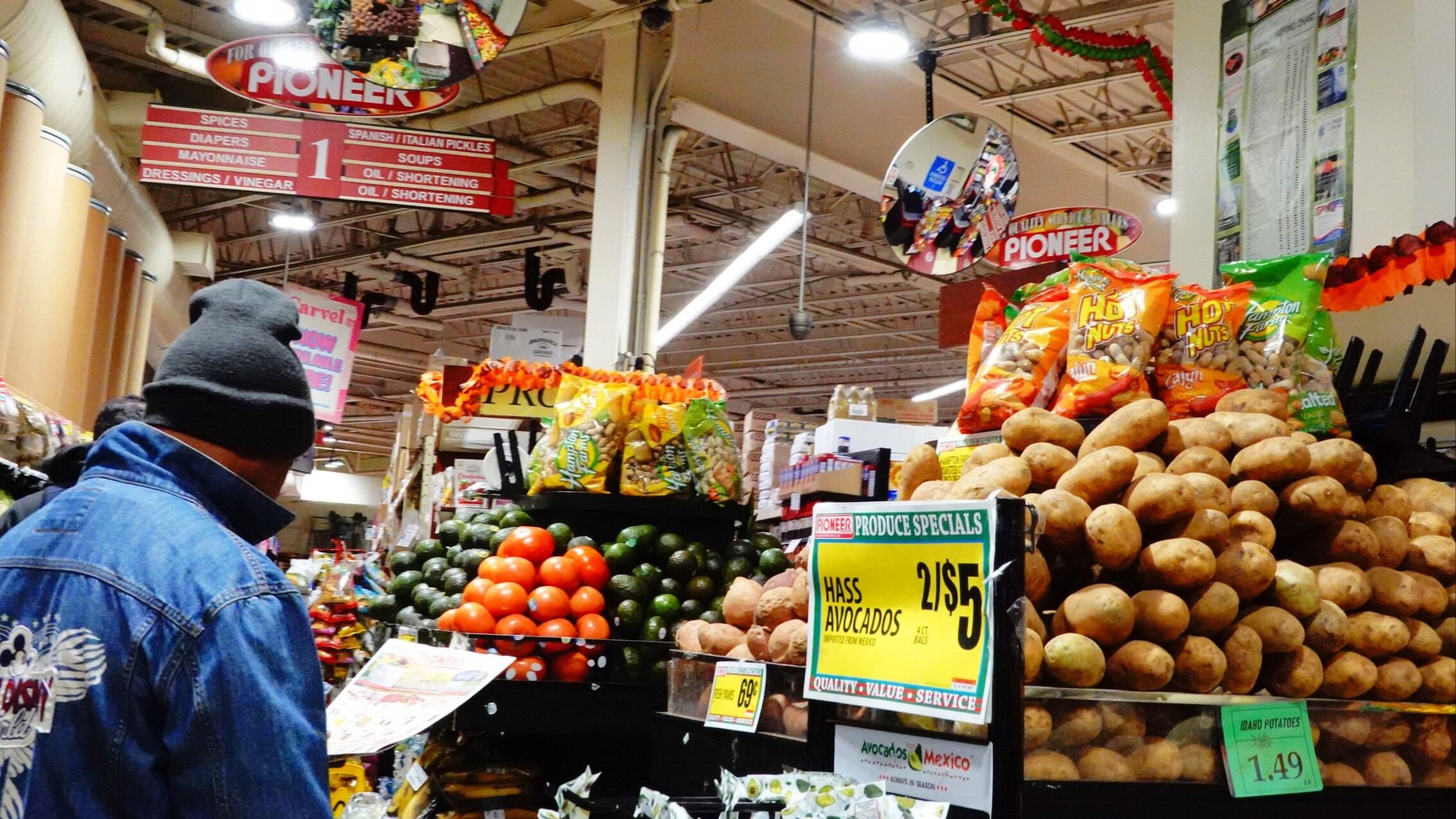
Consumer prices in the United States picked up last month, a sign that inflation remains a persistent challenge for the Federal Reserve and for President Biden.