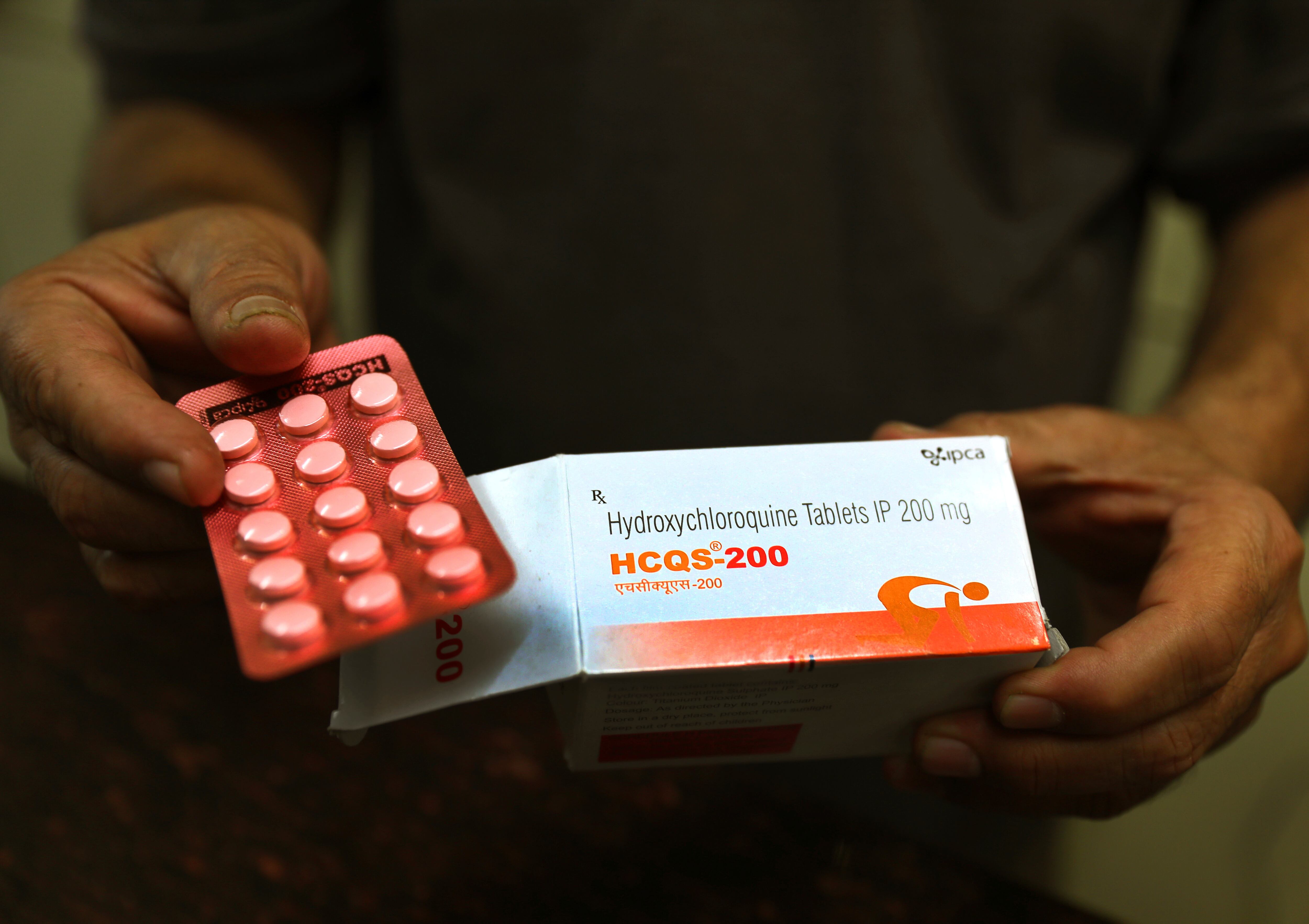
In this April 9, 2020 file photo, a chemist displays hydroxychloroquine tablets in New Delhi, India. U.S. regulators are revoking emergency authorization for malaria drugs promoted by President Donald Trump for treating COVID-19. The Food and Drug Administration said Monday, June 15 that the drugs hydroxychloroquine and chloroquine are unlikely to be effective in treating the coronavirus. (AP Photo/Manish Swarup, File)
By Matthew Perrone
The U.S. Food and Drug Administration is revoking its emergency authorization for malaria drugs promoted by President Donald Trump for treating COVID-19 amid growing evidence they don’t work and could cause deadly side effects.
The agency said Monday that the drugs hydroxychloroquine and chloroquine are unlikely to be effective in treating the coronavirus. Citing reports of heart complications, the FDA said the drugs pose a greater risk to patients than any potential benefits.
The decades-old drugs, also prescribed for lupus and rheumatoid arthritis, can cause heart rhythm problems, severely low blood pressure, and muscle or nerve damage.
The move means that shipments of the drugs obtained by the federal government will no longer be distributed to state and local health authorities. The drugs are still available for alternate uses, so U.S. doctors could still prescribe them for COVID-19 — a practice known as off-label prescribing.
On Thursday, a National Institutes of Health expert panel revised its guidelines to specifically recommend against the drug’s use except in formal studies.
Trump aggressively pushed the drug beginning in the first weeks of the outbreak and stunned medical professionals when he revealed he took the drug preemptively against infection.
U.S. Air Force pilot Tyler Lucas beat 199 competitors on Beast Games Season 2 to win $5.1M. He joins us live to share how discipline and loyalty won the game.
Osier founder Cheree Ashley spent a decade building recovery programs & now she's channeling that mission into skincare with Selling Sunset's Sandra Vergara.
Genesis just committed to 22 new vehicles by 2030. The brand's COO joins us live to break down their luxury takeover, NY Auto Show reveals, and what's next.
Super League is redefining brand advertising, inside Roblox and Minecraft, reaching 300M gamers with results traditional ads can't touch. Here's how they do it.
As OpenAI and Anthropic eye public markets, Mizuho analyst Lloyd Walmsley tells us which AI giant has the stronger case for investors and what to watch next.
Hershey's VP of Marketing Dan Mohnshine reveals the brand's newest products, the story behind Dirty Soda Twizzlers, and how an iconic brand stays relevant.
Lavu CEO Saleem Khatri joins to explain how AI-powered POS systems are changing how major franchises like KFC take orders, cut costs, and serve customers faster
BillionToOne's Jen Hoskovec breaks down the Unity test, the latest in prenatal genetic screening, and what it means for those born with genetic conditions.