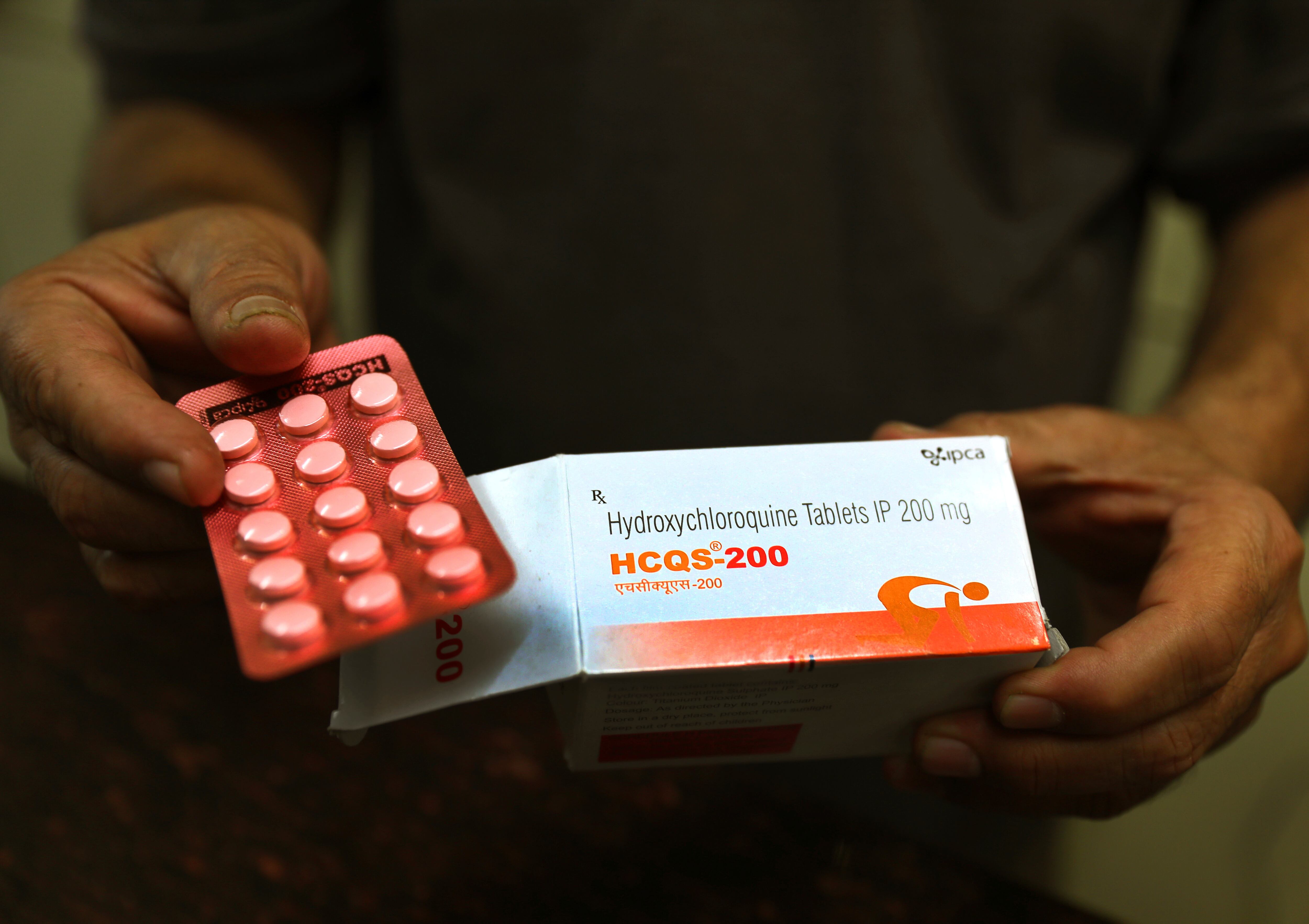
In this April 9, 2020 file photo, a chemist displays hydroxychloroquine tablets in New Delhi, India. U.S. regulators are revoking emergency authorization for malaria drugs promoted by President Donald Trump for treating COVID-19. The Food and Drug Administration said Monday, June 15 that the drugs hydroxychloroquine and chloroquine are unlikely to be effective in treating the coronavirus. (AP Photo/Manish Swarup, File)
By Matthew Perrone
The U.S. Food and Drug Administration is revoking its emergency authorization for malaria drugs promoted by President Donald Trump for treating COVID-19 amid growing evidence they don’t work and could cause deadly side effects.
The agency said Monday that the drugs hydroxychloroquine and chloroquine are unlikely to be effective in treating the coronavirus. Citing reports of heart complications, the FDA said the drugs pose a greater risk to patients than any potential benefits.
The decades-old drugs, also prescribed for lupus and rheumatoid arthritis, can cause heart rhythm problems, severely low blood pressure, and muscle or nerve damage.
The move means that shipments of the drugs obtained by the federal government will no longer be distributed to state and local health authorities. The drugs are still available for alternate uses, so U.S. doctors could still prescribe them for COVID-19 — a practice known as off-label prescribing.
On Thursday, a National Institutes of Health expert panel revised its guidelines to specifically recommend against the drug’s use except in formal studies.
Trump aggressively pushed the drug beginning in the first weeks of the outbreak and stunned medical professionals when he revealed he took the drug preemptively against infection.
Veetahl Eilat-Raichel, Founder and CEO of Sorbet, shares how employees can harness the value of their time off – and how companies can use PTO to employees’ benefit.
Brooke May, Managing Partner at Evans May Wealth, weighs in on how the market is expected to perform through the rest of 2024, plus why she’s still bullish on tech but cautious when it comes to financials.
Pete Nicoletti, Global CISO at Check Point, explains why it’s so difficult to legislate against A.I. disinformation and why it’s a concern going into the 2024 election.
Michelle Freyre, Clinique Global Brand President, discusses the company's latest ventures and why skin advice should always come from a trusted source.
Jason Tartick, small business expert and TurboTax Live Partner (who you may recognize from 'The Bachelorette'), shares his tips for making sure your taxes are flawless this year.
Christine Short, Head of Research, Global Corporate Events at Wall Street Horizon, a TMX Company, breaks down the biggest takeaways from companies’ quarterly results.