U.S. health regulators pledged again Thursday to try to ban menthol cigarettes, this time under pressure from African American groups to remove the mint flavor popular among Black smokers.
The Food and Drug Administration has attempted several times to get rid of menthol but faced pushback from Big Tobacco, members of Congress and competing political interests in both the Obama and Trump administrations. Any menthol ban will take years to implement and will likely face legal challenges from tobacco companies.
Thursday’s announcement is the result of a lawsuit filed by anti-smoking and medical groups last summer to force the FDA to finally make a decision on menthol, alleging that regulators had “unreasonably delayed” responding to a 2013 petition seeking to ban the flavor.
The deadline for the agency’s response was Thursday. The FDA said it aims to propose regulations banning the flavor in the coming year.
The action would also ban menthol and fruity flavors from low-cost, small cigars, which are increasingly popular with young people, especially Black teens.
“We will save save hundreds of thousands of lives and prevent future generations from becoming addicted smokers,” said Dr. Janet Woodcock, the FDA's acting commissioner.
She cited research estimates that banning menthol would prevent 630,000 tobacco-related deaths over 40 years, more than a third of them among African Americans.
Menthol is the only cigarette flavor that was not banned under the 2009 law that gave the FDA authority over tobacco products, an exemption negotiated by industry lobbyists. The act did, though, instruct the agency to continue to weigh banning menthol.
The flavor’s persistence has infuriated anti-smoking advocates, who point to research that menthol’s numbing effect masks the harshness of smoking, likely making it easier to start and harder to quit.
The mint-flavored cigarettes are overwhelmingly used by young people and minorities, particularly Black smokers, 85% of whom smoke menthols. That compares to about a third of white smokers.
“The science is there, the data is there, so why are these products still on the market?” said Carol McGruder of the African American Tobacco Control Leadership Council.
Her group sued along with Action on Smoking and Health, the American Medical Association and the National Medical Association, which represents Black physicians.
For decades, companies focused menthol marketing and promotions on Black communities, including sponsoring music festivals and neighborhood events. Company documents released via 1990s litigation also show companies viewed menthol cigarettes as good “starter” products because they were more palatable for teenagers .
“There was a specific, intentional focus on creating the next generation of smokers by making menthol cigarettes available in those communities,” said Dr. Nia Heard-Garris, who chairs the American Academy of Pediatrics’ group on minority health and equity.
Sony is leveling up its subscription service, PlayStation Plus this week, a combination of its earlier options into a tiered plan offering options to play streaming and mostly older titles instead of day-and-date new games like those offered by rival Microsoft on its Gamepass service. Colette Bennett, a senior reporter at TheStreet and the host of the podcast "Colette & Matt Have Entered the Chat," joined Cheddar News to talk about the backlash from gamers. I would say maybe like it's like a six. I'm happy to see older, stony games and have access to them, but I really would have preferred to be able to stream brand-new games. "Gamers are pretty upset that Sony is kind of repackaging the stuff that's been around more or less for years and trying to make it look new," she said. "You know, the Netflix subscription-like model is so appealing."
Clear Skye CEO John Milburn joins Cheddar News' Closing Bell, where he explains how his company is helping major companies enhance their identity and security measures and breaks down how Clear Skye will be utilizing the new funding.
Jeff Bezos’ aerospace company Blue Origin successfully held a fourth civilian launch into space on Thursday. Former NASA Astronaut, Leroy Chiao, joined Cheddar News to talk about the significance of this launch for the future of civilian launches and to discuss the issue of safety. "This is opening space up to more people, raising more awareness, which is good for the entire industry," Chiao said. He also discussed the nature of pricing the tickets for space tourism.
The most popular and most valuable cryptocurrency is also the least eco-friendly - data shows that Bitcoin mining generates the same amount of carbon emissions as the entire country of Thailand. According to nonprofit Fair Planet, 96 million tons of carbon dioxide emissions come from Bitcoin mining every year. Now, a consortium of climate activist groups is calling on the Bitcoin industry to cut its energy use by making changes to its software code. Michael Brune, former executive director of the Sierra Club, joins Cheddar News' Closing Bell to discuss.
A cannabis software startup is offering a first-of-its-kind perk for its employees - reimbursements for legal cannabis purchases. Jointly Better bills itself as an experience-based cannabis wellness tracker and product platform. In an attempt to attract top talent, the company will reimburse up to $150 a month for its workers' lawful cannabis purchases. David Kooi, co-founder and CEO of Jointly, joins Cheddar News' Closing Bell to discuss.
Votes for unionization at the Amazon fulfillment center in Staten Island, New York, are now being tabulated, and the results might entirely depend on who voted and to which department they belong.
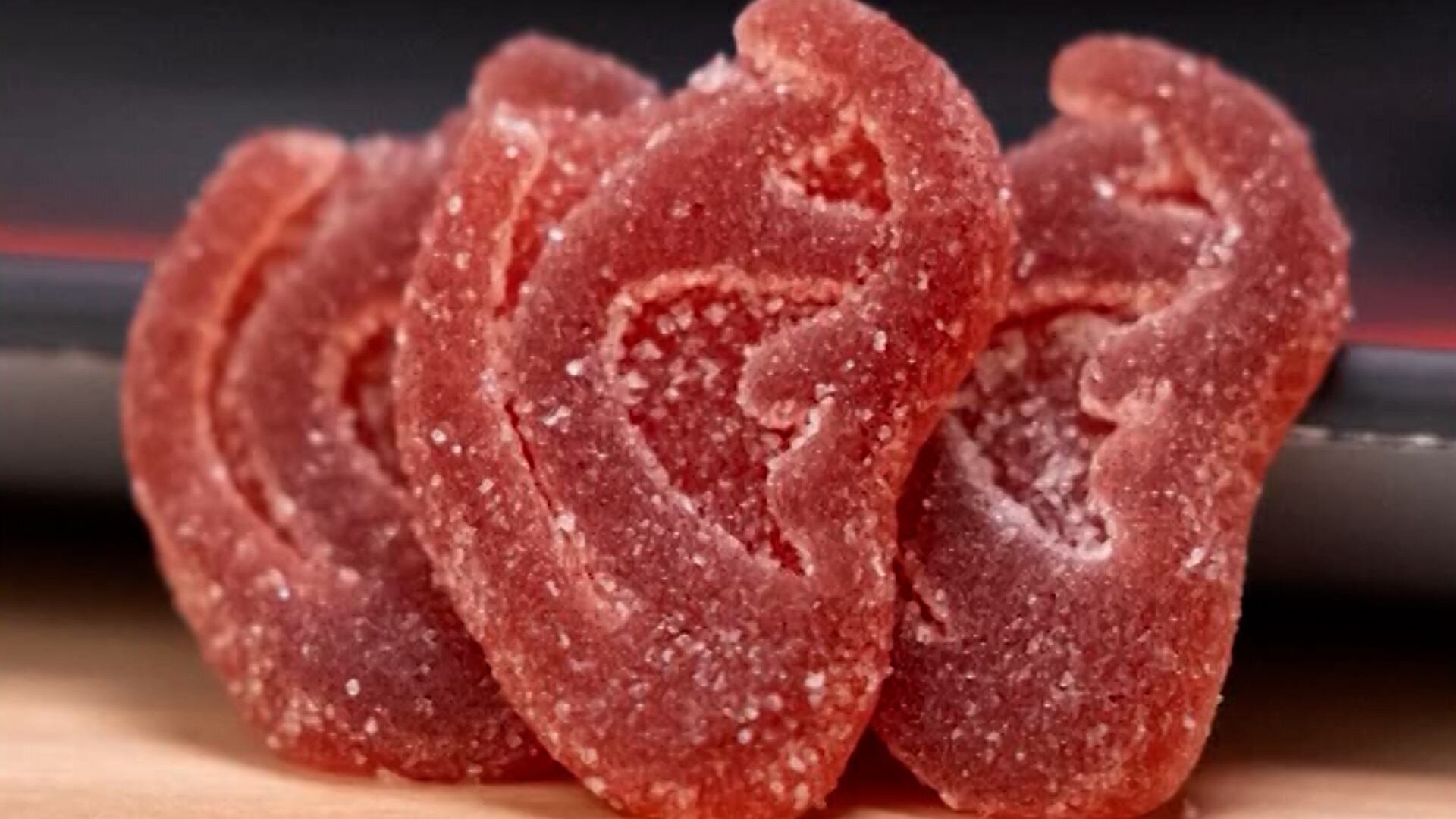
This June marks the 25th anniversary of the infamous 1997 "Bite Fight”, the iconic boxing rematch between Mike Tyson and Evander Holyfield when Tyson shockingly bit a piece of his opponent’s ear off. As a macabre tribute to the incident, the boxing legend’s line of cannabis products, Tyson 2.0, has released “Mike Bites", edibles in the shape of an ear complete with a bite mark. Tyson, the chief brand officer and co-founder, along with CEO Adam Wilks joined Cheddar News to talk about the unique gummies. "I just think this is just me owning what I did. I'm owning my responsibility. I've done that. That was pretty bad at the time, but I turned it over to make it pretty good," the former heavyweight champion said.