U.S. health regulators pledged again Thursday to try to ban menthol cigarettes, this time under pressure from African American groups to remove the mint flavor popular among Black smokers.
The Food and Drug Administration has attempted several times to get rid of menthol but faced pushback from Big Tobacco, members of Congress and competing political interests in both the Obama and Trump administrations. Any menthol ban will take years to implement and will likely face legal challenges from tobacco companies.
Thursday’s announcement is the result of a lawsuit filed by anti-smoking and medical groups last summer to force the FDA to finally make a decision on menthol, alleging that regulators had “unreasonably delayed” responding to a 2013 petition seeking to ban the flavor.
The deadline for the agency’s response was Thursday. The FDA said it aims to propose regulations banning the flavor in the coming year.
The action would also ban menthol and fruity flavors from low-cost, small cigars, which are increasingly popular with young people, especially Black teens.
“We will save save hundreds of thousands of lives and prevent future generations from becoming addicted smokers,” said Dr. Janet Woodcock, the FDA's acting commissioner.
She cited research estimates that banning menthol would prevent 630,000 tobacco-related deaths over 40 years, more than a third of them among African Americans.
Menthol is the only cigarette flavor that was not banned under the 2009 law that gave the FDA authority over tobacco products, an exemption negotiated by industry lobbyists. The act did, though, instruct the agency to continue to weigh banning menthol.
The flavor’s persistence has infuriated anti-smoking advocates, who point to research that menthol’s numbing effect masks the harshness of smoking, likely making it easier to start and harder to quit.
The mint-flavored cigarettes are overwhelmingly used by young people and minorities, particularly Black smokers, 85% of whom smoke menthols. That compares to about a third of white smokers.
“The science is there, the data is there, so why are these products still on the market?” said Carol McGruder of the African American Tobacco Control Leadership Council.
Her group sued along with Action on Smoking and Health, the American Medical Association and the National Medical Association, which represents Black physicians.
For decades, companies focused menthol marketing and promotions on Black communities, including sponsoring music festivals and neighborhood events. Company documents released via 1990s litigation also show companies viewed menthol cigarettes as good “starter” products because they were more palatable for teenagers .
“There was a specific, intentional focus on creating the next generation of smokers by making menthol cigarettes available in those communities,” said Dr. Nia Heard-Garris, who chairs the American Academy of Pediatrics’ group on minority health and equity.
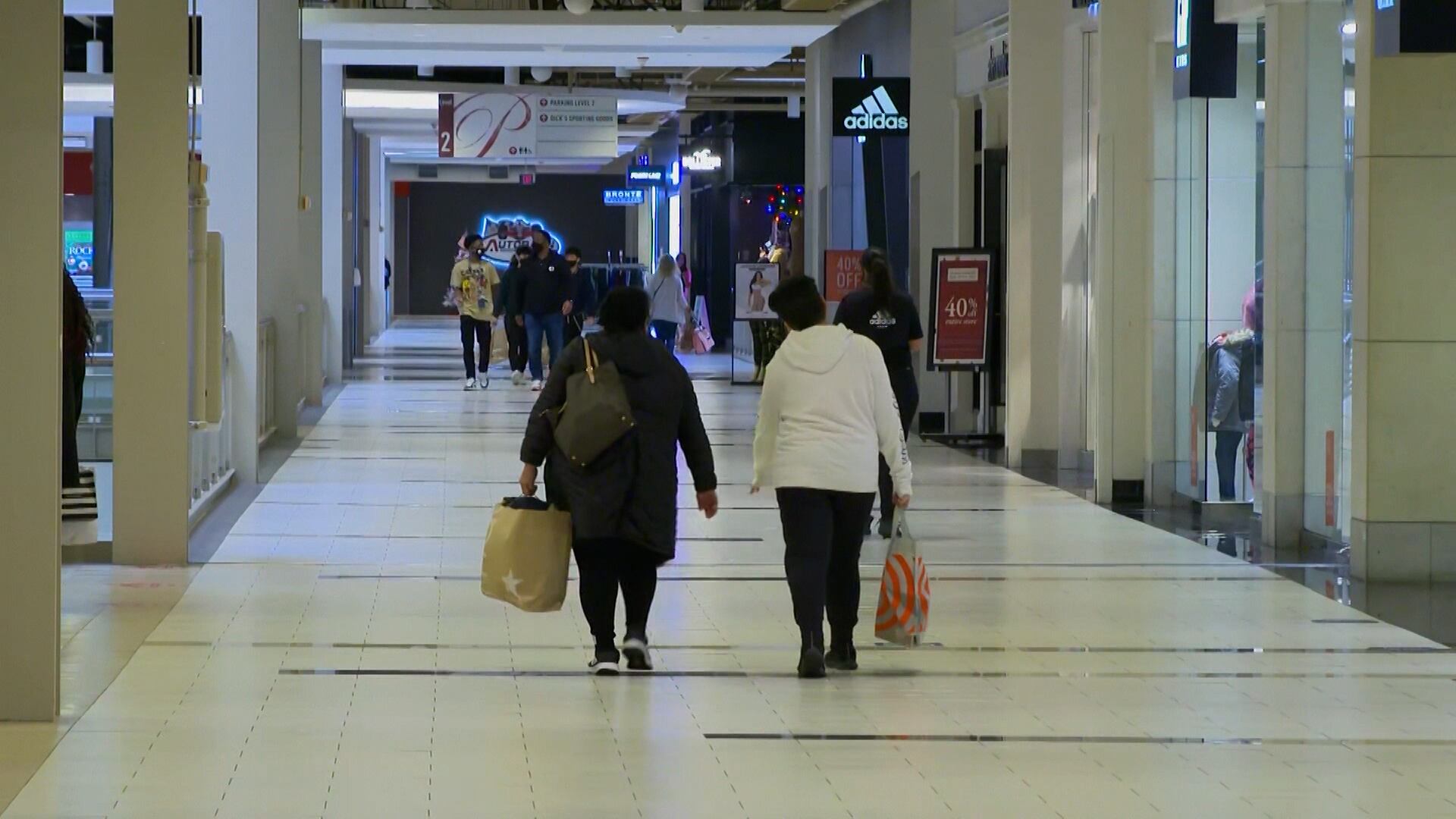
Despite challenges like inflation, labor and product shortages, and the Omicron variant, holiday sales saw record levels of growth this year, according to a new report from Mastercard SpendingPulse. The group reports on national retail sales across all payment types, finding that holiday sales rose at the fastest pace in 17 years this year. Mastercard senior advisor and former chariman and CEO of Saks Incorporated Steve Sadove joined Cheddar News' Closing Bell to discuss.
Keith Fitz-Gerald, chief investment officer at Fitz-Gerald Group, spoke to Cheddar about the growing competition for Tesla's electric cars in China as tech giant Huawei enters the race. "There's a lot of legacy worry, but that does not discount the possibility that Elon might have a contender on his hands," he said about the sometimes troubled telecom company. Fitz-Gerald also gave a nod to two other local rivals, Nio and XPeng, noting the latter as having something of an edge with its CEO He Xiopeng being lauded by Chinese state media.
Ariel Kaye, founder and CEO of home goods business Parachute, joined Cheddar to discuss the company's sales success over the holidays as it navigated supply chain issues. She also expects a strong showing in 2022 with the continuation of 2021 trends. "The hybrid work model is going to be here for a long time," Kaye said. The business, which currently has 12 physical locations, plans to expand to 30 brick-and-mortar shops by the end of 2022.
Nikola announced that it delivered its first electric semi trucks last week, sending the embattled EV company's stock soaring. There is a lot of competition in this space, though, said Lauren Fix, an automotive analyst with Car Coach Reports. While every country has companies racing to dominate the electric trucking industry, she explained, a shortage of graphite, used in batteries, and a dearth of convenient charging stations will still keep growth slow in 2022. "You really have to be very careful when you're investing in this marketplace," Fix said. "That's great that [Nikola was] able to deliver one, but can they deliver more?"
It looks like the supply chain didn't steal Christmas this year after all. Retail sales jumped 8.5 percent between November 1 and December 24, compared with the same period last year, according to a report from Mastercard. That's the strongest growth in 17 years. Jharonne Martis, director of consumer research at Refinitiv, joined Cheddar to discuss how retailers were able to do so well despite inflation, supply chain issues, and the COVID-19 omicron variant but gave a subdued outlook for the retail sector at the beginning of 2022. "Consumers are not just completely isolated from the inflation issues," she said. "This is definitely going to continue into the first half of the year, as per our IFR data."
Hotel cancellations are on the rise ahead of the holidays as the omicron variant spreads around the world. Online hotel search site Trivago noted a 35 percent jump in cancellations since November. Axel Hefer, managing director and CEO at Trivago, joined Cheddar to discuss this worrying trend. Hefner said it is important for both travelers and businesses to watch how the 2021-2022 winter travel season unfolds as it will help them prepare for next year as the pandemic will likely be ongoing.
Markets opened slightly higher to kick off the final trading week of the year as investors continue to watch the Omicron variant in the U.S. Sean O'Hara, President, Pacer ETFs joined Cheddar's Opening Bell to discuss what drove early market activity.