Facebook's David Marcus Knows Why People Prefer the Messenger App
The way companies communicate with their customers is changing drastically, and Facebook’s head of Messenger says his company’s app creates a space for them to have a better dialogue.
David Marcus joined Cheddar CEO Jon Steinberg from the WPP Stream conference in Ojai, California Friday. He points out that no one ever seems to call companies anymore. Not only is the process tedious, he says, but it’s not the way clients prefer to communicate. Marcus thinks Messenger is a more viable and effective option than even traditional texting.
This push for consumers and companies to communicate via Messenger, which was created in 2011, comes at a time where communication apps are on the rise. Data research firm Statista projects that by 2019 2.19 billion people will be using mobile phone messaging.
Marcus said in September that Facebook Messenger had 1.3 billion active users every month. The company’s other product, WhatsApp, has over 1 billion daily users on the platform. According to Statista, WhatsApp is the most popular option worldwide, and Messenger ranks #3.
Marcus argued that the number of people choosing to communicate via Messenger continues to increase. “As a result [the app] becomes a great platform for businesses as well,” he said.
He points to a survey Facebook conducted found that over 64 percent of people across demographics would prefer to communicate with a brand via a platform like Messenger. But there is a generational difference. A study by Goldman Sachs found that 34 percent of millennials like a brand more when it uses social media, but that number drops to 16 percent in individuals over 36.
Facebook has sought to monetize Messenger through advertising.
“We have ‘Click to Messenger’ ads … you can buy ads that direct people to opening more conversations with your brands inside of Messenger.”
Integrating a system where brands and consumers can increase communication is reminiscent of Facebook’s active advertisement strategy. The tech behemoth one of the two dominant players in the advertising industry -- the other being Google. It rules display advertising with a projected market share of 39 percent this year and revenues at $16.33 billion, according to eMarketer.
As the popularity of Bitcoin and other digital tokens grew this year, more financial institutions and payment apps added ways for customers to trade or make payments using cryptocurrency. Meanwhile, companies like theater chain AMC started accepting major cryptocurrencies for tickets and concessions, and retailers are rumored to be entering the space soon. What does this mean for cryptocurrency's wider adoption — and will 2022 be the year that the average consumer is exposed to digital coin payments on a regular basis? João Almeida, Co-Founder and CTO of OpenNode joins Cheddar News' Crypto Craze: The Year of the Token to discuss.
Bitcoin had a successful 2021: reaching a new high of nearly $70,000, a $1 trillion market cap, and becoming legal tender in El Salvador. Investors also got the chance to invest in three Bitcoin futures-backed ETFs once they were approved. These developments set up the world's best-known digital coin for more success in 2022, but could altcoins like Ethereum, Litecoin, and others move into the top spot or impact Bitcoin's value? Matt Hougan, CIO of Bitwise Asset Management, joins Cheddar's Crypto Craze: The Year of the Token to discuss his 2022 outlook for Bitcoin, whether we could see an ETF backed by a physical coin, and more.
Coming off a 2021 campaign where the prices of Bitcoin, Ether, and other cryptocurrencies reached unpreceded levels, Bitwise Asset Management CIO Matt Hougan and OpenNode Co-Founder & CTO João Almeida join Cheddar News' Crypto Craze: The Year of the Token to discuss the ways the crypto market can soar even higher in 2022.
Howard Yu, LEGO professor of management and innovation at IMD Business School and author of "Leap: How to Thrive in a World Where Everything Can Be Copied," joined Cheddar to discuss the mania surrounding the concept of the metaverse. He particularly noted how companies in the retailing sector like Nike are leveraging it. "I think metaverse really opens up a window for brands to think about how can they, ongoing-wise, engage with the consumer, engage with the target audience, so their brand continues to stay refreshed in the changing environment," Yu said.
Cheddar News visited the Amazon Fulfillment Center in Robbinsville, N.J., to find out how your order turns from a click of a mouse into a box on your doorstep.
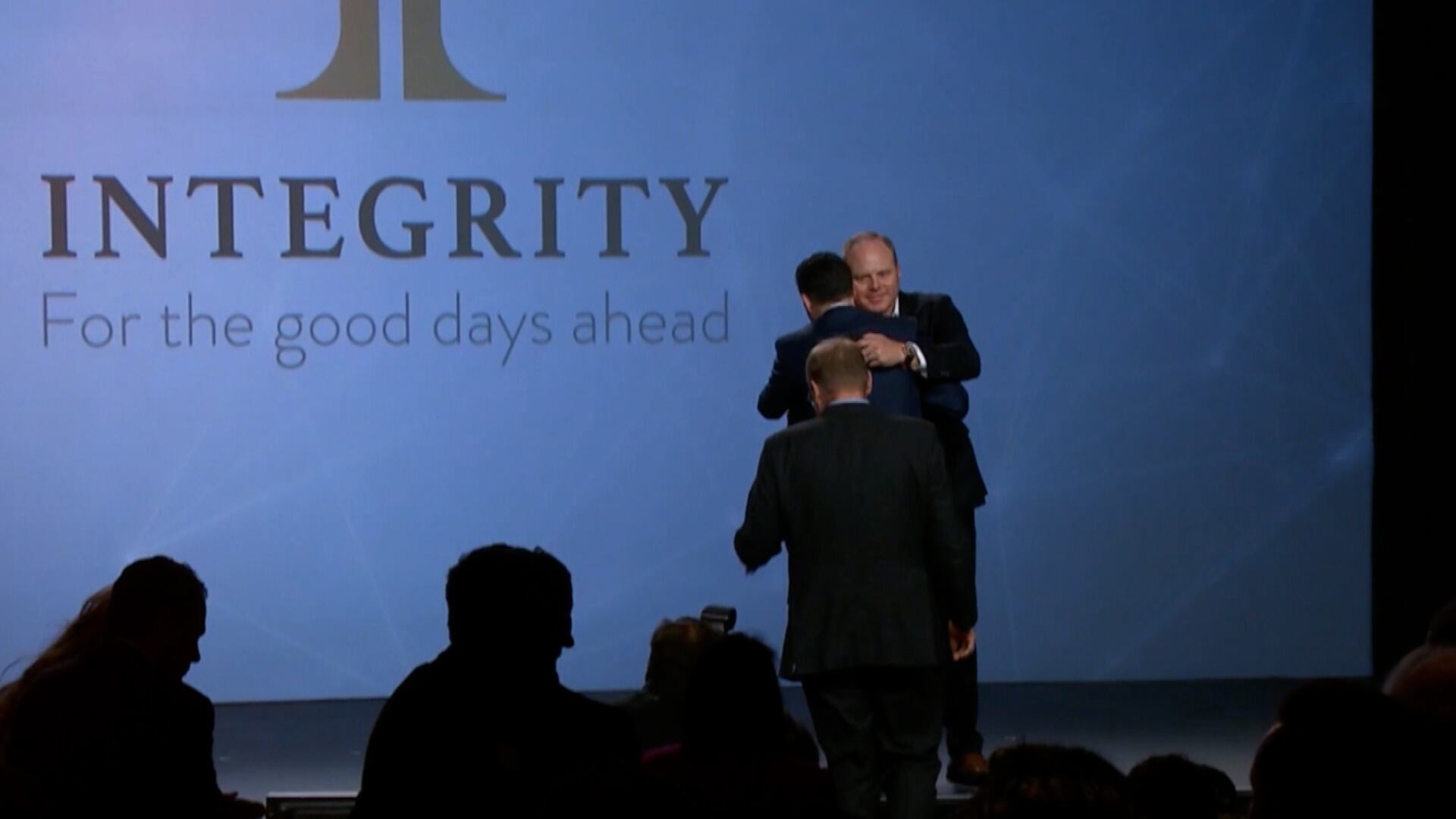
Integrity Marketing Group, nation's largest independent distributor of life and health insurance products, is showing its employees it cares. The company surprised its 5,500 employees with $125 million in cash payouts to those participating in the company's Employee Ownership Plan. Bryan Adams, CEO of at Integrity Marketing Group, and Steve Young, NFL Hall of Famer and chairman of the board at Integrity Marketing Group, join Cheddar News to talk about the announcement.
Anthony Tall, sports agent and president of Miracle Sports Agency, joins Cheddar News to talk about the challenges professional sports leagues are facing amid a surge in coronavirus cases across the U.S.
Todd Kaplan, Pepsi's Vice President of Marketing, joins Cheddar News to discuss the company's first-ever non-fungible token with its Pepsi Mic Drop genesis NFT collection.
This year, consumers might not be as surprised by what's under their trees as by the trees themselves. Despite a tighter market for trees, Stew Leonard's was able to secure its entire stock of Christmas trees from a supplier in Quebec. But some prices jumped this year as a result of increased costs for shipping and labor amid the COVID-19 pandemic. Cheddar's Chloe Aiello reports.