Shares of Facebook continued to plunge Thursday, wiping more than $100 billion from its market cap in just hours after the company's CFO forecast a significant drop in revenue growth and margins in the coming quarters.
"Looking beyond 2018, we anticipate that total expense growth will exceed revenue growth in 2019," said Chief Financial Officer David Wehner on a conference call Wednesday. "Over the next several years, we would anticipate that our operating margins will trend towards the mid-thirties on a percentage basis."
Wehner's comments on the conference call came after Facebook said revenues grew less than expected in the second quarter, and its user count missed estimates. The statements accelerated losses in the stock, which was down as much as 24 percent after hours.
"\[We see\] substantial legal and regulatory issues, and really structural changes in the business model, that we're going to see evolve over the next couple quarters at the least," said CFRA analyst Scott Kessler.
In the first earnings report to cover a full quarter since the Cambridge Analytica scandal broke, the social media network said monthly active users grew 11 percent from a year ago to about 2.23 billion people, though analysts were looking for 2.25 billion. Users in the U.S. remained at 241 million, the same level as at the end of March, while users in Europe fell for the first time.
"I think we've hit a point with Facebook where user growth is just going to slow down," said Jason Moser, analyst at Motley Fool, in an interview to Cheddar.
Revenues came in at about $13.2 billion for the quarter, also short of estimates.
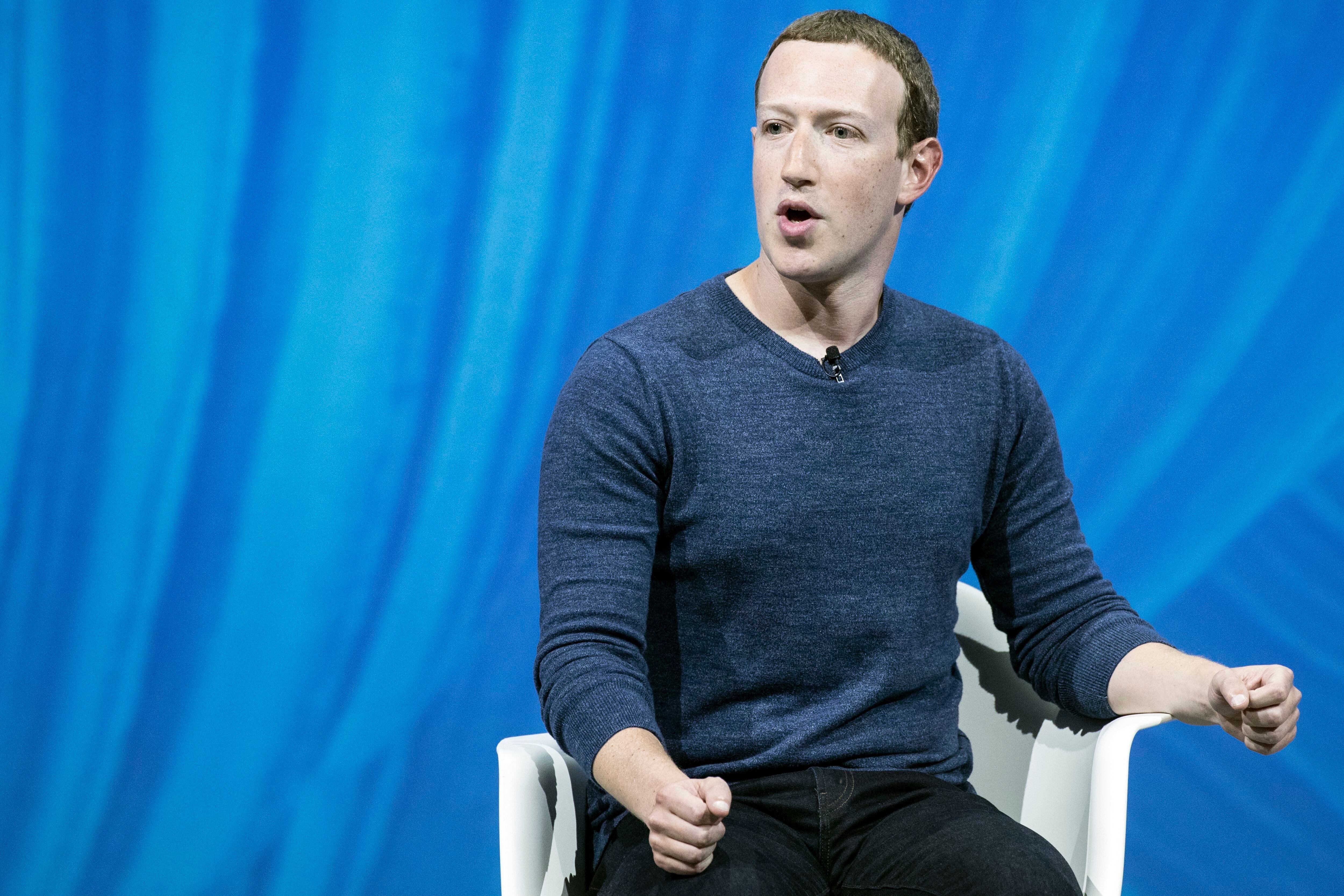
The company has been plagued by criticism over how it handles user data for months, and CEO Mark Zuckerberg has not only issued several rare public apologies but even testified before Congress on the issue.
Facebook was also hit with calls to better police the content on its platform, most recently after the company refused to take down a post from right-wing conspiracy theorist Alex Jones, threatening Special Counsel Robert Mueller.
Ad sales rose 42 percent during the quarter but were outpaced by a 50 percent increase in costs, driven by added efforts to address those issues.
Facebook's stock drop, the biggest on a percent basis ever for the company, erased all the gains it had made since its last earnings report three months ago. The loss in market value was bigger than the entire market cap of IBM, McDonald's, and Nike.
The results put pressure on the entire tech landscape, with shares of Amazon, Twitter, Snap, and Google parent Alphabet all falling in sympathy.
Quick facts from Facebook's Q2 earnings report:
* Earnings per share: $1.74 vs. $1.72 estimate
* Revenues: $13.23 vs. $13.36 billion estimate
* Monthly active users: 2.23 billion vs. 2.25 billion estimate
* Daily active users: 1.47 billion vs. 1.49 billion estimate
* Monthly active users in Europe fell for the first time
* Mobile ad revenue accounted for 91 percent of all ad revenue
* Ad revenue grew by 42 percent, but costs grew by 50 percent
For full interview, [click here](https://cheddar.com/videos/facebook-earnings-drop-as-much-as-10-after-slight-revenue-miss)
Eva Chen has spent the past three years turning Instagram into the go-to platform for fashion. Now the app's director of fashion partnerships is channeling her expertise into a new children's book, "Juno Valentine and The Magical Shoes."
With a dismal October on the books, investors are now looking to Thursday's earnings report from Apple for signs that tech stocks are ready to rebound. The trillion-dollar company will report its fiscal fourth-quarter earnings after the closing bell. Analysts are estimating about 48 million iPhones and 11 million iPads were sold in the three-month period, with earnings per share of $2.78 on roughly $62 billion in revenues.
Facebook CEO Mark Zuckerberg was notably forthcoming during the social media company's Tuesday earnings conference call, particularly about fellow tech competition. But comparing itself to Apple might just be Facebook's latest brilliant political maneuver.
Keith McCarty, CEO and founder of Wayv, wanted to offer easier solutions for consumers of cannabis. Wayv essentially acts like the "Amazon for weed," according to McCarty, and is a place for retailers and brands.
HSBC U.S. has entered the personal loans arms race through a partnership with the online lender Avant, in the decades-old institution's latest initiative to bring its business further into the digital-first present, level the playing field between banks and start-ups, and grow its domestic brand. Jeremy Balkin, head of innovation at HSBC's U.S. franchise, shared the bank's strategy with Cheddar.
When serial entrepreneur Samuel Ian Rosen topped his water bottle at an airport fill station and took a drink, it left a bad taste in his mouth. Rather than let the taste linger, Rosen founded water technology company Tap to ensure drinkers never fall prey to stale water ー or plastic bottles ー again.
The markets looked to recover losses for October in the last day of trading for the month. Facebook shares were making solid gains on the heels of its third-quarter earnings results. Revenue slowed but the company beat estimates on earnings per share. Plus, Debbie Mucarsel-Powell, an Ecuadorian immigrant running to represent Florida's 26th district, tells Cheddar the changes she would make if elected to office. The midterms are just six days out.
In the fight to save broadcast from cord cutters and big tech, television streamer Locast has an ambitious plan: increase and improve the data available to traditional broadcasters. "What I'd like to be able to do is help broadcasters with their advertising, reaching the audiences that are online," Locast's chairman David Goodfriend told Cheddar Wednesday.
Deloitte Digital CMO Alicia Hatch told Cheddar that the exploding adoption of mobile devices will drive consumers to embrace the value of AR in more of their everyday lives. "We've been in a mobile world for a while, but the number of devices, and the ubiquity of them, will allow us to have fewer barriers to entry to actually be using AR and have it threaded through our lives."
Known for disrupting the "Big Mattress" industry as one of the original digitally native, direct-to-consumer brands, Casper is set to open 200 new brick-and-mortar locations around the world. It's part of what CMO Jeff Brooks says is a strategy to meet the consumer wherever they are, on their terms. (And it helps the company stand out in a crowded marketplace, too.)