Facebook Loses a Quarter of Its Value After Dismal Earnings
Shares of Facebook continued to plunge Thursday, wiping more than $100 billion from its market cap in just hours after the company's CFO forecast a significant drop in revenue growth and margins in the coming quarters.
"Looking beyond 2018, we anticipate that total expense growth will exceed revenue growth in 2019," said Chief Financial Officer David Wehner on a conference call Wednesday. "Over the next several years, we would anticipate that our operating margins will trend towards the mid-thirties on a percentage basis."
Wehner's comments on the conference call came after Facebook said revenues grew less than expected in the second quarter, and its user count missed estimates. The statements accelerated losses in the stock, which was down as much as 24 percent after hours.
"\[We see\] substantial legal and regulatory issues, and really structural changes in the business model, that we're going to see evolve over the next couple quarters at the least," said CFRA analyst Scott Kessler.
In the first earnings report to cover a full quarter since the Cambridge Analytica scandal broke, the social media network said monthly active users grew 11 percent from a year ago to about 2.23 billion people, though analysts were looking for 2.25 billion. Users in the U.S. remained at 241 million, the same level as at the end of March, while users in Europe fell for the first time.
"I think we've hit a point with Facebook where user growth is just going to slow down," said Jason Moser, analyst at Motley Fool, in an interview to Cheddar.
Revenues came in at about $13.2 billion for the quarter, also short of estimates.
The company has been plagued by criticism over how it handles user data for months, and CEO Mark Zuckerberg has not only issued several rare public apologies but even testified before Congress on the issue.
Facebook was also hit with calls to better police the content on its platform, most recently after the company refused to take down a post from right-wing conspiracy theorist Alex Jones, threatening Special Counsel Robert Mueller.
Ad sales rose 42 percent during the quarter but were outpaced by a 50 percent increase in costs, driven by added efforts to address those issues.
Facebook's stock drop, the biggest on a percent basis ever for the company, erased all the gains it had made since its last earnings report three months ago. The loss in market value was bigger than the entire market cap of IBM, McDonald's, and Nike.
The results put pressure on the entire tech landscape, with shares of Amazon, Twitter, Snap, and Google parent Alphabet all falling in sympathy.
Quick facts from Facebook's Q2 earnings report:
* Earnings per share: $1.74 vs. $1.72 estimate
* Revenues: $13.23 vs. $13.36 billion estimate
* Monthly active users: 2.23 billion vs. 2.25 billion estimate
* Daily active users: 1.47 billion vs. 1.49 billion estimate
* Monthly active users in Europe fell for the first time
* Mobile ad revenue accounted for 91 percent of all ad revenue
* Ad revenue grew by 42 percent, but costs grew by 50 percent
For full interview, [click here](https://cheddar.com/videos/facebook-earnings-drop-as-much-as-10-after-slight-revenue-miss)
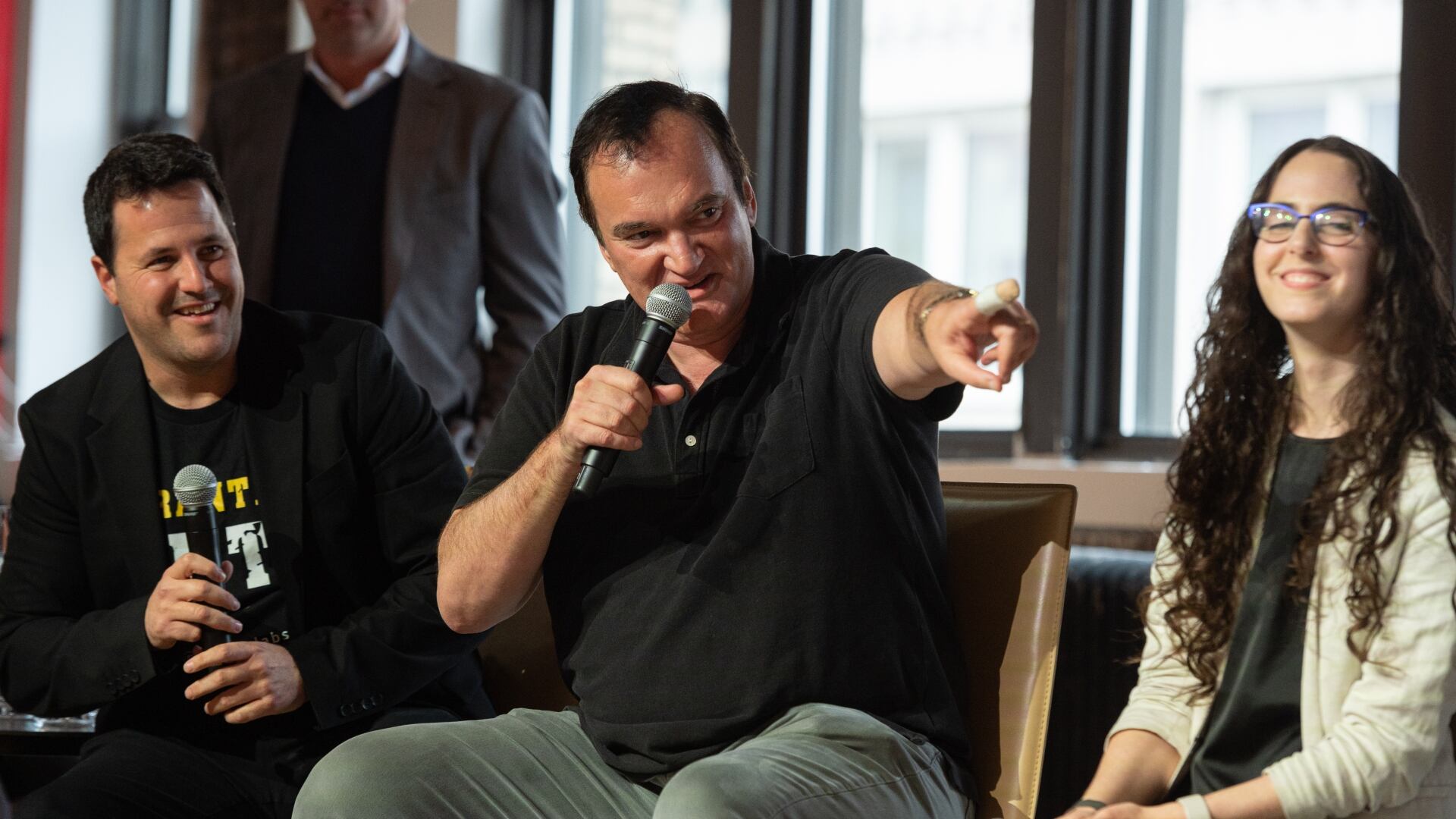
Capitalizing on the NFT hype while riding the rush to all things '90s, tarantino announced earlier this month a planned sale of NFTs based off his hand-written, original script of 'Pulp Fiction.' Days after the announcement, the studio that produced the iconic film, Miramax, filed suit against Tarentino. Kal Raustiala, Professor of comparative and international law at UCA joins Cheddar News.
Sam Burd, president of Dell Technologies Client Solutions Group, joined Cheddar to talk about the firm's Q3 earnings beat and what consumers can expect from the tech company in the future. He noted a return to offices alongside the overall change to how people work as sources for the earnings beat. Burd also discussed how the company has been able to navigate the ongoing global semiconductor chip shortage.
Sarav Arunachalam, air pollution scientist at the University of North Carolina at Chapel Hill, joins Cheddar Climate, where he discusses what he needs to happen when it comes to EV production on a global level to help reduce the effects of climate change.
In recent years, extreme weather events like flooding and wildfires have become more frequent, and more severe - and scientists say global warming is to blame. Climate crises could leave people in need of help, and that's where Global Rescue steps in. The crisis response firm employs former Navy Seals and Army Rangers to rescue travelers from climate-related emergencies. Global Rescue CEO Dan Richards joins Cheddar Climate to discuss.
Cloud-based AI-powered writing assistant Grammarly recently raised $200 million in a funding round that values the company at $13 billion. The funding will be used to help Grammarly achieve its goal of becoming more ubiquitous, as the company says it wants to be the go-to writing assistant for wherever people type. Grammarly also says it aims to solve what it calls one of the most critical problems facing people and businesses today -- ineffective communication. Grammarly global head of product Rahul Roy-Chowdhury joins Cheddar News' Closing Bell to discuss.
The Competition and Markets Authority in the UK moved to block Facebook parent company Meta from acquiring the image sharing platform Giphy after saying advertisers and consumers would be adversely impacted. Hatem Dhiab, managing partner at Gerber Kawasaki Wealth & Investment, joined Cheddar to break down the decision and noted that the CMA's order could also halt other big tech firms from making similar purchases in the future. "I think this is going to be true for Facebook, it's going to happen for other big tech companies — Amazon, perhaps Google, so it's interesting that the UK is starting this wave," he said.
Namita Dhallan, Chief Product Officer at Brightcove, joins Cheddar to discuss how artificial intelligence and machine learning are creating room for more personalization in video, and how these technologies are shaping the future of the video tech industry.
NASA indefinitely delayed a spacewalk to repair an ISS antenna, citing concerns about space debris. It was unclear if the warning from the space agency to astronauts aboard the ISS was related to the recent destruction of a non-functioning Russian satellite.