Iran Latest Bad Actor to Spread Misinformation on Facebook
*By Carlo Versano*
Facebook, Twitter, and Microsoft all announced this week they had shut down accounts and websites created to spread misinformation or malware almost immediately after discovering them.
But the scope of the threat remains unclear.
"I don't think anybody has a sense of how big the disinformation efforts are online by various foreign adversaries," said Washington Post technology reporter Craig Timberg. "It's not clear to me there are any systems set up to catch it."
The latest sweep targeted accounts and posts all traced to Iran ー hundreds, in the case of Facebook and Twitter ー though they pale in comparison to the coordinated misinformation campaign the Russians deployed in 2016, Timberg said Wednesday in an interview on Cheddar.
The speed with which these companies are alerting the public indicates they realize a need to be proactive about manipulation efforts on their platforms, said Sara Fischer, a reporter for Axios who also appeared Wednesday on Cheddar.
"I think it gives them a little bit of an upper hand every time they come out and say, 'We found something,'" Fisher said. The hope is that a "more holistic effort" will develop between the public and private sectors to take on cybersecurity issues, she added.
Fischer said that Silicon Valley's attempts at transparency are currying favor with regulators in Washington and strengthening users' trust in the platforms.
"This is evolving from being a tech policy and tech response conversation to a national security conversation," she said.
Facebook [announced](https://newsroom.fb.com/news/2018/08/more-coordinated-inauthentic-behavior) on Tuesday it removed 652 accounts and pages with ties to Iran. Soon after, Twitter [said](https://twitter.com/TwitterSafety/status/1032055161978585088) it suspended 284 accounts, many of which also originated in Iran, all meant to engage "in coordinated manipulation."
The Iranian Facebook campaigns included anti-Saudi and anti-Israel content and were aimed at users in the U.S., UK, Latin America, and the Middle East, according to [Fireye](https://www.fireeye.com/blog/threat-research/2018/08/suspected-iranian-influence-operation.html), a cybersecurity firm that worked with Facebook on the investigation.
Both announcements follow a [report](https://cheddar.com/videos/microsoft-uncovers-new-russian-hacking-scheme) earlier in the week from Microsoft that found Russian intelligence groups had built a suite of fake U.S. political sites in an attempted spear-phishing campaign.
It has been well-established that social media can be used as a tool for manipulation by bad actors, Timberg said.
"We shouldn't believe everything we read on the internet," he said.
For full interview, [click here] (https://cheddar.com/videos/iranian-fake-news-accounts-targeted-people-around-the-world).
As Russia continues to invade Ukraine, its tech outsourcing sector is at risk. Over the past few years, the country has become a popular outsourcing destination for American and European tech companies, but now the future of that industry is uncertain. Isabelle Bousquette, enterprise technology reporter, for The Wall Street Journal, discusses what repercussions the crisis might have on the industry, and what companies are doing to mitigate possible disruptions.
The Mobile World Congress is underway in Barcelona this week. The annual global trade show is showcasing the latest advancements in mobile and other progressive technologies.
Katie Collins, Senior European Correspondent, CNET joined Cheddar's Opening Bell to break down the latest announcements.
NerdWallet reported strong fiscal Q4 results in its first earnings report as a publicly traded company. The personal finance company saw revenue increase 75 percent year-over-year as the company witnessed a rebound in consumer demand as the pandemic wanes. Tim Chen, Founder & CEO, NerdWallet joined Cheddar's Opening Bell to discuss.
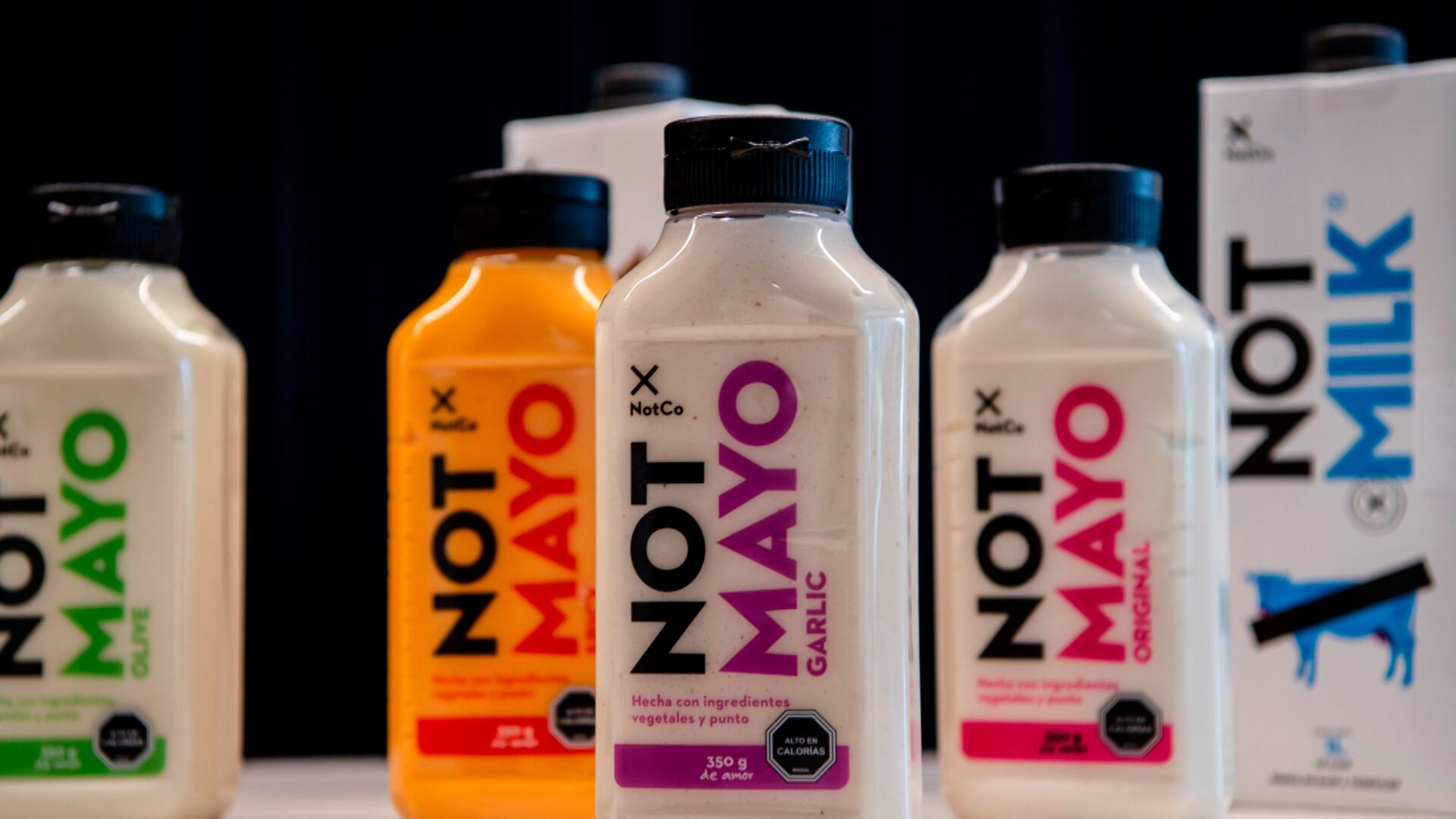
Kraft Heinz is launching a new joint venture with NotCo, a Chilean startup that creates plant-based substitutes using artificial intelligence. The goal is to reimagine global food production and bring plant-based versions of Kraft Heinz products to market at a faster speed, all while driving sustainability. Matias Muchnik, CEO and Co-Founder of NotCo, joined Cheddar's Opening Bell to discuss the partnership, NotCo's technology, and his response to the backlash against the ingredients in meatless meat.
Uber is rolling out a new feature on its app called Explore that will allow users to discover things to do in their area such as dining. The new service is now available in 14 U.S. cities.
Traci Gusher, EY Americas data and analytics leader, joins Cheddar News to discuss how companies have made strides within data and analytics throughout the pandemic and what the chief information officers of today need to focus on and dedicate resources to.
World leaders are currently dealing with a handful of pressing issues, including Russia's invasion of Ukraine, inflation, and not to mention the COVID-19 pandemic; but it could be argued that the most pressing issue is one that has experienced its fair share of neglect in the past -- climate change. As tensions escalate between Russia and Ukraine, there is fear the focus on climate will once again be pushed aside. However, the White House appears to be making some effort to prevent that from happening. The White House Office of Science and Technology held a first-of-its-kind roundtable discussion with some of the nation's leading climate scientists on Thursday. Michael Mann, Director of the Earth System Science Center at Pennsylvania State University, and author of the book 'The New Climate War' joins Cheddar News' Closing Bell to discuss his experience as one of the climate scientists at the White House event.