Iran Latest Bad Actor to Spread Misinformation on Facebook
*By Carlo Versano*
Facebook, Twitter, and Microsoft all announced this week they had shut down accounts and websites created to spread misinformation or malware almost immediately after discovering them.
But the scope of the threat remains unclear.
"I don't think anybody has a sense of how big the disinformation efforts are online by various foreign adversaries," said Washington Post technology reporter Craig Timberg. "It's not clear to me there are any systems set up to catch it."
The latest sweep targeted accounts and posts all traced to Iran ー hundreds, in the case of Facebook and Twitter ー though they pale in comparison to the coordinated misinformation campaign the Russians deployed in 2016, Timberg said Wednesday in an interview on Cheddar.
The speed with which these companies are alerting the public indicates they realize a need to be proactive about manipulation efforts on their platforms, said Sara Fischer, a reporter for Axios who also appeared Wednesday on Cheddar.
"I think it gives them a little bit of an upper hand every time they come out and say, 'We found something,'" Fisher said. The hope is that a "more holistic effort" will develop between the public and private sectors to take on cybersecurity issues, she added.
Fischer said that Silicon Valley's attempts at transparency are currying favor with regulators in Washington and strengthening users' trust in the platforms.
"This is evolving from being a tech policy and tech response conversation to a national security conversation," she said.
Facebook [announced](https://newsroom.fb.com/news/2018/08/more-coordinated-inauthentic-behavior) on Tuesday it removed 652 accounts and pages with ties to Iran. Soon after, Twitter [said](https://twitter.com/TwitterSafety/status/1032055161978585088) it suspended 284 accounts, many of which also originated in Iran, all meant to engage "in coordinated manipulation."
The Iranian Facebook campaigns included anti-Saudi and anti-Israel content and were aimed at users in the U.S., UK, Latin America, and the Middle East, according to [Fireye](https://www.fireeye.com/blog/threat-research/2018/08/suspected-iranian-influence-operation.html), a cybersecurity firm that worked with Facebook on the investigation.
Both announcements follow a [report](https://cheddar.com/videos/microsoft-uncovers-new-russian-hacking-scheme) earlier in the week from Microsoft that found Russian intelligence groups had built a suite of fake U.S. political sites in an attempted spear-phishing campaign.
It has been well-established that social media can be used as a tool for manipulation by bad actors, Timberg said.
"We shouldn't believe everything we read on the internet," he said.
For full interview, [click here] (https://cheddar.com/videos/iranian-fake-news-accounts-targeted-people-around-the-world).
One of Europe's leading micromobility providers, TIER mobility, is expanding into North America after acquiring the micromobility operator, Spin. Ford Motor Company previously owned Spin but is now selling the company to TIER Mobility, which says the deal will make it the largest multimodal micromobility operator in the world in terms of the number of cities it operates in and the number of vehicles in its fleet. Lawrence Leuschner, CEO of TIER Mobility, and Ben Bear, CEO of Spin, join Cheddar News' Closing Bell to discuss.
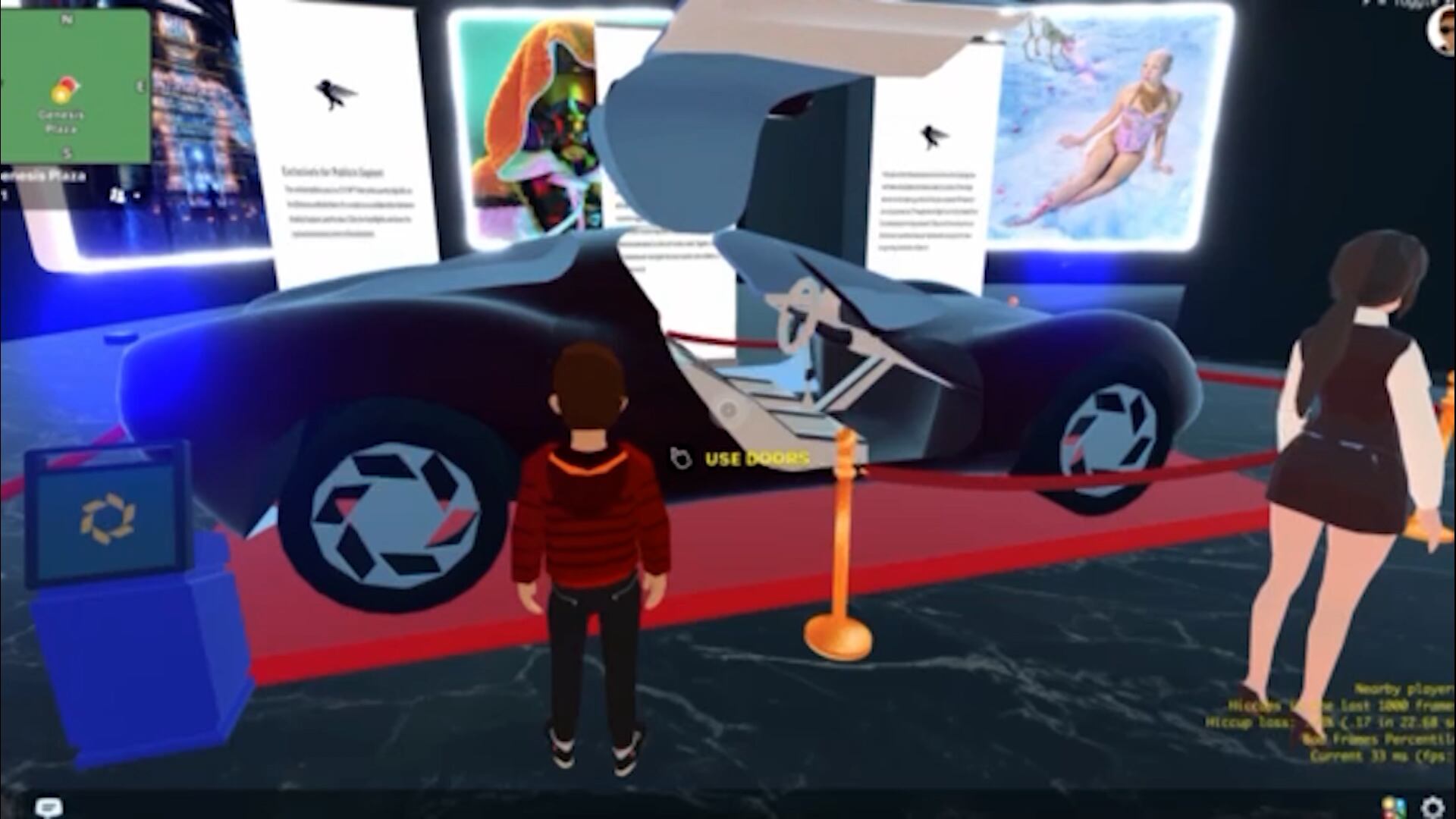
Digital consulting company Publicis Sapient has its sights set on the Metaverse. The subsidiary of the French advertising giant Publicis Group is announcing a new partnership with NFT auction house Portion in an effor to help brands deliver experiences in the metaverse, including the sales of products. Publicis Sapient CEO Nigel Vaz joined Cheddar News' Closing Bell to discuss. "In the context of our collaboration with Portion, the first experience that we created was with Decentraland, which is a virtual world," he said. "And car manufacturers in this metaverse, in terms of their buyers, can interact with a virtual person, (and) they can view quality NFTs. They can examine a virtual vehicle, be inside the car, rev an engine, open doors, all without leaving their homes."
Identity and access management company ForgeRock looks to use pattern recognition and artificial intelligence to ease secure access for users as an alternative to just password management. CEO Fran Rosch joined Cheddar News to discuss how the company's services work. "I mean, who likes to set up and use a new password? And they're also really bad security because a lot of people repeat the same one and use it everywhere and use the simplest one possible," he said. "We're trying to really create a smarter better identity system where we can find different ways, smarter ways, of recognizing you as a user and giving you access to what you need by really eliminating the password altogether."
Ford announced today that it will be separating its electric vehicles business from its internal combustion engine vehicles in two divisions named Ford Model E and Ford Blue, respectively. Ford Motor Company CFO John Lawler joined Cheddar to discuss the decision-making behind the restructuring. "When you think about the expertise that Ford has in like body structural engineering, chassis engineering, manufacturing at scale, there isn't an EV startup company out there that wouldn't love to have our capabilities in that space," he said.
Amazon is confirming it’s closing all of its physical bookstores as well as its 4-star shops and pop up locations as the online behemoth reworks its physical footprint.