By Barbara Ortutay
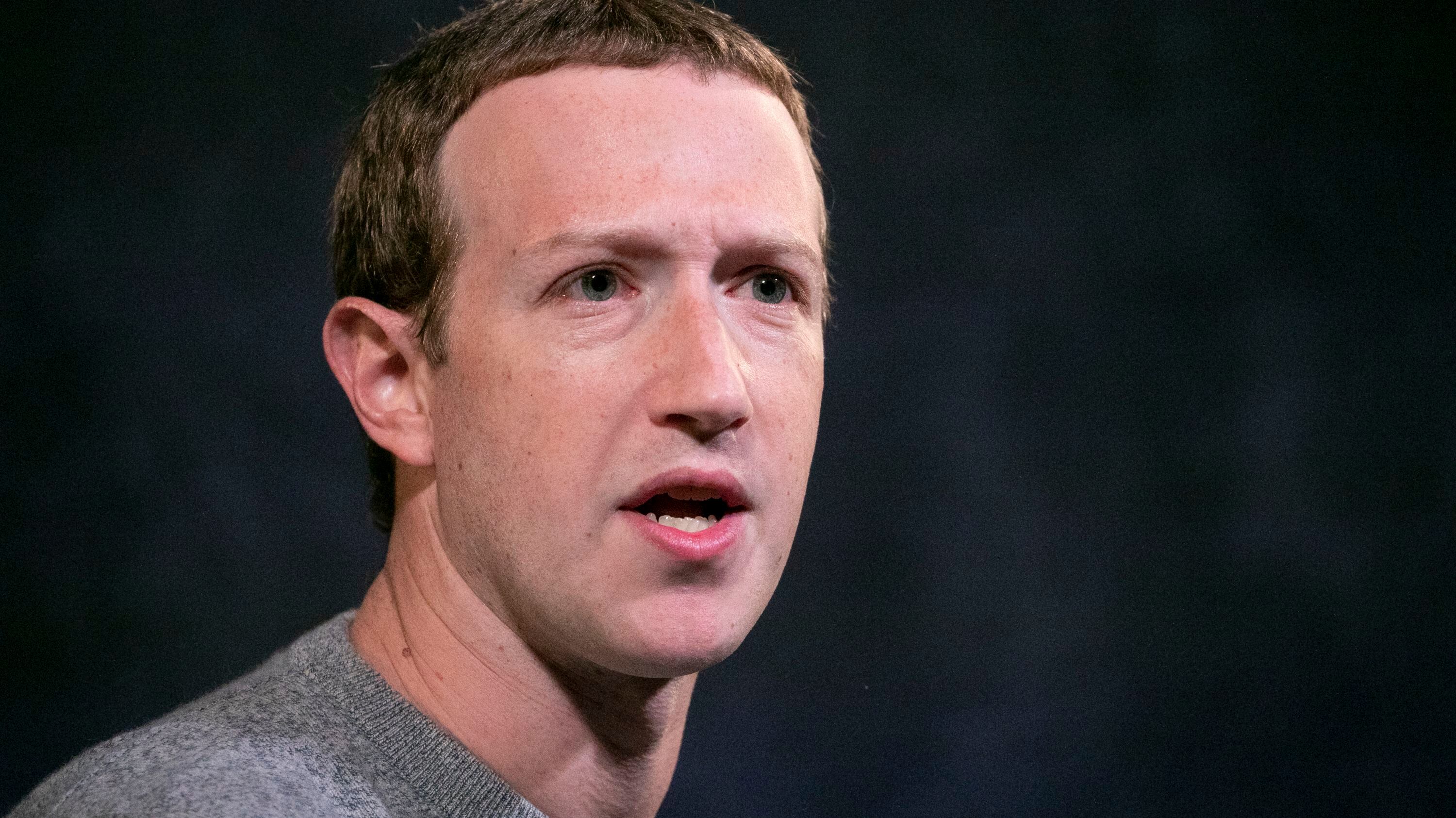
Facebook employees are using Twitter to register their frustration over CEO Mark Zuckerberg's decision to leave up posts by President Donald Trump that suggested protesters in Minneapolis could be shot.
While Twitter demoted and placed a warning on a tweet about the protests that read, in part, that “when the looting starts the shooting starts,” Facebook has let it stand, with Zuckerberg laying out his reasoning in a Facebook post on Friday.
“I know many people are upset that we’ve left the President’s posts up, but our position is that we should enable as much expression as possible unless it will cause imminent risk of specific harms or dangers spelled out in clear policies,” Zuckerberg wrote.
Trump's comment evoked the civil-rights era by borrowing a phrase used in 1967 by Miami’s police chief to warn of aggressive police response to unrest in black neighborhoods.
On Monday, Facebook employees staged a virtual “walkout” to protest the company's decision not to touch the Trump posts according to a report in the New York Times, which cited anonymous senior employees at Facebook. The Times report says “dozens” of Facebook workers “took the day off by logging into Facebook’s systems and requesting time off to support protesters across the country."
“I work at Facebook and I am not proud of how we’re showing up. The majority of coworkers I’ve spoken to feel the same way. We are making our voice heard,” tweeted Jason Toff, a director of product management at Facebook who's been at the company for a year.
Toff, who has a verified Twitter account, had 131,400 “likes” and thousands of retweets of his comment. He did not immediately respond to a message seeking comment on Monday.
“I don’t know what to do, but I know doing nothing is not acceptable. I’m a FB employee that completely disagrees with Mark’s decision to do nothing about Trump’s recent posts, which clearly incite violence. I’m not alone inside of FB. There isn’t a neutral position on racism,” tweeted another employee, design manager Jason Stirman.
Stirman did not immediately respond to a request for comment on Monday.
Sara Zhang, a product designer at the company, tweeted that Facebook's “decision to not act on posts that incite violence ignores other options to keep our community safe. The policy pigeon holes us into addressing harmful user-facing content in two ways: keep content up or take it down.”
“I believe that this is a self-imposed constraint and implore leadership to revisit the solution,” she continued.
Zhang declined to comment to The Associated Press.
Representatives for Facebook did not immediately respond to messages for comment.
Twitter has historically taken stronger stances than its larger rival, including a complete ban on political advertisements that the company announced last November.
That’s partly because Facebook, a much larger company with a broader audience, targeted by regulators over its size and power, has more to lose. And partly because the companies’ CEOs don’t always see eye to eye on their role in society.
Over the weekend, Twitter changed the background and logo of its main Twitter account to black from its usual blue in support of the Black Lives Matter protesters and added a #blacklivesmatter hashtag. Facebook did the same with its own logo on its site, though without the hashtag.